Leh
City · India

Leh

Leh, Jammu and Kashmir, India

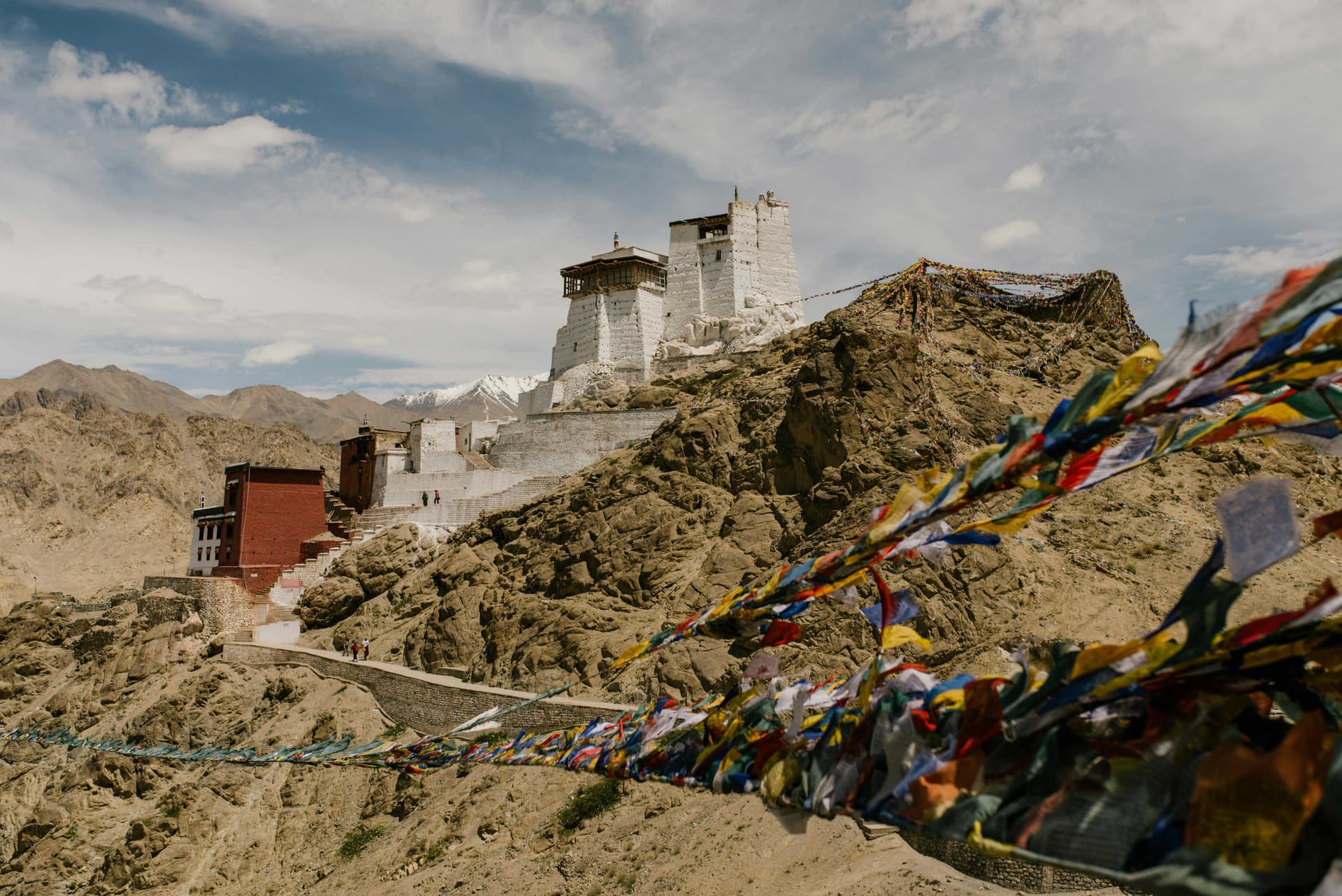
Leh, the joint capital and largest town of the union territory of Ladakh in India, is a high-altitude desert city nestled in the Himalayas at over…

#mountainous#adventurous#scenic#Buddhist culture#remote

Top Hotels in Leh

Top Flights to Leh

Flying from

Top Activities in Leh

Highlights

Things to do in Leh

What travellers talk about most.

Tours

Alchi Monastery Exploration

Take a tour of the ancient Alchi Monastery, known for its stunning Indo-Tibetan art and architecture.

4.6(948)INR 15

Stok Palace Museum Evening Tour

Discover the history of Ladakh with a tour at the Stok Palace Museum, home to royal artifacts and collections.

4.2(455)INR 25

Ladakh Arts and Media Centre Visit

Explore the cultural exhibits and learn about Ladakh's vibrant arts and storytelling traditions.

4.6(29)INR 5

Thiksey Monastery Morning Visit

Explore one of the largest and most impressive monasteries in Leh with panoramic views of the Indus Valley.

4.7(6.6k)INR 10

Gurudwara Pathar Sahib Visit

Visit the sacred Gurudwara Pathar Sahib, a spiritual and calm religious stop amidst the beautiful landscapes of Leh.

4.8(4.5k)INR 10

Visit to Shanti Stupa

Experience panoramic views of Leh and a serene atmosphere at the Shanti Stupa, a Buddhist white-domed stupa on a hilltop.

4.7(7.6k)

Explore Leh Palace

Visit Leh Palace, a former royal palace overlooking the town of Leh, offering insights into the rich history of the region.

4.4(10.9k)INR 200

Shey Palace and Monastery Tour

Visit the beautiful Shey Palace, the former summer capital of Ladakh, with its stunning murals and architecture.

INR 15

Sunset at the Hall of Fame

Visit the Hall of Fame, a fascinating museum constructed by the Indian Army. Witness the beautiful sunset while learning about the history of the region.

4.8(10.9k)INR 10

Shopping

Relax at Leh Market

Explore local handicrafts and delicacies at the bustling Leh Market at your leisure.

4.6(1.4k)

Outdoor

Hike to Khardung La

Embark on a scenic hike towards the famous Khardung La, one of the highest motorable passes in the world. Enjoy breathtaking mountain views along the way.

4.8(2.3k)

See it for yourself

Location videos

Reels and longer watches.

Featured for Leh

Traveller clips picked out for this place.

Watch & explore

Good to know

Practical info

Weather, costs and getting around.

Leh, Jammu and Kashmir, India Open in Google Maps
When to go

Scored from each month’s typical high and its usual conditions.

GoodMixedAvoid
Best monthsApr – Sep
Worth avoidingDec – Feb
October · coldHigh 14°C Low -1°C
Mixed

Leh, located in the Himalayan region of India, experiences a cold desert climate. Summers are mild with temperatures ranging from 15°C to 30°C, making it an ideal time for outdoor activities and sightseeing. Monsoons are rare, but occasional rainfall can occur. Winters are extremely cold with temperatures dropping below freezing, so it's important to prepare for snowfall and icy conditions if visiting during this time.

All 12 monthshighs, lows and conditions
Jan
snow
-2°-15°
Feb
snow
1°-12°
Mar
cold
6°-7°
Apr
clear
12°-1°
May
clear
17°3°
Jun
sun
21°7°
Jul
sun
25°10°
Aug
sun
24°9°
Sep
clear
20°5°
Oct
cold
14°-1°
Nov
cold
7°-6°
Dec
snow
2°-11°
Currency
₹ | INR | Indian Rupee
Population
30870 (2011)
Density
1 / km²
Local time
Languages
Ladakhi mainly · Hindi, English
Budget / day
₹2000 - ₹12000
Also known as
གླེངས, གླེང, ལེ, Ladakh

Know before you go

Local guide

A deeper read on Leh.

What people love

Leh offers an unparalleled travel experience with its dramatic, otherworldly landscapes of barren mountains and crystal-clear high-altitude lakes. It is a premier destination for adventure sports, offering world-class trekking, mountain biking, and white-water rafting on the Zanskar and Indus rivers. The rich Tibetan Buddhist culture provides a deeply spiritual and serene atmosphere, with stunning ancient monasteries to explore. Despite its remote location, the local Ladakhi people are incredibly warm and welcoming. The unique blend of Indian, Tibetan, and Central Asian influences is also reflected in the delicious local cuisine, making Leh a truly captivating destination.

What to know

The most significant drawback of visiting Leh is the high risk of altitude sickness (Acute Mountain Sickness), as the town sits at over 3,500 metres. Visitors must spend at least a day or two acclimatizing before engaging in strenuous activities. The remote location means that infrastructure can be basic; power outages are common, and internet or mobile connectivity is often slow and unreliable. The weather is extreme, with harsh, freezing winters that cut off road access for months, and intense UV radiation during the summer. Additionally, reaching certain restricted border areas requires obtaining special Inner Line Permits.

Leh, the joint capital and largest town of the union territory of Ladakh in India, boasts a captivating history shaped by its strategic location at the crossroads of ancient trade routes. For centuries, Leh served as a vital entrepôt on the Silk Road, facilitating the exchange of goods, ideas, and cultures between the Indian subcontinent, Tibet, Central Asia, and Xinjiang. Caravans laden with pashmina wool, silk, spices, and precious stones would traverse the treacherous Himalayan passes to converge in Leh's bustling bazaars, making it a melting pot of diverse ethnicities and traditions.

The historical prominence of Leh surged in the 17th century when King Sengge Namgyal, one of Ladakh's most illustrious rulers, shifted the royal capital from Shey to Leh. Under his visionary leadership, the Namgyal dynasty reached its zenith. He commissioned the construction of the imposing Leh Palace, a nine-story architectural marvel that towers over the old town. Modeled after the Potala Palace in Lhasa, Tibet, the Leh Palace stands as a testament to the region's rich Tibetan Buddhist heritage and the architectural ingenuity of the era.

Religion has profoundly influenced Leh's historical trajectory. While Tibetan Buddhism has been the dominant spiritual force, evidenced by the proliferation of ancient monasteries (gompas) such as Hemis, Thiksey, and Spituk clinging to the surrounding crags, Islam also established a significant presence. The arrival of Muslim traders and the subsequent construction of the Jama Masjid in the heart of Leh during the late 17th century highlight the town's historical religious syncretism and tolerance.

In the 19th century, the geopolitical landscape shifted dramatically. The Dogra general Zorawar Singh invaded Ladakh in 1834, incorporating the region into the princely state of Jammu and Kashmir under the suzerainty of the British Empire. This marked the end of Ladakh's independent monarchy. Following India's independence in 1947, Leh became part of the Indian state of Jammu and Kashmir. Its strategic importance was further amplified due to border conflicts with neighboring Pakistan and China, leading to a strong military presence that continues to shape the local economy and infrastructure.

In 2019, a monumental administrative change occurred when Ladakh was officially separated from Jammu and Kashmir and reconstituted as a distinct Union Territory. Today, Leh is not only a crucial military outpost but also a premier destination for global travelers. Visitors are drawn to its stark high-altitude desert landscapes, vibrant Buddhist festivals, and enduring historical monuments like the Shanti Stupa, which overlooks the valley. Leh's history is a fascinating narrative of resilience, trade, and spiritual devotion, echoing through its ancient alleyways and majestic mountain passes.