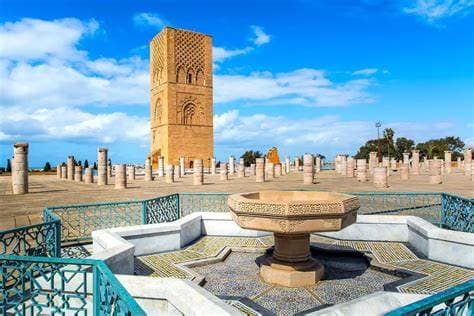
Rabat
City · Morocco

Rabat

Rabat, Rabat-Sale-Kenitra, Morocco

Step into Rabat, Morocco's captivating capital, where centuries of history blend seamlessly with a relaxed, modern coastal vibe. Unlike the frenetic…

#Capital city#Historic sites#Cultural landmarks#Coastal city#North Africa

Top Hotels in Rabat

Top Flights to Rabat

Flying from

Top Activities in Rabat

Highlights

Things to do in Rabat

What travellers talk about most.

Tours

Day in the Chellah Gardens

Explore the tranquil gardens surrounding the ancient Roman ruins at the Chellah, a site bustling with historical significance.

MAD 70

Walking Tour of the Medina

Discover the vibrant market streets of the Rabat Medina, famous for its crafts, food, and traditional Moroccan goods.

Explore the Kasbah of the Udayas

A historical fortress offering stunning views of the Atlantic Ocean, featuring Andalusian gardens and vibrant streets.

4.7(1.7k)

Shopping

Shopping at Rabat's Central Market

Dive into the heart of Rabat's shopping scene at the bustling central market filled with local goods and crafts.

4.0(4.3k)

Outdoor

Cycle along the Bouregreg River

Experience an invigorating cycle ride along the scenic Bouregreg River, separating Rabat from Salé.

See it for yourself

Location videos

Reels and longer watches.

Featured for Rabat

Traveller clips picked out for this place.

Watch & explore

Good to know

Practical info

Weather, costs and getting around.

Rabat, Rabat-Sale-Kenitra, Morocco Open in Google Maps
When to go

Scored from each month’s typical high and its usual conditions.

GoodMixedAvoid
Best monthsMar – Oct
Worth avoidingNov – Feb
November · rainHigh 20°C Low 12°C
Avoid

Rabat, the capital city of Morocco, experiences a Mediterranean climate characterized by mild, wet winters and warm, dry summers. In the winter months, temperatures typically range from 8°C to 18°C (46°F to 64°F), with occasional rainfall. Summers in Rabat are warm, with temperatures averaging between 18°C and 28°C (64°F to 82°F), and plenty of sunshine. The coastal location of Rabat provides a refreshing Atlantic breeze, making summer heat more tolerable. Spring and fall are particularly pleasant, with moderate temperatures and less rainfall, making these seasons ideal for travel.

All 12 monthshighs, lows and conditions
Jan
rain
17°8°
Feb
rain
18°9°
Mar
cloud
19°10°
Apr
cloud
20°11°
May
sun
22°13°
Jun
sun
24°16°
Jul
clear
27°18°
Aug
clear
28°19°
Sep
sun
26°18°
Oct
cloud
24°16°
Nov
rain
20°12°
Dec
rain
18°9°
Currency
MAD | MAD | Moroccan Dirham
Population
572717.0
Density
4,854 / km²
Local time
Languages
Arabic mainly · Berber, French
Budget / day
د.م.400 - د.م.2500
Also known as
Fort Ribat, Rabat-Salé, Ribat, Sala Colonia, Sala al-Jadida

Know before you go

Local guide

A deeper read on Rabat.

What people love

Rabat offers a beautifully balanced Moroccan experience, combining rich historical heritage with a relaxed, coastal atmosphere. As the capital, it is notably cleaner, safer, and less chaotic than other major tourist hubs, making it highly accessible for first-time visitors. The city boasts incredible UNESCO World Heritage sites, including the Kasbah of the Udayas and the Chellah Necropolis. Its coastal location provides refreshing ocean breezes and scenic promenades. Additionally, the local souks offer authentic shopping with far less hassle from vendors, allowing travelers to comfortably immerse themselves in the vibrant culture and delicious local cuisine.

What to know

While Rabat's relaxed pace is a draw for many, travelers seeking the intense, bustling energy or vibrant nightlife of Marrakech might find the capital a bit too quiet. The city's attractions can generally be covered in a day or two, making it less ideal for an extended stay. Language can occasionally be a barrier; while French and Arabic are widely spoken, English is less common outside of major tourist areas and upscale hotels. Additionally, navigating the administrative and bureaucratic nature of the capital can sometimes slow down services, and public transport can get crowded during rush hours.

Rabat, the capital city of Morocco, is located in the Rabat-Salé-Kénitra administrative region. Its rich history dates back to ancient times and has been shaped by various civilizations, including the Phoenicians, Romans, Berbers, and Arabs.

Ancient and Medieval Periods

  • Phoenician and Roman Era: The area around modern Rabat was originally settled by the Phoenicians and later became a Roman settlement known as Sala Colonia. The ruins of Chellah, located just outside the city, are a testament to this period, featuring Roman and medieval remains.

  • Establishment of Rabat: The city of Rabat itself was founded in the 12th century by the Almohad ruler, Abd al-Mu’min. His grandson, Yaqub al-Mansur, further developed the city, constructing the fortifications and the iconic Hassan Tower, which was intended to be the world's largest minaret but was left incomplete after his death.

Marinid and Saadian Eras

  • During the Marinid dynasty in the 13th and 14th centuries, Rabat remained significant but was not the capital. The Marinids focused on other cities like Fez, but Rabat continued to develop as an important coastal settlement.

  • In the 16th century, under the Saadian dynasty, Rabat gained prominence due to its strategic coastal position and was used as a base for corsairs.

The Alaouite Period

  • Rabat as a Refuge: In the 17th century, Rabat became a refuge for "Moriscos" (Muslims who were expelled from Spain) and developed into an autonomous republic for a time, known as the Republic of Bou Regreg, which was known for its piracy.

  • Alaouite Control: The Alaouite dynasty, which still rules Morocco today, eventually brought Rabat under control in the late 17th century. The city began to grow more steadily as part of the unified Moroccan state.

French Colonial Period

  • Protectorate and Capital: In 1912, when Morocco became a French protectorate, the French administration decided to make Rabat the administrative capital of Morocco instead of Fez. This decision led to significant urban development and modernization efforts, including the construction of the Ville Nouvelle (New City) by French architects.

Modern Era

  • Independence: Morocco gained independence from France in 1956, and Rabat retained its status as the capital. It became the political and administrative center of the country.

Significant Landmarks

  • Hassan Tower: An unfinished minaret of the mosque commissioned by Yaqub al-Mansur. The tower is part of a larger complex that includes the mausoleum of Mohammed V, a revered Moroccan king who led the country to independence.

  • Chellah: A medieval fortified Muslim necropolis built on the ruins of the Roman town Sala Colonia. It is now an archaeological site that attracts many visitors.

  • Kasbah of the Udayas: A historic kasbah (fortified citadel) located at the mouth of the Bou Regreg River. It offers picturesque views and is a UNESCO World Heritage site.

  • Royal Palace: The official residence of the King of Morocco, located in the city and a symbol of the country's monarchy.

  • Mohammed V University: One of Morocco’s most prominent institutions of higher education, established in 1957, reflecting Rabat’s role as an educational and cultural center.

Important Figures

  • Yaqub al-Mansur: The Almohad caliph responsible for much of Rabat’s early architectural development.
  • Mohammed V: King of Morocco who played a pivotal role in the country’s struggle for independence.

Rabat today is a vibrant city that blends its rich historical heritage with modern infrastructure, serving as a key political, educational, and cultural hub in Morocco.

Traveler ratings

How Rabat rates

From verified Travafa trips.

4.8
Very good
Based on 2 ratings
Things to Do
4.8
Accommodation Quality
4.8
Local Transportation
4.8
Safety
5.0
Scenic Beauty
4.3
Shopping
4.5
Friendliness of People
4.0
Cleanliness
3.8
Value for Money
5.0
Internet Connectivity
4.8
Good for
100%
Friends
50%
Family
50%
Couple
50%
Solo
0%
Pets

Who is Rabat for?

By the travellers who rated it on Travafa. Each page states the places, months and budget for that kind of trip.