Medellin
City · Colombia

Medellin

Medellin, Antioquia, Colombia

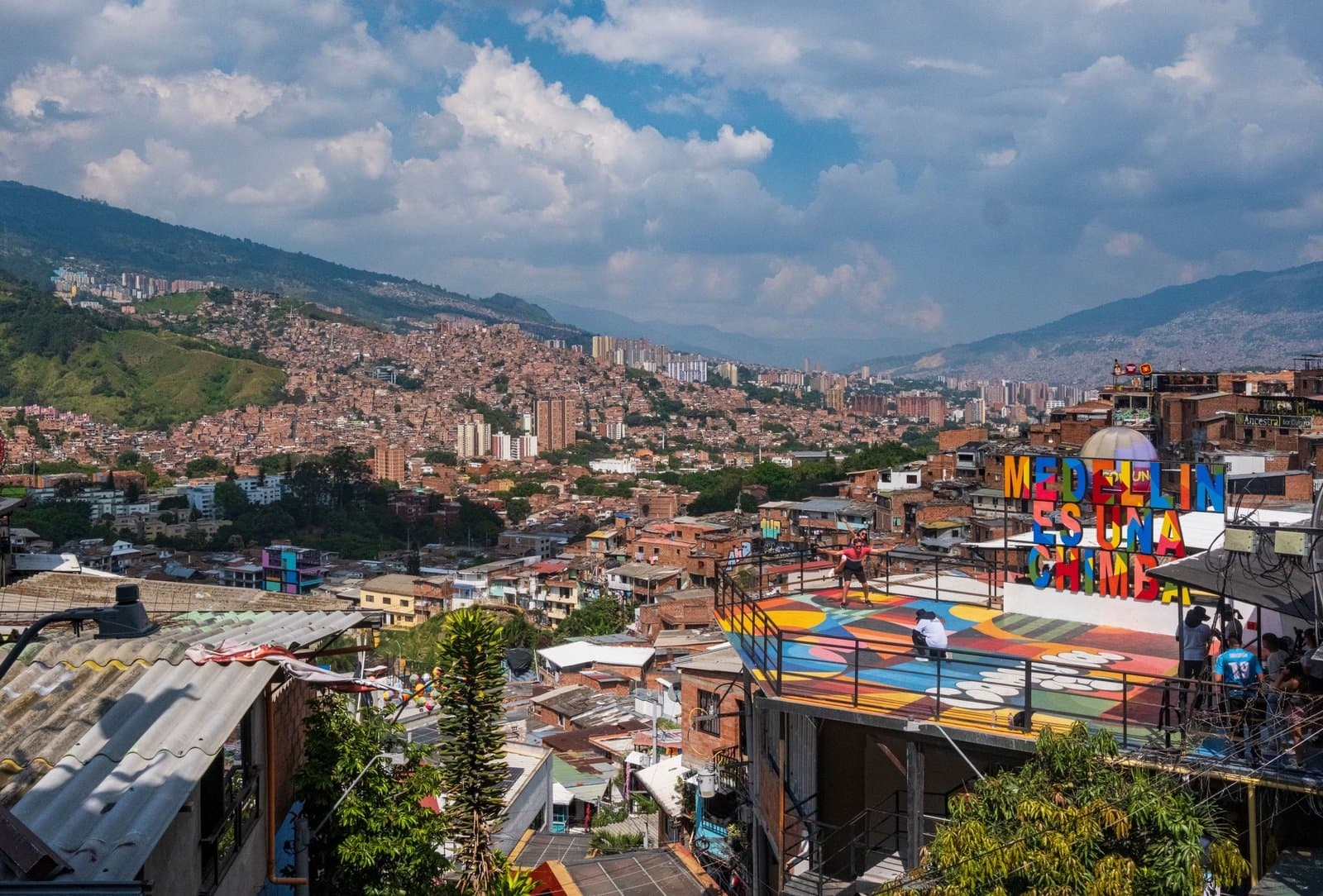
Nestled in the Aburrá Valley of the Andes Mountains, Medellín has transformed from a turbulent past into one of South America's most innovative and…

#City#Urban#Cultural#Mountainous#Tropical

Top Hotels in Medellín

Top Flights to Medellín

Flying from

Top Activities in Medellín

Highlights

Things to do in Medellin

What travellers talk about most.

Tours

Museo de Antioquia and Plaza Botero

Explore the works of Fernando Botero and other artists at the Museo de Antioquia, located in the bustling Plaza Botero.

INR 1,800

Last-Minute Souvenir Shopping

Pick up some last-minute souvenirs from a local market or shop.

INR 3,000

Visit to Comuna 13

Explore the vibrant street art and culture of Comuna 13, a neighborhood known for its transformation and innovation.

4.7(41k)

Evening Walk in Parque Lleras

Soak in the vibrant nightlife and atmosphere of Medellín's most famous park.

4.4(21.9k)

Medellín Metrocable Tour

Experience Medellín's urban transformation by riding the Metrocable up to Santo Domingo, offering breathtaking views of the city and its surroundings. Witness how this innovative transport system has changed lives.

COP 3,650

Explore El Poblado

Wander through the trendy neighborhood of El Poblado, with its boutiques, cafes, and galleries.

4.4(35.6k)INR 500

Guatapé Day Trip

Take a trip to the picturesque town of Guatapé, famous for its colorful buildings and the giant rock formation, El Peñol.

COP 1,50,000

Outdoor

Jardín Botánico de Medellín Visit

Take a peaceful stroll through the Jardín Botánico, admiring its diverse range of flora, butterfly house, and orchid collection. This oasis in the city offers a relaxing break surrounded by nature.

4.7(44.8k)

Parque Arví Eco-Hike

Embark on a guided eco-hike through Parque Arví's lush green landscapes and discover the rich biodiversity and native plants of the region. Learn about conservation efforts and enjoy the serene environment.

4.7(24.5k)COP 45,000

See it for yourself

Location videos

Reels and longer watches.

Featured for Medellin

Traveller clips picked out for this place.

Watch & explore

Good to know

Practical info

Weather, costs and getting around.

Medellin, Antioquia, Colombia Open in Google Maps
When to go

Scored from each month’s typical high and its usual conditions.

GoodMixedAvoid
Best monthsDec – Feb, Jul – Aug
Worth avoidingMar – Jun, Sep – Nov
November · rainHigh 27°C Low 17°C
Avoid

Medellín has a mild, spring-like climate year-round due to its location in the Andes Mountains. Temperatures typically range between 60-80°F (15-27°C) during the day, with cooler evenings. The city experiences a rainy season from April to November, with short bursts of heavy rain, so it's advisable to pack an umbrella or rain jacket. Overall, the weather in Medellín is pleasant for exploring the city and its surrounding attractions.

All 12 monthshighs, lows and conditions
Jan
sun
27°17°
Feb
sun
27°17°
Mar
rain
27°17°
Apr
rain
27°17°
May
rain
27°17°
Jun
rain
27°17°
Jul
cloud
27°17°
Aug
sun
28°17°
Sep
rain
27°17°
Oct
rain
27°17°
Nov
rain
27°17°
Dec
sun
27°17°
Currency
$ | COP | Colombian Peso
Population
2.6 million (2023)
Density
6,643 / km²
Local time
Languages
Spanish mainly · English
Budget / day
$120000 - $700000
Also known as
Metropolitan Area of Medellín, Metropolis of the Andes, City of Flowers, MDE (IATA airport code), Capital of Antioquia

Know before you go

Local guide

A deeper read on Medellin.

What people love

Medellín offers an unbeatable combination of a perfect, spring-like climate year-round and a highly affordable cost of living. The city is nestled in a stunning Andean valley, providing breathtaking mountain views and easy access to nature. It boasts a world-class, innovative public transit system, including the iconic Metrocable. Visitors are consistently charmed by the incredible warmth and hospitality of the local Paisa people. Additionally, the city features a thriving digital nomad community, excellent coffee culture, and a vibrant nightlife and dining scene, making it a highly attractive destination for all types of travelers.

What to know

Despite its remarkable transformation, safety remains a concern in Medellín; petty theft and muggings can occur, requiring visitors to stay vigilant and avoid certain neighborhoods at night. The city's location in a valley traps vehicle emissions, leading to noticeable air pollution and occasional smog. Traffic congestion is also a major issue, making road travel slow during peak hours. Additionally, the language barrier can be challenging, as English is not widely spoken outside of major tourist hubs like El Poblado. Finally, the city's rising popularity has led to gentrification and overcrowding in popular areas.

Medellín, the capital of Colombia’s mountainous Antioquia province, boasts a captivating and complex history that has shaped it into one of South America’s most resilient and innovative cities. Long before the arrival of Europeans, the Aburrá Valley was inhabited by various indigenous groups, including the Aburrá, Yamesí, and Nutabe peoples, who thrived in the region's eternal spring-like climate. The first Spanish contact occurred in 1541 when an expedition led by Jerónimo Luis Tejelo entered the valley. However, it was not until 1616 that Spanish conquistador Francisco de Herrera Campuzano officially founded the first settlement, originally named San Lorenzo de Aburrá. In 1675, the settlement was formally established as the Villa de Nuestra Señora de la Candelaria de Medellín by royal decree.

During the colonial era, Medellín remained a relatively small and isolated town, overshadowed by the nearby gold-mining center of Santa Fe de Antioquia. It wasn't until the 19th century that Medellín began to emerge as a regional powerhouse. The coffee boom of the late 1800s brought significant wealth to the region, funding the construction of the Antioquia Railway, which finally connected the landlocked city to the Magdalena River and the outside world. This newfound connectivity sparked a massive wave of industrialization in the early 20th century. Medellín quickly transformed into the industrial capital of Colombia, particularly renowned for its booming textile manufacturing sector, which drew thousands of rural migrants seeking factory work and rapidly expanded the city's urban footprint.

The late 20th century, however, brought a dark and turbulent chapter to Medellín's history. During the 1980s and early 1990s, the city became the epicenter of the global cocaine trade, dominated by the infamous Medellín Cartel. Although cartel leader Pablo Escobar was born in nearby Rionegro, his operations were deeply rooted in Medellín, plunging the city into an era of unprecedented violence, narco-terrorism, and social upheaval. For a time, Medellín was tragically known as the most dangerous city in the world.

Yet, the true defining characteristic of Medellín is its miraculous 21st-century renaissance. Following the dismantling of the cartels, local government and citizens embarked on an ambitious journey of social urbanism. Innovative public policies focused on integrating marginalized hillside neighborhoods with the city's economic center. The introduction of the Metro de Medellín, the iconic Metrocable gondola system, and outdoor public escalators in Comuna 13 revolutionized urban mobility and social equity. Today, Medellín is celebrated globally as a model of urban transformation, having evolved from a city of fear into a vibrant, forward-thinking metropolis celebrated for its culture, technology, and indomitable spirit.

Traveler ratings

How Medellin rates

From verified Travafa trips.

5.0
Very good
Based on 1 rating
Things to Do
4.0
Accommodation Quality
4.5
Local Transportation
4.5
Safety
3.0
Scenic Beauty
4.0
Shopping
3.5
Friendliness of People
5.0
Cleanliness
5.0
Value for Money
5.0
Internet Connectivity
3.5
Good for
0%
Friends
100%
Family
100%
Couple
100%
Solo
0%
Pets

Who is Medellin for?

By the travellers who rated it on Travafa. Each page states the places, months and budget for that kind of trip.