Where to Frame Delhi: High-Contrast Spots and Precise Angles
Six locations for clean frames, golden light, and minimal background clutter across the capital.
Humayun's Tomb before the morning heat
Arrive at the gates by 6:00 AM when the complex opens. The morning light strikes the red sandstone facade at a low angle, throwing deep shadows into the high arched alcoves. Take the Violet Line to JLN Stadium metro station, followed by an eight-minute auto-rickshaw ride for roughly Rs 50. Entering early allows you to photograph the grand central dome without modern crowds interrupting your sightlines.
Most visitors stop at the main lawn, but the strongest compositions are found along the outer corner pavilions. Frame the central structure through the carved sandstone jali screens along the upper corridors. Exploration of Humayun's Tomb takes about two hours. Note that if you are visiting around Gandhi Jayanti on 2 October 2026, it is a national dry day, so plan evening dinner arrangements accordingly since alcohol service will be closed across city venues.
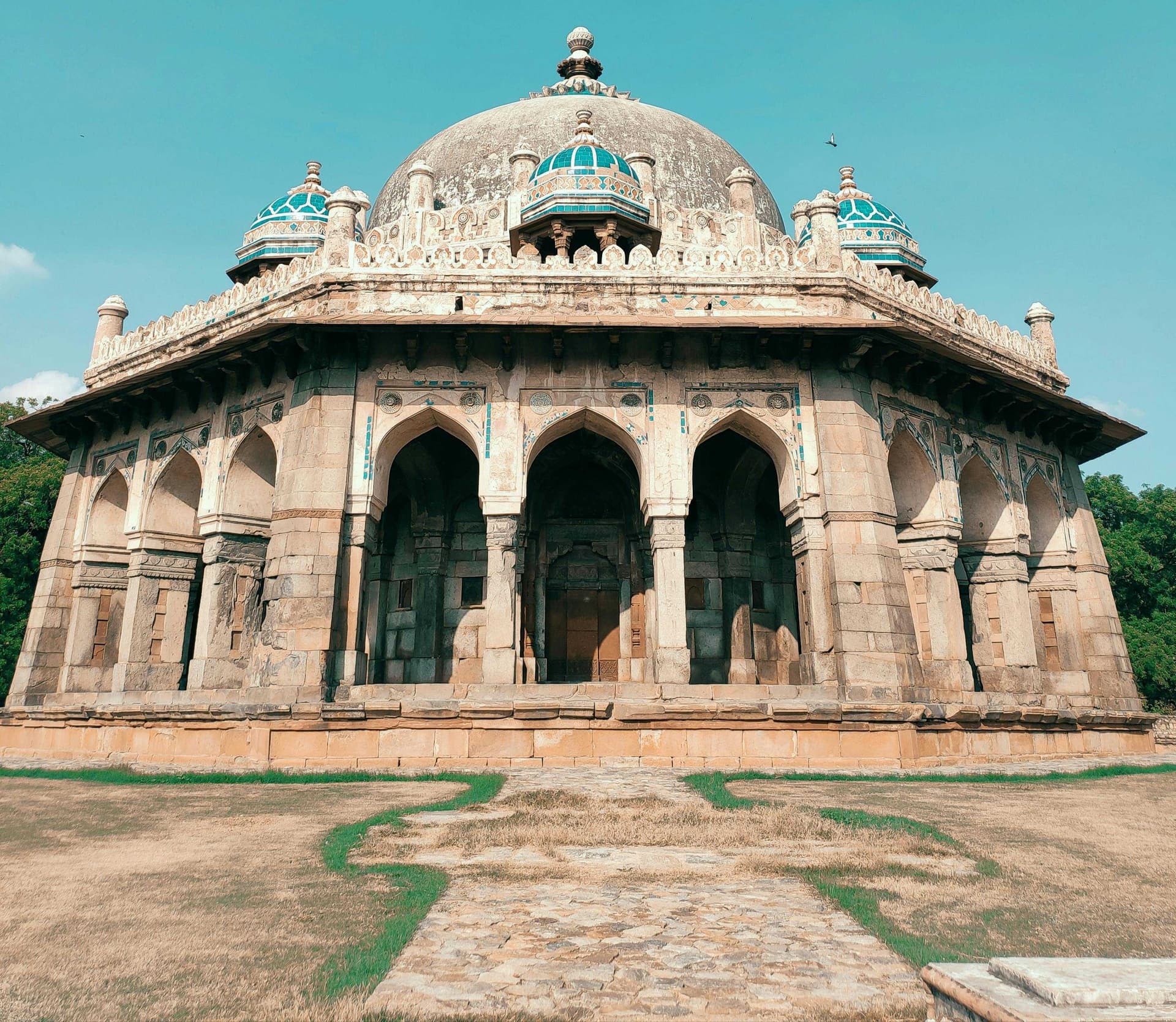
AI-generated impression of Delhi: the most photographed view in Delhi at golden hour, framed the way a visitor would frame it
Qutub Minar and its vertical geometry
The 73-metre brick minaret dominates the skyline in South Delhi, but getting a clean frame requires planning. The best angle is not from the front entrance where hundreds of visitors stand. Instead, walk through the ruined colonnades of the Quwwat-ul-Islam mosque and use the 12th-century iron pillar and carved arches as foreground framing elements.
Reach the site via the Yellow Line to Qutub Minar station, then walk 10 minutes or take a quick Rs 30 electric rickshaw. Plan a Morning Visit to Qutub Minar, from USD 500, or head in independently right at 7:00 AM. Avoid the hours between 11:00 AM and 3:00 PM; the overhead sun flattens the detailed calligraphic carvings and makes long exposure shots impossible under harsh sunlight. Spending 90 minutes here gives you enough time to work around the perimeter walls.
Old Delhi alleys and Jama Masjid roof views
The narrow lanes of Old Delhi require fast prime lenses and quick instincts. Take the Heritage Line metro to Chawri Bazar at 7:30 AM before commercial shops pull up their metal shutters. Walk past the spice sellers on Khari Baoli to capture the morning light breaking through steam above street kettles. The textures of weathered brick, hanging wires, and wooden doorways offer endless framing options.
Walk ten minutes over to Visit to Jama Masjid. Camera fees apply at the gate. Pay the additional fee to climb the narrow, 121-step spiral staircase of the southern minaret. From the top, you get a 360-degree grid view of Old Delhi's dense rooftop life. Avoid Friday mornings when congregational prayers limit access for tourists. If your trip falls during Sharad Navratri from 11 October 2026 to 19 October 2026, keep in mind many local street vendors shift to strict vegetarian fast menus, making an Evening Street Food Tour in Delhi, from Rs 1,000, a fascinating look into seasonal culinary shifts.
Hauz Khas Village ruins meeting the reservoir
Hauz Khas combines 14th-century Delhi Sultanate stone structures with modern urban graffiti. The best lighting occurs between 4:30 PM and sunset. Enter the park complex behind the village to access the ancient madrasa and tombs overlooking the water. Look for the stone arches that frame the lake as the sun drops behind the tree line.
Get there via Green Park metro station on the Yellow Line, then take a short auto-rickshaw ride into the main village gate. Entry to the medieval complex costs Rs 25, or opt for Outdoor Adventure at Hauz Khas, from Rs 40. Most people stay near the main entrance cafes, which means the upper pillared pavilions inside the park remain relatively clear. Give yourself two hours before dark to capture both the heritage stone textures and the dusk reflections off the lake surface.
Dilli Haat for raw color and craft textures
If you want close-up shots of textiles, ceramics, and regional crafts, head straight to Dilli Haat at INA metro station. Unlike temporary street markets, this open-air plaza features permanent thatched stalls that host artisans from across different Indian states. Entry is Rs 30 for adults, or book Dilli Haat Shopping, from Rs 100, for structured access.
The ideal time to photograph is around 3:30 PM when natural light hits the terracotta floor tiles and bright fabric displays. Focus on macro details of hand-carved wooden toys, painted papier-mache, and embroidered shawls rather than wide landscape shots of the walkways. Avoid Saturday and Sunday evenings when heavy pedestrian traffic makes tripod setup impossible and blocks clear shots of the displays. Plan for about 90 minutes to stroll the loops and capture the detail work of local craftspeople.
Ready-made plans
Start a trip to Delhi
Day-by-day plans built on real bookable activities. Copy one and make it yours.