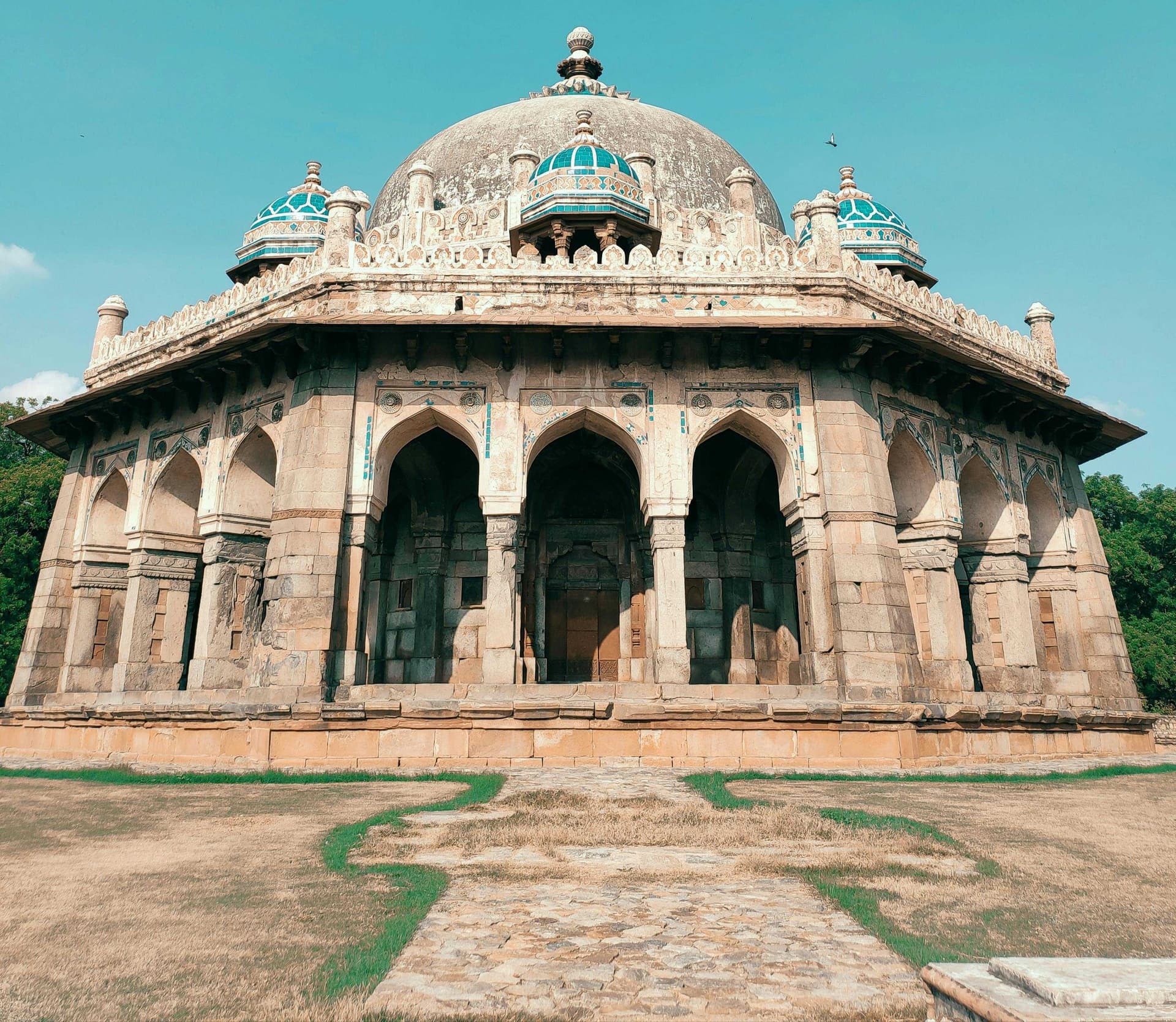
Navigating Old Delhi Backstreets and Hauz Khas Ruins
Early mornings, night street food, and craft markets in India's capital.
Early hours inside the walled city
The Yellow Line metro drops you at Chandni Chowk station by 6:30am, long before shopkeepers pull up their iron shutters. Most first-timers show up at noon, when the narrow lanes turn into a wall of handcarts, rickshaws, and suffocating heat. At dawn, you get the actual architecture: 17th-century sandstone archways, quiet courtyards, and red bricks softened by decades of soot.
Walk straight toward Jama Masjid before the courtyard fills with tour groups. Entry to the mosque courtyard is free, though carrying a camera incurs a modest fee. Stand near the central pool while the morning call to prayer echoes off the sandstone towers. A Morning Exploration of Old Delhi costs from USD 500 if booked as a private guided heritage walk, but wandering the lanes around Matia Mahal on foot costs nothing extra and takes about two hours before breakfast.
What people get wrong is rushing through on a tuk-tuk. You miss the tiny tea stalls pouring hot chai from brass kettles into clay cups. Stop at the corner of Dariba Kalan for freshly fried jalebis straight out of the kadhai. By 9:00am, the crowds arrive, and that is your cue to head south toward greener neighborhoods.
AI-generated impression of Delhi: a quiet, lesser-known corner of Delhi that most visitors walk past — a lane, a courtyard, a small shrine or shopfront
Craft stalls and dry days at Dilli Haat
Hop back on the Yellow Line to INA station to reach Dilli Haat, an open-air craft bazaar organized like a traditional village market. Entry costs just Rs 30 per person, and the space operates daily from 10:30am to 10:00pm. Unlike closed shopping malls, the stalls here rotate every fifteen days, bringing weavers, woodcarvers, and potters directly from state rural cooperatives across India.
It takes about two hours to walk the brick pathways and bargain reasonably for hand-loom textiles or brass lanterns. The food court at the rear is organized by state, offering steamed momos from Sikkim alongside spicy mutton curry from Kashmir. Keep in mind that Gandhi Jayanti falls on 2 October 2026. As a national holiday, it is observed strictly as a dry day across the city, meaning state food stalls will not serve alcohol or beer on that date.
If you prefer dedicated craft markets over chaotic wholesale centers, Dilli Haat Shopping from Rs 100 provides a far cleaner, manageable experience than navigating commercial street vendors. Go around 4:00pm to browse in cooler daylight before settling down for early dinner dishes under hanging paper lamps.
Medieval stones and lake paths at Hauz Khas
Take an auto-rickshaw down to South Delhi for an Outdoor Adventure at Hauz Khas, from Rs 40. The entrance fee to the medieval complex is Rs 40, and the gates stay open until sunset. Most visitors cluster around the modern bar strip at the entrance of Hauz Khas Village, completely ignoring the 14th-century madrasa ruins and reservoir built during the reign of Alauddin Khilji.
Spend ninety minutes walking the stone pavilions, elevated tombs, and terraced lawns overlooking the water tank. The stone arches frame views of deer grazing in the adjacent park. Photographers gather here around 4:30pm when the low autumn sun hits the grey granite walls. Avoid visiting on weekend afternoons when local college groups crowd the narrow stairs.
From 11 October 2026 to 19 October 2026, Sharad Navratri fills local neighborhoods with evening music and community prayers. Staying near Hauz Khas puts you within walking distance of peaceful green paths during the day, while remaining close to South Delhi temples that come alive with lights and quiet gatherings after dark.
Late evening bites through the old alleyways
As dusk settles, head back toward the walled city for an Evening Street Food Tour in Delhi, from Rs 1,000. Led by local food guides, these three-hour walking routes navigate subterranean alleys that look intimidating to solo travelers after dark. Expect to pay around Rs 1,000 to Rs 1,500 per person, which covers all food tastings along the way.
During the Sharad Navratri festival in mid-October, vendors modify their menus to offer special fasting items. You will find crispy sabudana tikki and buckwheat puris fried in pure ghee alongside classic winter treats like Daulat ki Chaat—a delicate, whipped milk dessert served only in cold months. A Visit to Jama Masjid late in the evening reveals lit minarets and quiet kebab shops lining the perimeter.
Skip the commercial sit-down restaurants in Connaught Place if you want authentic northern flavors. The best meals in Old Delhi are eaten standing up beside small frying stations where recipes have been handed down through four generations of street cooks.
Ready-made plans
Start a trip to Delhi
Day-by-day plans built on real bookable activities. Copy one and make it yours.