A real guide to navigating Hampi's trails, rivers, and granite hills on foot.
Scrambling up Matanga Hill before dawn
Set your alarm for 5:00am. You want to be at the base of Matanga Hill near the eastern end of Hampi Bazaar while it is still pitch black. The Matanga Hill Sunrise Trek takes about thirty minutes of real legwork, stepping over uneven rock-cut stairs and pulling yourself up granite slabs. Bring a headlamp or use your phone light because there are no streetlights, and a missed footing on the loose gravel near the top will ruin your morning.
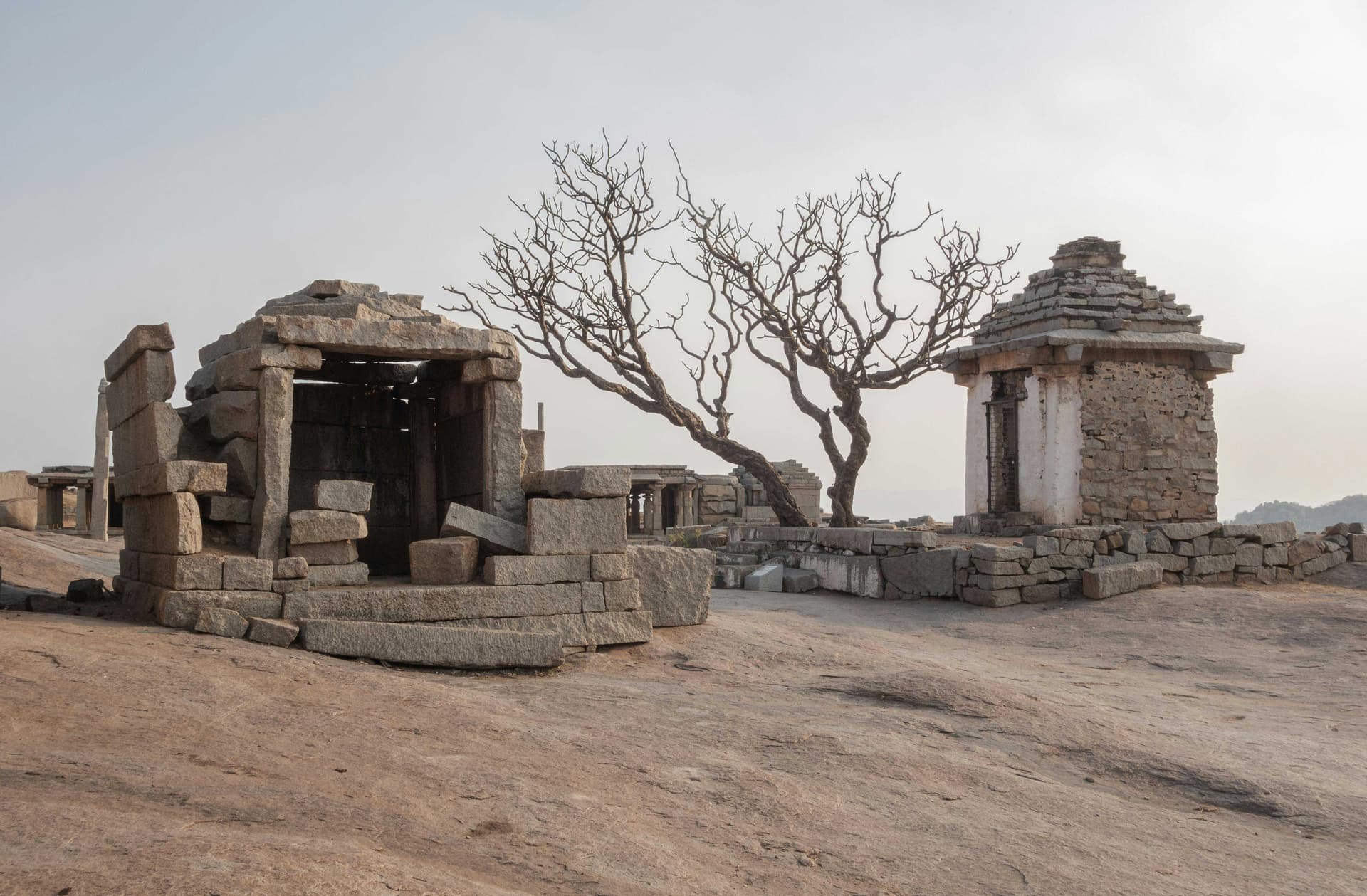
When you reach the roof of the Veerabhadra temple at the summit, the entire boulder-strewn landscape unfolds beneath you. October to February brings crisp morning air, while April and May turn the granite into an oven by 9:00am. Skip the unofficial guides at the bottom offering to lead you up for five hundred rupees; the path is straightforward as long as you follow the painted arrows on the rock faces.
What most people get wrong is staying up top long after sunrise. Once the sun clears the horizon around 6:15am, head straight down before the midday heat settles in. The descent takes twenty minutes and puts you in a prime spot to explore the nearby ruins before tour crowds arrive.
Taking the train and picking your base
Getting to Hampi requires a bit of planning, but it is easy enough to navigate. The most direct route from Bengaluru is the overnight Hampi Express train to Hosapete Junction, which takes roughly nine hours and costs around Rs 400 for a sleeper berth. From Hosapete station, skip the persistent drivers inside the terminal and walk out to the main road to catch a local government bus for Rs 20, or bargain an auto-rickshaw down to Rs 200 for the 13-kilometer drive into Hampi village.
Base yourself close to the main bazaar on the south side of the river if you want immediate access to the early morning trails. While the north side used to be popular for laid-back stays, the temporary motorboat ferries stop operating promptly at 5:30pm. If you miss that last boat, you face a 40-kilometer, Rs 1,000 auto-rickshaw detour around the bridge at Gangavati just to get back to your room for the night.
Staying on the south bank saves you cash and stress, putting you within walking distance of basic guesthouses charging Rs 800 to Rs 1,500 per night. You can easily stroll to the trails without waiting on boat schedules.
Crossing the Tungabhadra River in a coracle
The Tungabhadra River splits Hampi into two distinct landscape zones. To see the massive boulder formations from the water level, jump into a traditional round basket boat. A Sunset Coracle Ride on Tungabhadra River, from Rs 300, takes roughly forty-five minutes and gives you a completely different perspective on the ancient stone ramparts rising straight out of the water.
The boatmen navigate the swirling currents using a single wooden paddle, spinning the coracle deliberately at least once to show off for passengers. Do not pay more than Rs 300 for a standard crossing, though sunset trips cost a bit extra. If you want a more structured trek, book the Alternate Walk along Tungabhadra with Coracle ride (2 Hours Guided Walking Tour), about 2 hours, from Rs 893, which pairs a rocky trail trek along the riverbank with a drift downriver.
Alternate Walk along Tungabhadra with Coracle ride (2 Hours Guided Walking Tour)
Avoid coracle rides between July and September. Monsoon currents turn the river treacherous, and local authorities shut down all boat operations for safety. Stick to the cooler dry months from November through February when the water currents are calm and predictable. For a quiet end to the day, try Relaxation at Hampi Riverside near the ancient bathing ghats around 4:30pm to watch local life without spending anything.
Hiking the rock paths between ancient ruins
Ditch the electric golf carts and tour buses. The best outdoor route in Hampi is the dirt and stone track connecting the main central complex to the riverside monuments. Start from the trail past Virupaksha Temple Visit, from Rs 50, and follow the river bank eastward. You will reach the path down to Explore Achyutaraya Temple, from Rs 200, situated right beneath the shadow of Sulai Bazaar, which gets a fraction of the crowds that cluster around the central plaza.
Continuing along the rocky trail leads you toward the Vittala Temple Exploration, from Rs 250, famous for its stone chariot and carved musical pillars. The entire hike along this river section takes about two and a half hours if you stop to explore the carved stone mantapas along the way. Wear sturdy approach shoes or trail runners; polished granite surfaces will punish flip-flops.
Most visitors make the mistake of visiting Vittala Temple at noon when the exposed stone paving burns through light footwear. Go at 3:30pm instead, when the shadows stretch long over the stone carvings, making the walk back along the river cool and manageable.
Keep reading
More Hampi blogs
Written for real trips, priced from the city you fly out of.