Boulders, River Trails, and Granite Peaks in Hampi
How to hike, cycle, and paddle through India's ancient stone landscape.
Climbing Matanga Hill before the morning heat
Headlamp batteries die quickly when you are picking your way over slick granite at 5:00 AM. Start your climb from the marked path behind the Hampi Bazaar bus stand; it takes about 30 to 40 minutes of steep, uneven step-climbing to reach the roof of Matanga Hill. Most people make the mistake of taking the unmarked southern path in the dark and end up scrambling up loose stone chutes. The Matanga Hill Sunrise Trek requires zero entry fees, but you will pay in sweat as you haul yourself up the final carved rock staircases. The top gives you an unfiltered 360-degree view across the entire Vijayanagara valley as the sun rises around 6:15 AM. November to February offers clear blue skies without the brutal 40-degree heat of April. Skip the midday climbs entirely—the exposed rock acts like an oven after 10 AM, and there is no shade anywhere on the summit.
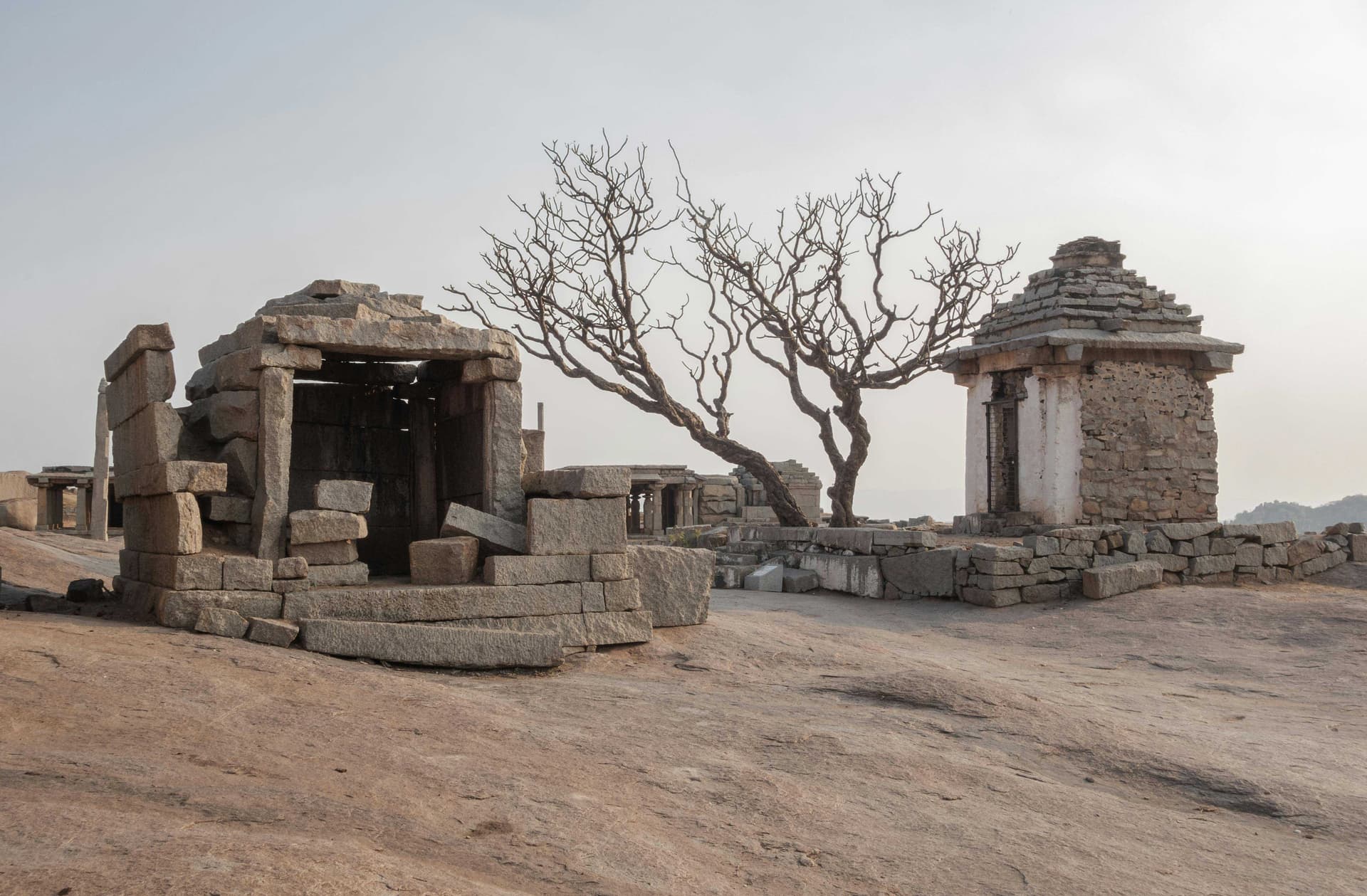
AI-generated impression of Hampi: the most recognisable view of Hampi, seen from where a visitor would actually stand
Paddling the river and exploring the banks
By late afternoon, head down to the water for a Sunset Coracle Ride on Tungabhadra River, from Rs 300 for a 30-minute trip. These round, basket-like boats spin in gentle circles as the boatman paddles through narrow rock gaps near the main bathing steps. Post-monsoon months from October through January are ideal; during peak July rains, the river swells dangerously and boat trips are suspended entirely. For a longer outing on foot, combine your boat trip with a quiet Riverside Ruins Exploration along the northern bank, where massive boulder fields meet forgotten stone gateways. What most visitors get wrong is paying double for an extended coracle ride that stays in the exact same pool of water. A half-hour float is plenty of time to view the rock-cut relief carvings along the waterline before heading back ashore for Relaxation at Hampi Riverside with a hot ginger tea.
Navigating the royal enclosures on foot and bike
Renting a gearless single-speed bicycle near the main street costs roughly Rs 150 a day and remains the smartest way to navigate the ruins. Auto-rickshaws charge Rs 800 or more to ferry you between major sights, but they stick strictly to the paved roads, completely missing the narrow cart tracks that cut through the banana plantations. Pay for your Vittala Temple Exploration, from Rs 250 ticket first, which also covers entry to the other main royal structures on the same calendar day. The famous stone chariot inside Vittala draws thick crowds by 10 AM, so hit it early before pedaling south toward the Queen's Bath Visit, from Rs 20. On your way back, stop into the center of town for a Virupaksha Temple Visit, from Rs 50, where you can watch the morning rituals before the noon heat peaks. Riding between these scattered complexes takes 10 to 15 minutes per stretch along mostly flat dirt paths.
Wandering temple ruins and quiet side trails
If you want to dodge the tour buses that pack the central monuments, head over the low stone saddle behind Sulai Bazaar to Explore Achyutaraya Temple, from Rs 200. Tucked into a valley beneath the cliffs, this complex receives a fraction of the foot traffic despite its massive carved pillars and double enclosure walls. You can easily spend two hours walking the silent stone corridors without bumping into another group. Afterward, take a short trip south for Leisure Time at Kamalapur Lake, a deep reservoir built by the Vijayanagara kings where kingfishers hunt along the banks. Creative travelers often book an Architectural Sketching Session, from Rs 1,200, spending three quiet hours with a local artist mapping out relief carvings. Finish your afternoon with a slow Hampi Bazaar Stroll, grabbing a Rs 40 plate of hot paddu from the street carts instead of overpaying at the westernized tourist cafes.
Keep reading
More blogs
Written for real trips, priced from the city you fly out of.