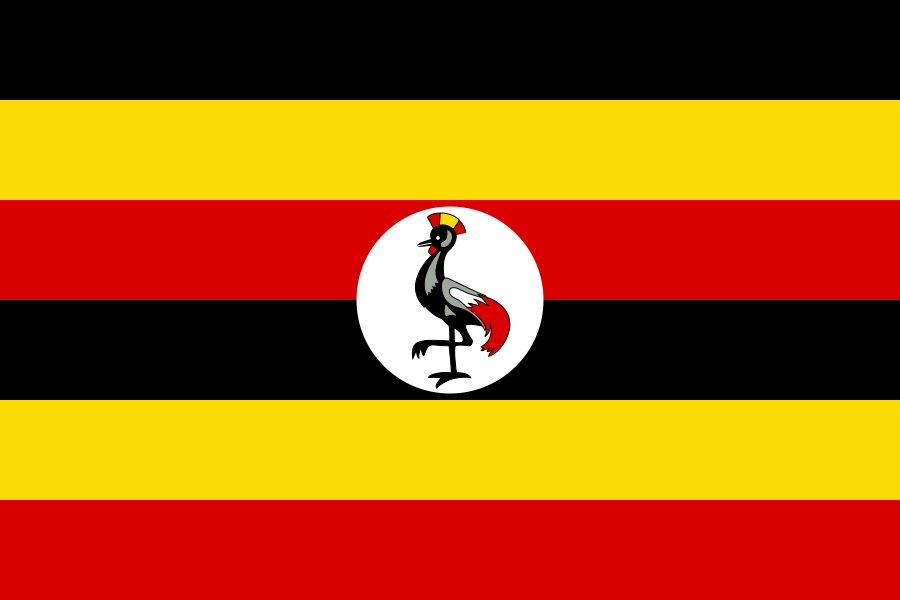
Uganda
· UG

Uganda

Uganda

Uganda: The Pearl of Africa Awaits Uganda, nestled in the heart of East Africa, is a country brimming with life and adventure. More than just a safari destination, Uganda captivates with its lush landscapes, vibrant cul…

#East Africa#Landlocked country#Victoria Lake#Mountainous terrain#Gorilla trekking
1/2

Top hotels & flights

Hand-picked stays and the best fares into Uganda.

Top Hotels in Kampala

Top Flights to Kampala

Popular activities

Tours, tickets and experiences travelers book most in Uganda.

Tours

Visit the Source of the Nile

Visit the historic source of the world's longest river and enjoy a boat ride.

Explore Queen Elizabeth National Park

Embark on a safari to see diverse wildlife, including elephants, lions, and birds.

Visit the Uganda Museum

Learn about Uganda's culture and history at the Uganda Museum.

Bird Watching at Lake Bunyonyi

Observe various bird species at the picturesque Lake Bunyonyi.

Shopping

Shopping at the Craft Markets in Kampala

Discover unique Ugandan crafts and souvenirs at Kampala's bustling craft markets.

Outdoor

Gorilla Trekking in Bwindi Impenetrable National Park

Experience the thrill of trekking through dense forest to see mountain gorillas in their natural habitat.

Hiking the Rwenzori Mountains

Challenge yourself with a hike in the Rwenzori Mountains, known as the 'Mountains of the Moon'.

Jinja Adventures

Engage in thrilling water sports at the source of the Nile in Jinja.

Bungee Jumping in Jinja

Feel the adrenaline rush with a bungee jump over the Nile River.

Mabira Forest Canopy Super Skyway

Explore the Mabira Forest canopy on a skyway adventure.

Location videos

Real reels from travelers, plus longer watches to get the full picture.

From travelers
Watch & explore

Practical info

The essentials for planning your time in Uganda.

Currency
USh | UGX | Ugandan Shilling
Population
Approximately 47.1 million (Uganda).
Languages
English, English, Swahili, Luganda, Ateso, Runyankore
Average weather
Uganda
Jan
sun
27°16°
Feb
sun
28°16°
Mar
rain
27°17°
Apr
rain
26°17°
May
rain
25°17°
Jun
cloud
25°16°
Jul
cloud
25°15°
Aug
cloud
26°15°
Sep
rain
26°16°
Oct
rain
26°16°
Nov
rain
25°16°
Dec
sun
26°16°

Local guide

What travelers love, what to watch for, and a deeper read on Uganda.

What people love

Uganda, located in East Africa, is a diverse and beautiful country with a wide range of attractions for travelers. Some of the pros of traveling to Uganda include:

  1. Stunning Natural Beauty: Uganda is known as the "Pearl of Africa" for its breathtaking landscapes, including lush forests, rolling hills, and the stunning Lake Victoria. Visitors can enjoy activities such as gorilla trekking in Bwindi Impenetrable National Park, exploring the Murchison Falls, and relaxing on the white sand beaches of Lake Victoria.

  2. Rich Wildlife: Uganda is home to a diverse range of wildlife, including the famous mountain gorillas, chimpanzees, elephants, and a variety of bird species. Visitors can go on safaris in national parks like Queen Elizabeth, Kidepo Valley, and Semuliki to see these animals in their natural habitats.

  3. Cultural Experiences: Uganda is a melting pot of different cultures and ethnicities, making it a fascinating destination for those interested in cultural experiences. Visitors can interact with local communities, learn about traditional customs and practices, and even participate in cultural events and festivals.

  4. Adventure Activities: Uganda offers a range of adventure activities for adrenaline junkies, including white-water rafting on the Nile River, hiking the Rwenzori Mountains, and zip-lining through the forest canopy. The country's varied landscapes provide the perfect backdrop for outdoor adventures.

  5. Affordability: Compared to other African safari destinations, Uganda is relatively affordable, making it an attractive option for budget-conscious travelers. Accommodation, food, and transportation are generally affordable, allowing visitors to experience the best of Uganda without breaking the bank.

Overall, traveling to Uganda offers a unique and enriching experience for those looking to explore a lesser-known African destination with a rich cultural heritage and abundant natural beauty.

What to know

Some potential cons of traveling to Uganda include:

  1. Health and safety concerns: While Uganda is generally safe for tourists, there are certain health risks to be aware of, such as malaria and other tropical diseases. It's important to take necessary precautions and seek medical advice before traveling.

  2. Political instability: Uganda has experienced periods of political unrest and protests in the past. Travelers should stay informed about the current political situation and avoid large gatherings or demonstrations.

  3. Poor infrastructure: The roads in Uganda can be poorly maintained, making travel between cities and regions challenging. Public transportation options may also be limited, and access to remote areas can be difficult.

  4. Wildlife risks: Uganda is known for its diverse wildlife, including gorillas and other endangered species. While this is a draw for many tourists, it also poses potential risks, such as encounters with dangerous animals or the spread of diseases.

  5. Cultural differences: Travelers to Uganda may encounter cultural norms and practices that are different from their own. It's important to be respectful of local customs and traditions to avoid unintentionally causing offense.

It's important to note that these are general cons and may not apply to every traveler's experience in Uganda. It's always a good idea to research and plan ahead to ensure a safe and enjoyable trip.

Uganda, officially known as the Republic of Uganda, is a landlocked country in East Africa. Its complex history is marked by ancient kingdoms, colonial rule, and post-independence challenges. Here is a detailed account of the history of Uganda:

Pre-Colonial Era

  • Bantu Migration: Between the 1st and 4th centuries AD, Bantu-speaking people migrated to the area, bringing iron-smelting technology and agriculture.
  • Nilotic and Nilo-Hamitic Groups: The region also saw the arrival of Nilotic and Nilo-Hamitic ethnic groups from the north, such as the Luo and Karamojong.
  • Kingdoms: Several powerful kingdoms emerged, including Buganda, Bunyoro, Ankole, and Toro. The Buganda Kingdom, located near the shores of Lake Victoria, became particularly influential.

Colonial Period

  • British Protectorate: In 1894, Uganda became a British protectorate. The British used a system of indirect rule, working through local chiefs, particularly the Kabaka (king) of Buganda.
  • Construction of the Uganda Railway: This railway, completed in the early 20th century, connected the interior to the Kenyan coast, facilitating trade and colonization.
  • Economic Changes: The colonial period saw the introduction of cash crops like cotton and coffee, which became the backbone of the economy.

Independence and Early Post-Independence

  • Independence (1962): Uganda gained independence from Britain on October 9, 1962. The first Prime Minister was Milton Obote, and the country was a constitutional monarchy with the Kabaka of Buganda, Mutesa II, as the ceremonial president.
  • Milton Obote's Rule: Obote abolished kingdoms and centralized power. In 1966, he declared Uganda a republic and became the executive president.

Idi Amin Era

  • Coup of 1971: Idi Amin seized power in a military coup, overthrowing Milton Obote. Amin's rule was marked by human rights abuses, economic mismanagement, and expulsion of the Asian community.
  • Economic Decline and Violence: The economy suffered severely under Amin's regime, and tens of thousands were killed in state-sponsored violence.

Post-Amin Period

  • Tanzanian-Ugandan War (1978-1979): Amin's regime ended after Tanzanian forces, alongside Ugandan exiles, invaded Uganda and captured Kampala in April 1979.
  • Return of Milton Obote (1980-1985): Obote returned to power after disputed elections but faced significant opposition and conflict, including a civil war known as the Bush War.

National Resistance Movement (NRM) and Yoweri Museveni

  • Yoweri Museveni's Rise (1986): After a protracted guerrilla war, Museveni and his National Resistance Army (NRA) seized power in January 1986.
  • Stability and Development: Museveni's government brought relative stability, economic reforms, and growth. However, his long tenure has been criticized for authoritarian practices and human rights issues.

Recent Developments

  • Political Tensions: Uganda has faced political tensions and opposition to Museveni's extended rule, including significant protests and opposition activity.
  • Economic Growth: The country has seen economic growth driven by sectors like agriculture, oil, and services, though challenges like poverty and corruption persist.

Important Landmarks

  • Kasubi Tombs: A UNESCO World Heritage site, these are the burial grounds of Buganda kings.
  • Rwenzori Mountains National Park: Known for its stunning landscapes and biodiversity, it is also a UNESCO World Heritage site.
  • Bwindi Impenetrable National Park: Famous for its population of mountain gorillas, it's a critical conservation area.
  • Lake Victoria: The largest lake in Africa, shared with Kenya and Tanzania, it is a vital resource for fishing and transport.
  • Kibale National Park: Renowned for its primate population, particularly chimpanzees.

Historical Figures

  • Milton Obote: First Prime Minister and later President, known for his role in post-independence politics.
  • Idi Amin: Notorious for his brutal regime and the economic decline during his rule.
  • Yoweri Museveni: Long-serving president credited with economic reforms but criticized for his extended tenure and governance issues.

Uganda's history reflects a journey from rich ancient traditions through colonial rule and turbulent post-independence times to contemporary challenges and achievements.