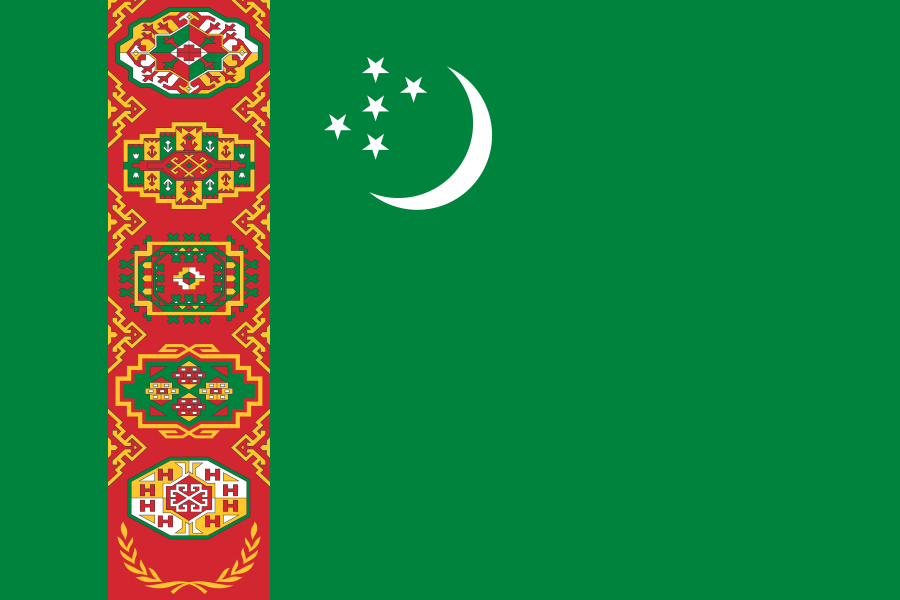
Turkmenistan
· TM

Turkmenistan

Turkmenistan

Turkmenistan: Journey to the Land of Eternal Blue Skies Step off the beaten path and into the heart of Central Asia, where ancient Silk Road cities rise from the desert sands and fiery traditions burn bright. This is Tur…

#Central Asia#Desert landscapes#Turkic culture#Historic Silk Road#Gas-rich country
1/6

Top hotels & flights

Hand-picked stays and the best fares into Turkmenistan.

Top Hotels in Ashgabat

Top Flights to Ashgabat

Location videos

Real reels from travelers, plus longer watches to get the full picture.

From travelers
Watch & explore

Practical info

The essentials for planning your time in Turkmenistan.

Currency
m | TMT | Turkmenistani manat
Population
The approximate estimated total population of Turkmenistan is '6.3 million'.
Languages
Turkmen, Russian, Uzbek
Average weather
Turkmenistan
Jan
cold
7°-3°
Feb
cold
9°-1°
Mar
clear
15°3°
Apr
sun
22°9°
May
sun
28°14°
Jun
hot
35°20°
Jul
hot
38°23°
Aug
hot
37°22°
Sep
sun
32°16°
Oct
clear
23°9°
Nov
clear
15°4°
Dec
cold
9°-1°

Local guide

What travelers love, what to watch for, and a deeper read on Turkmenistan.

What people love

Turkmenistan is a country with a rich cultural heritage and stunning natural landscapes. Here are some of the pros of traveling to Turkmenistan:

  1. Ancient Silk Road Sites: Turkmenistan was a key stop on the historic Silk Road trade route, and today visitors can explore well-preserved ancient cities like Merv and Konye-Urgench, which are UNESCO World Heritage Sites.

  2. Unique Architecture: Turkmenistan is known for its distinctive architecture, including the famous white-marble buildings in the capital city of Ashgabat and the striking Darvaza Gas Crater, also known as the "Door to Hell."

  3. Natural Beauty: The country is home to diverse landscapes, from the sandy deserts of the Karakum to the lush mountains of Kopet Dag. Travelers can enjoy outdoor activities like trekking, camping, and exploring the diverse flora and fauna.

  4. Warm Hospitality: Turkmen people are known for their hospitality and welcoming nature towards visitors. Travelers can experience traditional Turkmen culture, taste local cuisine, and participate in cultural events and festivals.

  5. Safety: Turkmenistan is considered a safe country for travelers, with low crime rates and a stable political environment. Visitors can explore the country with peace of mind.

  6. Unique Cultural Experiences: Travelers to Turkmenistan can witness traditional Turkmen crafts like carpet weaving, enjoy performances of traditional music and dance, and learn about the country's rich history and heritage.

Overall, Turkmenistan offers a unique travel experience for those interested in history, culture, and adventure.

What to know

Traveling to Turkmenistan can have some challenges and drawbacks, including:

  1. Restricted freedoms: Turkmenistan is known for its strict government control and limited political freedoms. Travelers may experience constraints on freedom of speech, assembly, and expression while in the country.

  2. Limited access to information: The government heavily censors media and restricts access to the internet in Turkmenistan. This can make it difficult for travelers to stay informed and communicate with the outside world.

  3. Lack of infrastructure: Turkmenistan is a developing country with limited infrastructure in some areas. This can lead to challenges in transportation, accommodation, and other basic services for travelers.

  4. Language barrier: The official language of Turkmenistan is Turkmen, and while Russian is also widely spoken, English proficiency is limited. Travelers may face difficulties in communicating with locals and navigating the country.

  5. Bureaucratic procedures: Turkmenistan has strict visa requirements and registration procedures for foreign visitors. Travelers may encounter bureaucratic hurdles and delays when entering or traveling within the country.

  6. Limited tourist attractions: Turkmenistan is not a popular tourist destination compared to other countries in the region. While it has some unique cultural sites and natural landscapes, the country may not offer as many tourist attractions or amenities as other destinations.

Please note that conditions in Turkmenistan may change, and it's advisable to check for updated travel advisories and regulations before planning a trip to the country.

Turkmenistan, located in Central Asia, has a rich and diverse history influenced by various cultures and empires. Below is a detailed historical overview, including significant events, historical figures, and important landmarks.

Ancient History

  • Early Settlements: The area now known as Turkmenistan has been inhabited since prehistoric times. The region was part of the Bronze Age Oxus civilization, with notable archaeological sites like Gonur Tepe.
  • Achaemenid Empire: In the 6th century BCE, the area became part of the Achaemenid Empire under Cyrus the Great.
  • Alexander the Great: In the 4th century BCE, Alexander the Great conquered the region as he expanded his empire.

Medieval Period

  • Parthian Empire: The Parthians, an Iranian people, established their capital at Nisa, near modern-day Ashgabat, around the 3rd century BCE.
  • Sassanian Empire: The Sassanian Empire took control in the 3rd century CE, continuing Persian influence in the region.
  • Islamic Conquest: The 7th and 8th centuries saw the Islamic conquest, introducing Islam and integrating the region into the Islamic Caliphates.

Turkmen Tribes and the Silk Road

  • Turkmen Tribes: By the 11th century, Turkmen tribes began migrating into the area, establishing a distinct cultural and ethnic identity.
  • Seljuk Empire: The Seljuk Turks, originating from the Turkmen tribes, established a vast empire in the 11th century, with important cultural contributions, including architecture and art.
  • Timurid Empire: In the 14th century, Turkmenistan came under the control of Tamerlane (Timur), whose empire spanned much of Central Asia.

Russian Empire and Soviet Era

  • Russian Conquest: In the late 19th century, the Russian Empire expanded into Central Asia, and by 1885, Turkmenistan was fully incorporated into the empire.
  • Soviet Rule: After the Russian Revolution in 1917, Turkmenistan became part of the Soviet Union as the Turkmen Soviet Socialist Republic in 1924.
  • Modernization: During Soviet rule, Turkmenistan underwent significant industrialization and modernization while also experiencing political repression.

Independence and Modern History

  • Independence: Turkmenistan declared independence from the Soviet Union on October 27, 1991.
  • Saparmurat Niyazov (Turkmenbashi): Niyazov became the first president, ruling until his death in 2006. His leadership was marked by a personality cult and authoritarian governance.
  • Gurbanguly Berdimuhamedow: Following Niyazov, Berdimuhamedow became president, continuing the authoritarian style but with some economic reforms.

Important Landmarks

  • Ashgabat: The capital city, known for its white marble buildings and monuments, including the Neutrality Monument and Independence Monument.
  • Kunya-Urgench: A UNESCO World Heritage Site with remnants of the ancient Khorezm capital.
  • Merv: Another UNESCO World Heritage Site, it was once one of the great cities on the Silk Road and a center of Islamic learning.
  • Darvaza Gas Crater: Known as the "Door to Hell," this burning natural gas field is a unique geological feature and tourist attraction.

Culture and Society

  • Turkmenistan is known for its rich cultural heritage, including traditional crafts like carpet weaving, which is a symbol of national identity.
  • The country is predominantly Muslim, and its culture reflects a blend of nomadic traditions and Islamic influences.

Turkmenistan remains a country with a distinct identity, shaped by its strategic position on the Silk Road and its complex history of tribal, imperial, and Soviet influences.