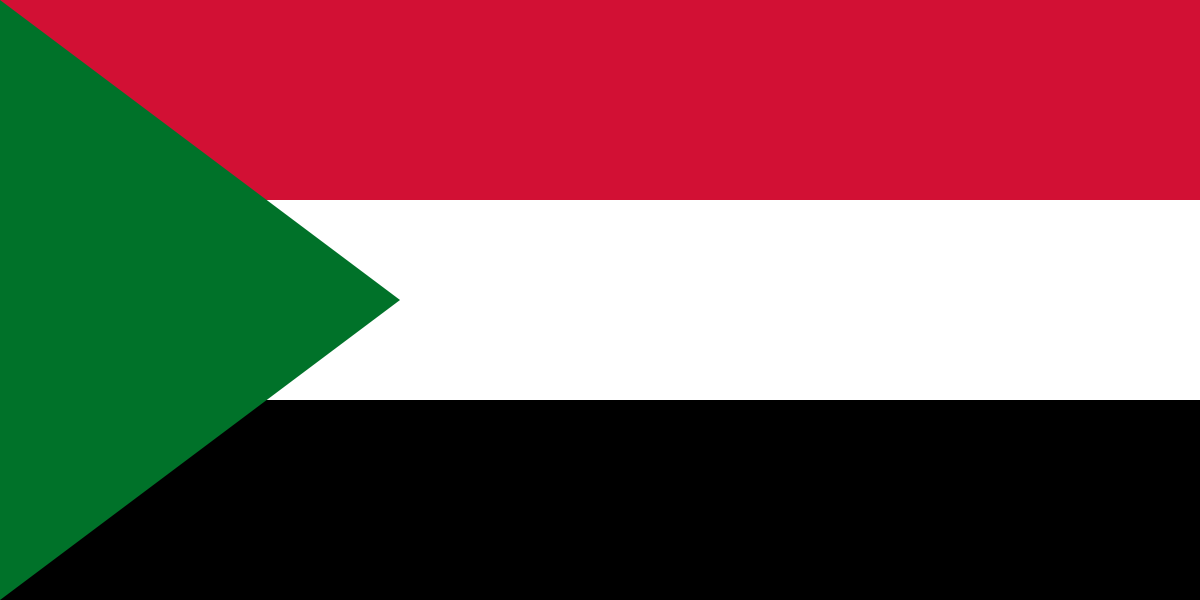
Sudan
· SD

Sudan

Sudan

Sudan, officially the Republic of the Sudan, is a country in Northeast Africa. It is bordered by Egypt to the north, Libya to the northwest, Chad to the west, the Central African Republic to the southwest, South Sudan to…

#Africa#North Africa#Arabic speaking#Conflict#Nile River
1/7

Top hotels & flights

Hand-picked stays and the best fares into Sudan.

Top Hotels in Khartoum

Top Flights to Khartoum

Popular activities

Tours, tickets and experiences travelers book most in Sudan.

Tours

Pyramids of Meroë

Explore the ancient pyramids of the Meroitic Kingdom in Sudan.

Shopping

Omdurman Souq

A bustling traditional market offering a variety of goods and crafts.

Outdoor

Nile River Cruise

Experience the beauty of the Nile River with a scenic cruise.

Location videos

Real reels from travelers, plus longer watches to get the full picture.

From travelers
Watch & explore

Practical info

The essentials for planning your time in Sudan.

Currency
SDG | Sudanese Pound | Sudanese Pound
Population
45.7 million
Languages
Arabic, Arabic, English
Average weather
Sudan
Jan
clear
30°15°
Feb
clear
32°17°
Mar
hot
35°20°
Apr
hot
38°23°
May
hot
41°26°
Jun
hot
40°27°
Jul
hot
38°26°
Aug
hot
37°25°
Sep
hot
38°25°
Oct
hot
38°24°
Nov
clear
35°20°
Dec
clear
31°16°

Local guide

What travelers love, what to watch for, and a deeper read on Sudan.

What people love

Sudan, located in Northeast Africa, offers a unique travel experience with a rich cultural heritage and diverse landscapes. Here are some pros of traveling to Sudan:

  1. Ancient History: Sudan is home to ancient civilizations such as the Kingdom of Kush and the Meroitic Empire. Visitors can explore archaeological sites like the pyramids of Meroe, ancient temples, and royal burial grounds.

  2. Nubian Culture: The Nubian people in Sudan have a vibrant culture with colorful traditions, music, and dances. Travelers can immerse themselves in Nubian hospitality and learn about their customs and way of life.

  3. Natural Beauty: Sudan boasts stunning natural landscapes, including the Red Sea coast with pristine beaches and coral reefs for diving and snorkeling. The country also has vast deserts, lush oases, and the majestic Nile River, offering diverse scenery for outdoor enthusiasts.

  4. Hospitality: Sudanese people are known for their warmth and hospitality towards visitors. Travelers can enjoy authentic Sudanese cuisine, traditional coffee ceremonies, and interactions with friendly locals.

  5. Off the Beaten Path: Sudan is still relatively undiscovered by mass tourism, making it a great destination for travelers seeking authentic experiences off the beaten path. Visitors can explore remote areas, interact with local communities, and enjoy a more authentic travel experience.

While Sudan offers many unique attractions and experiences for travelers, it's important to note that the country may have certain challenges such as political instability in some regions. It's recommended to check travel advisories and take necessary precautions when planning a trip to Sudan.

What to know

Some potential cons of traveling to Sudan include:

  1. Safety concerns: Sudan has experienced political instability and conflict in certain regions, which can pose safety risks to travelers. It is important to stay informed about the current situation and follow any travel advisories issued by your government.

  2. Health risks: Sudan is known to have a high prevalence of diseases such as malaria, yellow fever, and cholera. Travelers should take necessary precautions, such as getting appropriate vaccinations and taking preventive measures against mosquito bites.

  3. Limited infrastructure: Some parts of Sudan may have limited infrastructure, including poor road conditions and limited access to healthcare facilities. This can make travel more challenging and may affect your overall experience.

  4. Language barrier: The official language in Sudan is Arabic, and while English is also spoken to some extent, communication may still be a challenge in certain areas, especially outside of major cities.

  5. Cultural considerations: Sudan is a conservative country with strict social norms and customs. Travelers should be respectful of local traditions, dress modestly, and be mindful of cultural sensitivities to avoid unintentionally causing offense.

It's always recommended to thoroughly research and plan your trip to Sudan, taking into consideration these and other factors that may impact your travel experience.

Sudan, officially the Republic of the Sudan, has a rich and complex history that spans thousands of years, marked by its position as a crossroads between Africa and the Arab world. Here is an overview of Sudan's history, significant events, historical figures, and important landmarks:

Ancient History

  • Kingdom of Kerma (c. 2500 – 1500 BCE): Sudan's earliest known civilization, the Kingdom of Kerma, was one of the first urban centers in Africa. It is known for its impressive architecture and trade relations with Ancient Egypt.

  • Nubian Kingdoms (c. 1500 BCE – 350 CE): Following Kerma, the region was home to several Nubian kingdoms, including the Kingdom of Kush, which at times controlled Egypt as the 25th Dynasty. The Nubians were known for their pyramids, which can be seen at sites like Meroë.

Medieval Period

  • Christian Kingdoms (6th – 15th century): After the decline of the Kushite kingdoms, Christian kingdoms such as Nobatia, Makuria, and Alodia emerged in Sudan. These kingdoms left behind significant archaeological sites, including churches and fortresses.

Islamic Influence

  • Islamic Kingdoms (15th – 19th century): The spread of Islam in Sudan led to the rise of Islamic kingdoms like the Funj Sultanate in central Sudan and the Sultanate of Darfur in the west. The Funj capital, Sennar, was an important cultural and trade center.

Colonial Period

  • Turco-Egyptian Rule (1821 – 1885): Sudan was invaded by Muhammad Ali Pasha of Egypt in 1821, marking the beginning of Turco-Egyptian rule. This period saw significant economic exploitation and the introduction of modern administrative systems.

  • The Mahdist Revolt (1881 – 1898): Led by Muhammad Ahmad al-Mahdi, the Mahdist Revolt was a nationalist uprising against Turco-Egyptian rule. The Mahdists established a theocratic state with its capital at Omdurman.

20th Century

  • Anglo-Egyptian Condominium (1899 – 1956): Following the defeat of the Mahdists, Sudan came under joint British-Egyptian rule. This period saw the development of infrastructure and the introduction of Western education, but also significant resistance against foreign domination.

  • Independence (1956): Sudan gained independence on January 1, 1956. The early years of independence were marked by political instability and a series of military coups.

  • Civil Wars: Sudan experienced two prolonged civil wars between the north and the south (1955-1972 and 1983-2005), largely due to religious, ethnic, and economic differences. The Comprehensive Peace Agreement in 2005 ended the second civil war.

  • Darfur Conflict (2003 – Present): Conflict in the Darfur region has led to a humanitarian crisis and allegations of genocide. Efforts to stabilize the region continue.

21st Century

  • Separation of South Sudan (2011): Following a referendum, South Sudan seceded from Sudan on July 9, 2011, becoming the world's newest country.

  • Recent Political Changes: In 2019, after months of protests, President Omar al-Bashir was ousted in a coup, ending his 30-year rule. Sudan has since been undergoing a transition towards democratic governance.

Significant Historical Figures

  • Muhammad Ahmad al-Mahdi: Leader of the Mahdist Revolt against British and Egyptian rule.
  • Ismail al-Azhari: A prominent figure in Sudan's independence movement and the country's first Prime Minister.
  • Omar al-Bashir: Former president who ruled from 1989 to 2019.

Important Landmarks

  • Meroë Pyramids: Ancient pyramids of the Kingdom of Kush, located near the Nile River.
  • Jebel Barkal: A UNESCO World Heritage site, known for its ancient Egyptian and Nubian temples.
  • Sanganeb National Park: A marine national park in the Red Sea, known for its coral reefs and diverse marine life.

Sudan's history is characterized by its diverse cultures, significant contributions to ancient civilizations, and ongoing challenges in modern times.