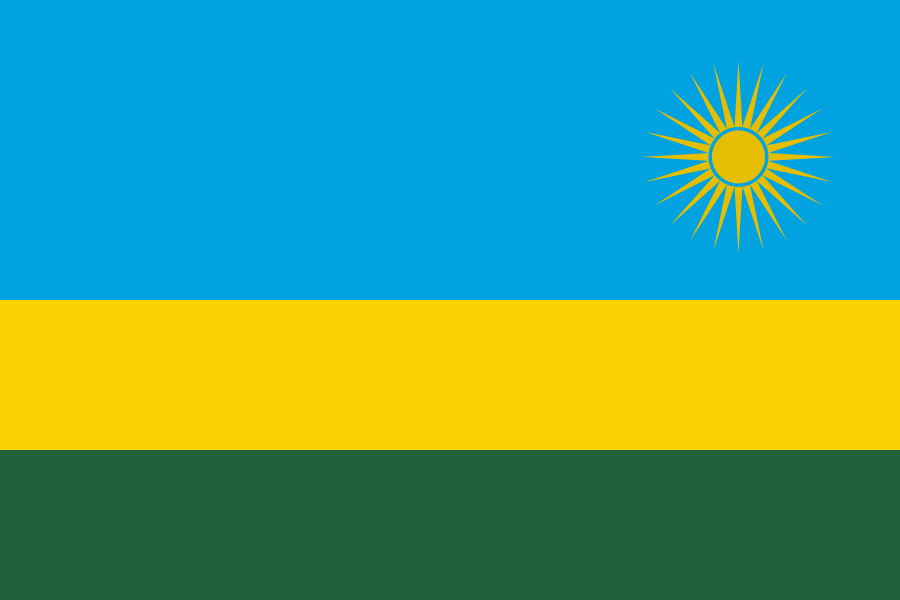
Rwanda
· RW

Rwanda

Rwanda

Discover Rwanda: The Land of a Thousand Hills and a Million Experiences Rwanda, the "Land of a Thousand Hills," is a landlocked East African nation brimming with verdant landscapes, vibrant culture, and a captivating his…

#East Africa#Land of a Thousand Hills#Kigali#Genocide Memorial#Volcanoes National Park
1/3

Top hotels & flights

Hand-picked stays and the best fares into Rwanda.

Top Hotels in Kigali

Top Flights to Kigali

Popular activities

Tours, tickets and experiences travelers book most in Rwanda.

Tours

Kigali Genocide Memorial

The Kigali Genocide Memorial is a place of remembrance for victims of the Rwandan Genocide of 1994. It offers a poignant insight into Rwanda's history.

Nyungwe Forest National Park

Nyungwe Forest is a vast area of mountain rainforest and home to many species, including chimpanzees.

Inema Arts Center

An art center in Kigali showcasing the work of contemporary Rwandan artists.

Rwanda Art Museum

Located in the former presidential palace, this museum showcases contemporary art from Rwanda.

Amahoro Stadium

The national stadium of Rwanda, hosting various sports and cultural events.

Shopping

Kimironko Market

Kimironko Market is one of the largest and busiest markets in Kigali, offering a variety of local products.

Caplaki Craft Village

A village where local artisans sell handmade crafts and souvenirs, showcasing Rwanda's rich cultural heritage.

Outdoor

Volcanoes National Park

Home to the famous mountain gorillas, Volcanoes National Park offers an adventurous trek through the Rwandan jungle.

Lake Kivu

Lake Kivu is one of the African Great Lakes, providing stunning scenery and opportunities for relaxation and adventure.

Akagera National Park

Akagera National Park is known for its diverse wildlife and stunning savannah landscapes, setting the stage for a memorable safari experience.

Location videos

Real reels from travelers, plus longer watches to get the full picture.

From travelers
Watch & explore

Practical info

The essentials for planning your time in Rwanda.

Currency
RF | RWF | Rwandan Franc
Population
13.1 million
Languages
Kinyarwanda, English, French, Swahili
Average weather
Rwanda
Jan
rain
26°16°
Feb
rain
26°16°
Mar
rain
25°16°
Apr
rain
24°16°
May
rain
24°15°
Jun
clear
26°14°
Jul
clear
26°14°
Aug
clear
27°15°
Sep
rain
27°16°
Oct
rain
26°16°
Nov
rain
25°16°
Dec
rain
25°16°

Local guide

What travelers love, what to watch for, and a deeper read on Rwanda.

What people love

Rwanda, located in East Africa, offers a unique travel experience with several pros for visitors. Here are some of the advantages of traveling to Rwanda:

  1. Stunning Landscapes: Rwanda is known as the "Land of a Thousand Hills" due to its beautiful rolling hills, lush landscapes, and stunning scenery. Travelers can enjoy breathtaking views and opportunities for outdoor activities such as hiking and trekking.

  2. Wildlife Encounters: Rwanda is famous for its mountain gorilla trekking in Volcanoes National Park. This once-in-a-lifetime experience allows visitors to get up close and personal with endangered mountain gorillas in their natural habitat.

  3. Cultural Experiences: Rwanda has a rich cultural heritage with diverse traditions, art, music, and dance. Visitors can immerse themselves in the local culture by visiting traditional villages, attending cultural events, and interacting with the friendly Rwandan people.

  4. Safe and Stable: Rwanda is known for its safety and political stability, making it a relatively secure destination for travelers. The country has made significant progress in terms of security and infrastructure in recent years, ensuring a peaceful environment for visitors.

  5. Gorilla Conservation: By participating in gorilla trekking tours, travelers contribute directly to the conservation efforts aimed at protecting the endangered mountain gorillas. This sustainable tourism approach helps support the local communities and preserve the natural habitat of these magnificent creatures.

  6. Warm Hospitality: Rwandans are known for their warm hospitality and friendliness towards visitors. Travelers often feel welcomed and appreciated in Rwanda, creating a positive and memorable travel experience.

Overall, traveling to Rwanda offers a unique blend of nature, culture, wildlife, and hospitality, making it a compelling destination for adventure seekers and nature enthusiasts.

Enjoy your trip to Rwanda!

What to know

There are a few potential cons of traveling to Rwanda that you may want to consider:

  1. Health and Safety Concerns: While Rwanda is generally considered safe for travelers, as with any destination, there are health and safety risks to be aware of. Malaria is a concern in some parts of the country, and it is important to take necessary precautions. There is also a risk of other diseases such as dengue fever and yellow fever.

  2. Limited Infrastructure: Rwanda's infrastructure, especially outside major cities like Kigali, may not be as developed as in other countries. This can lead to challenges in terms of transportation, accommodation, and access to basic services.

  3. Language Barrier: While English is widely spoken in Rwanda, the official languages are Kinyarwanda, French, and English. In more rural areas, you may encounter language barriers that could make communication difficult.

  4. Cultural Sensitivities: Rwanda has a rich cultural heritage, and it is important for travelers to respect local customs and traditions. Failing to do so could lead to misunderstandings or offend locals.

  5. Limited Tourist Infrastructure: While Rwanda has made significant strides in developing its tourism industry, it may not have the same level of tourist infrastructure as more popular destinations. This could mean fewer accommodation options, fewer guided tours, or limited facilities in some areas.

It's worth noting that Rwanda is a beautiful country with a lot to offer visitors, including stunning landscapes, vibrant wildlife, and a rich cultural heritage. However, like any travel destination, it's important to be aware of potential challenges and plan accordingly.

Rwanda, officially the Republic of Rwanda, is a landlocked country situated in Central and East Africa. Known for its breathtaking landscapes and vibrant culture, Rwanda has a rich history marked by significant events and transformations.

Pre-Colonial Era

Rwanda's history dates back centuries, with archaeological evidence suggesting that humans have inhabited the region for thousands of years. The early inhabitants were the Twa, a Pygmy people who are considered the indigenous population. Later, the Hutu people, an agriculturalist group, settled in the area, followed by the Tutsi, who were pastoralists. Over time, a complex social structure developed with a monarchy that was established by the Tutsi.

Colonial Period

In the late 19th century, Rwanda became part of German East Africa. However, after Germany's defeat in World War I, the League of Nations mandated Rwanda to Belgium in 1916. Belgian colonial rule significantly altered Rwanda's social dynamics, reinforcing ethnic divisions between the Hutu and Tutsi through identity cards and preferential policies.

Independence and Early Post-Colonial Period

Rwanda gained independence from Belgium on July 1, 1962. The initial post-independence period was marked by ethnic tension, and in 1959, a Hutu-led revolution led to the overthrow of the Tutsi monarchy. Grégoire Kayibanda, a Hutu, became the first President of Rwanda. His regime focused on promoting Hutu interests and was eventually overthrown in 1973 by Juvenal Habyarimana, who seized power through a coup.

The Rwandan Genocide

The most tragic chapter in Rwanda's history occurred in 1994, when the assassination of President Habyarimana triggered the Rwandan Genocide. Over a period of about 100 days, an estimated 800,000 Tutsi and moderate Hutu were killed. The genocide ended when the Rwandan Patriotic Front (RPF), led by Paul Kagame, took control of the country.

Post-Genocide Period and Rebuilding

After the genocide, Rwanda embarked on a path of recovery and reconciliation. Paul Kagame became the de facto leader and later the President. His government focused on unity, economic growth, and development. Rwanda has since become known for its rapid development, technological adoption, and efforts to foster national unity.

Significant Historical Figures

  • King Yuhi V Musinga: Last king under colonial rule, deposed in 1931.
  • Grégoire Kayibanda: First President of Rwanda after independence.
  • Juvenal Habyarimana: President from 1973 until his assassination in 1994.
  • Paul Kagame: Current President, credited with leading Rwanda's recovery post-genocide.

Important Landmarks

  • Kigali Genocide Memorial: A site that commemorates the victims of the Rwandan Genocide.
  • Volcanoes National Park: Known for its mountain gorillas, this park is a major tourist attraction.
  • Nyungwe Forest National Park: One of Africa's oldest rainforests, rich in biodiversity.
  • Lake Kivu: One of the African Great Lakes, bordering the Democratic Republic of the Congo.

Recent Developments

Rwanda has made significant strides in economic growth and technological advancement. It is known for its clean and organized capital, Kigali, and its efforts to promote gender equality. The country continues to be a model of post-conflict recovery and development in Africa.

Rwanda's journey from a tragic past to a promising future is a testament to its resilience and commitment to progress and reconciliation.