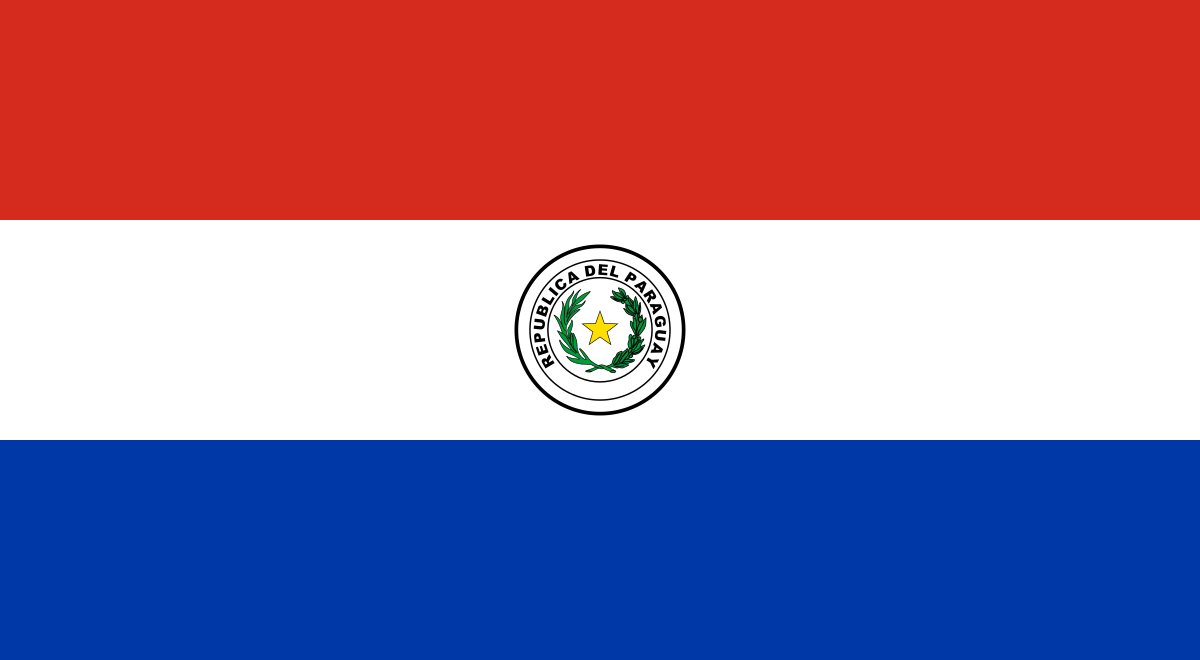
· PY

Paraguay

Paraguay

Unlock the Heart of South America: Adventure Awaits in Paraguay! Nestled in the heart of South America, Paraguay offers an authentic and often overlooked travel experience. A land of vibrant culture, dramatic history, an…

#South America#Landlocked country#Guarani culture#Asuncion#Iguazu Falls

Top hotels & flights

Hand-picked stays and the best fares into Paraguay.

Top Hotels in Asuncion

Top Flights to Asuncion

Popular activities

Tours, tickets and experiences travelers book most in Paraguay.

Tours

Explore the Iguazu Falls

Visit one of the most spectacular waterfalls in the world, located at the border of Paraguay, Brazil, and Argentina.

Discover Asuncion's Historical Center

Wander through the vibrant historical center of Paraguay's capital city, Asuncion.

Shopping

Shopping at Paseo La Galería

Visit one of the largest shopping centers in Asuncion for a premium shopping experience.

Outdoor

Eco-Adventure in Ybycuí National Park

Experience the natural beauty of Ybycuí National Park, known for its lush landscapes and waterfalls.

Location videos

Real reels from travelers, plus longer watches to get the full picture.

From travelers
Watch & explore

Practical info

The essentials for planning your time in Paraguay.

Currency
₲ | PYG | Paraguayan Guarani
Population
7.2 million
Languages
Spanish, Spanish, Guarani
Average weather
Paraguay
Jan
hot
33°23°
Feb
hot
32°23°
Mar
hot
31°22°
Apr
sun
28°19°
May
clear
25°16°
Jun
clear
23°13°
Jul
clear
23°13°
Aug
sun
26°14°
Sep
sun
28°17°
Oct
sun
30°19°
Nov
hot
32°21°
Dec
hot
33°23°

Local guide

What travelers love, what to watch for, and a deeper read on Paraguay.

What people love

Paraguay is a beautiful country located in the heart of South America with a unique culture and rich history. Here are some of the pros of traveling to Paraguay:

  1. Rich cultural heritage: Paraguay has a diverse cultural heritage influenced by its indigenous Guarani roots and Spanish colonial past. Visitors can experience traditional music, dance, crafts, and cuisine that reflect this cultural richness.

  2. Natural beauty: Paraguay is known for its stunning natural landscapes, including the lush forests of the Chaco region, the impressive Iguazu Falls, and the serene Paraguay River. Nature lovers will appreciate the country's biodiversity and opportunities for outdoor activities such as hiking, bird watching, and wildlife spotting.

  3. Affordable travel destination: Paraguay offers relatively affordable travel options compared to other South American countries, making it an attractive destination for budget-conscious travelers. Accommodation, food, and transportation are generally more affordable in Paraguay.

  4. Friendly locals: Paraguayans are known for their warm hospitality and friendliness towards visitors. Travelers can expect to be welcomed with open arms and have the opportunity to interact with locals to learn more about the country's culture and way of life.

  5. Authentic experiences: Paraguay is less touristy than some of its neighboring countries, which means that travelers can enjoy more authentic and off-the-beaten-path experiences. Whether exploring historic colonial towns, attending traditional festivals, or visiting indigenous communities, visitors can immerse themselves in the local culture and way of life.

Overall, traveling to Paraguay can be a rewarding experience for those looking to discover a lesser-known destination with a rich cultural heritage and natural beauty.

What to know

Some potential cons of traveling to Paraguay include:

  1. Safety concerns: Paraguay has some areas with higher crime rates, particularly in urban areas such as Asunción and Ciudad del Este. Travelers should take precautions to ensure their safety, such as avoiding walking alone at night and being cautious of their surroundings.

  2. Limited infrastructure: Paraguay's infrastructure may not be as developed as in other countries, which can lead to challenges in terms of transportation, accommodations, and access to amenities.

  3. Language barrier: While Spanish is the official language of Paraguay, not all residents may speak English fluently. This could pose a communication challenge for travelers who do not speak Spanish.

  4. Health risks: Travelers should be aware of potential health risks in Paraguay, such as mosquito-borne illnesses like dengue fever and Zika virus. It is recommended to take necessary precautions, such as using insect repellent and seeking medical advice before traveling.

  5. Limited tourist attractions: Paraguay may not have as many well-known tourist attractions compared to other countries in South America. Travelers looking for a more traditional tourist experience may find the options in Paraguay to be limited.

Overall, while Paraguay has much to offer in terms of culture, history, and natural beauty, travelers should be aware of these potential drawbacks to ensure a safe and enjoyable trip.

Paraguay, officially the Republic of Paraguay, is a landlocked country in the heart of South America, bordered by Argentina, Brazil, and Bolivia. Its history is rich and complex, marked by periods of colonization, independence, conflict, and development.

Pre-Colonial and Colonial Era

  • Pre-Columbian Period: The region that is now Paraguay was inhabited by various indigenous tribes, predominantly the Guaraní people. They developed a rich culture with complex social and religious structures.
  • 1524: Spanish explorers first entered the region. Juan de Salazar y Espinosa founded Asunción on August 15, 1537, which became one of the first cities in the Río de la Plata basin.
  • Jesuit Missions: In the 17th and 18th centuries, Jesuit missionaries established settlements known as "reductions" to convert and protect the indigenous population. These missions became economically successful and culturally influential until their expulsion in 1767.

Independence and Nation-Building

  • 1811: Paraguay declared independence from Spain on May 14-15, 1811. José Gaspar Rodríguez de Francia, a key figure in Paraguay's early history, became the country's first consul and later the supreme dictator.
  • 1814-1840: Rodríguez de Francia ruled with an iron fist, implementing isolationist policies that kept Paraguay economically and politically independent from its neighbors.

19th Century Conflicts

  • Carlos Antonio López and Francisco Solano López: After Francia, Carlos Antonio López assumed power, modernizing the country and opening it to foreign influence. His son, Francisco Solano López, succeeded him in 1862.
  • War of the Triple Alliance (1864-1870): Paraguay fought against Argentina, Brazil, and Uruguay in one of the bloodiest conflicts in Latin American history. The war resulted in massive loss of life and territory for Paraguay, and it economically devastated the nation.

Early 20th Century and the Chaco War

  • Post-War Recovery: Paraguay struggled to recover from the War of the Triple Alliance, facing political instability and economic challenges.
  • Chaco War (1932-1935): Fought against Bolivia over control of the Gran Chaco region, the war ended with Paraguay gaining most of the disputed territory.
  • 1936 Revolution: A military coup led to the rise of Colonel Rafael Franco, who attempted social reforms but was ousted in 1937.

Stronato Era and Stroessner Regime

  • 1947 Civil War: A brief but bloody civil war led to a long period of political turmoil.
  • 1954-1989: Alfredo Stroessner's dictatorship marked Paraguay's longest period of political stability. His regime was characterized by authoritarian rule, human rights abuses, and economic growth.

Transition to Democracy

  • 1989: Stroessner was overthrown in a military coup led by General Andrés Rodríguez. This marked the beginning of Paraguay’s transition to democracy.
  • 1992 Constitution: A new democratic constitution was adopted, establishing a more open political system.

Modern Era

  • 21st Century: Paraguay has experienced political instability with frequent changes in leadership, but has also seen economic growth, largely driven by agriculture and hydroelectric power.
  • Notable Figures: Recent presidents such as Fernando Lugo and Mario Abdo Benítez have played significant roles in contemporary Paraguayan politics.

Important Landmarks and Cultural Heritage

  • Asunción: The capital city, home to historic sites like the Palacio de los López and the National Pantheon of the Heroes.
  • Jesuit Missions of La Santísima Trinidad de Paraná and Jesús de Tavarangue: UNESCO World Heritage sites showcasing the architectural and cultural legacy of the Jesuit era.
  • Itaipu Dam: One of the largest hydroelectric dams in the world, located on the Paraná River, symbolizing Paraguay's modern engineering achievements.

Paraguay's history is a blend of indigenous heritage and colonial influences, shaped by its strategic location and internal dynamics. Despite challenges, it remains a culturally vibrant nation with a unique identity in South America.