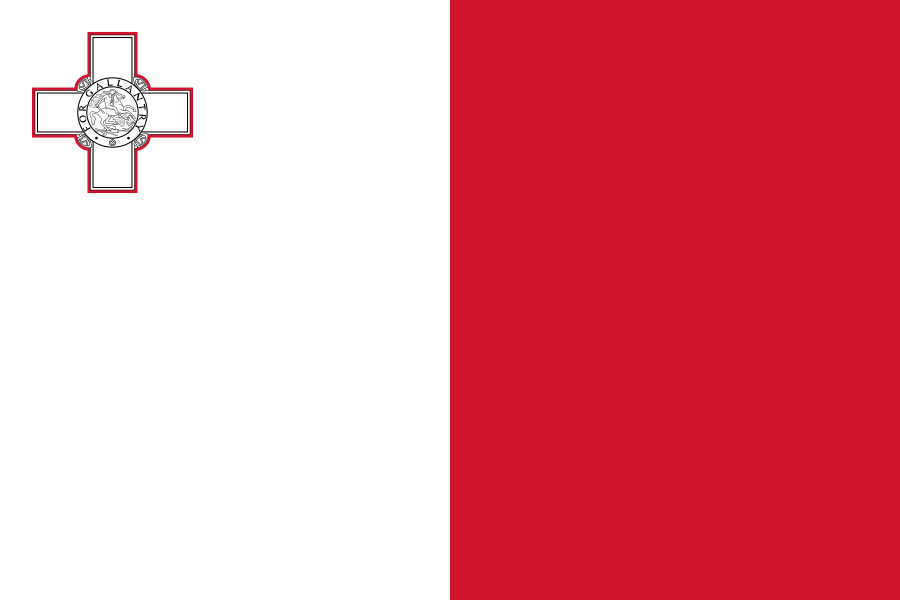
Malta
· MT

Malta

Malta

Malta: Where History Meets Azure Waters Step onto sun-drenched shores steeped in ancient history and vibrant culture. Malta, a captivating archipelago nestled in the heart of the Mediterranean, beckons with its golden be…

#Island nation#Mediterranean Sea#Historic sites#Tourist destination#European Union member
1/7

Top hotels & flights

Hand-picked stays and the best fares into Malta.

Top Hotels in Valletta

Top Flights to Valletta

Popular activities

Tours, tickets and experiences travelers book most in Malta.

Tours

Valletta Exploration

Discover the historic city of Valletta, a UNESCO World Heritage Site, with its remarkable architecture and historic attractions.

Mdina and Rabat Adventure

Experience the ancient 'Silent City' of Mdina and the nearby town of Rabat, rich in history and culture.

Shopping

Sliema Shopping Spree

Experience Malta's vibrant shopping district in Sliema, where you can find a variety of shops and boutiques.

Outdoor

Blue Grotto Boat Trip

Take a boat tour to the mesmerizing Blue Grotto and marvel at the natural beauty of Malta's coastline.

Comino's Blue Lagoon

Visit the idyllic Blue Lagoon on the island of Comino, known for its crystal-clear waters and scenic views.

Location videos

Real reels from travelers, plus longer watches to get the full picture.

From travelers
Watch & explore

Practical info

The essentials for planning your time in Malta.

Currency
€ | EUR | Euro
Population
The approximate estimated total population of Malta is '0.5 million'.
Average weather
Malta
Jan
rain
15°9°
Feb
rain
15°9°
Mar
cloud
17°10°
Apr
clear
19°12°
May
sun
23°15°
Jun
sun
28°19°
Jul
hot
31°22°
Aug
hot
31°23°
Sep
sun
28°21°
Oct
cloud
25°18°
Nov
rain
21°14°
Dec
rain
17°11°

Local guide

What travelers love, what to watch for, and a deeper read on Malta.

What people love

Traveling to Malta has several pros, including:

  1. Rich History and Culture: Malta is home to a plethora of historical sites, including prehistoric temples, medieval towns, and Baroque architecture. The country's history is visible in its museums, palaces, and cathedrals, offering visitors a chance to delve into the past.

  2. Stunning Beaches: Malta boasts crystal-clear waters and beautiful sandy beaches, making it a popular destination for sun-seekers and water sports enthusiasts. From popular tourist spots to hidden coves, there is a beach for everyone to enjoy.

  3. Scenic Landscapes: Malta's landscape is diverse, with rugged cliffs, rolling hills, and picturesque valleys. The island offers numerous opportunities for hiking, cycling, and exploring its natural beauty.

  4. Warm Climate: Malta enjoys a Mediterranean climate with hot summers and mild winters, making it an ideal year-round destination for travelers looking to escape the cold.

  5. Delicious Cuisine: Maltese cuisine is a delightful mix of Mediterranean flavors, influenced by its history and proximity to other countries. Visitors can enjoy fresh seafood, traditional pastries, and local wines during their stay.

  6. English is Widely Spoken: English is one of the official languages of Malta, making it easy for English-speaking travelers to communicate with locals and navigate the country.

Overall, traveling to Malta offers a unique blend of history, culture, and natural beauty, making it a must-visit destination for those looking for a Mediterranean escape.

What to know

Traveling to Malta, located in the Mediterranean Sea, offers many attractions and experiences, but there are also some potential cons to consider:

  1. Expensive: Malta can be relatively expensive compared to other European destinations, especially during the peak tourist season. Accommodation, dining, and activities may cost more than expected.

  2. Crowded: During the summer months, Malta can get very crowded with tourists, especially in popular areas like Valletta and St. Julian's. This can lead to long lines, crowded attractions, and limited availability for accommodations.

  3. Limited Public Transportation: While Malta does have a public transportation system, it may not be as extensive or reliable as in other European countries. Renting a car may be necessary to explore the more remote parts of the islands.

  4. Hot Weather: Malta has a Mediterranean climate, which means hot and dry summers. The high temperatures can be uncomfortable for some travelers, especially if they are not used to such weather.

  5. Language Barrier: While English is widely spoken in Malta, Maltese is the official language. Some locals, especially in more rural areas, may primarily speak Maltese, which could pose a language barrier for travelers.

  6. Tourist Scams: As with any tourist destination, there may be instances of scams targeting visitors. It's important to be cautious and aware of your surroundings to avoid falling victim to any fraudulent schemes.

Remember that these cons are relative and may not be significant enough to outweigh the many benefits of visiting Malta. Taking precautions and planning ahead can help mitigate these potential drawbacks.

Malta is an archipelago in the central Mediterranean, known for its rich history and strategic importance. Here is a detailed history of Malta, highlighting significant events, historical figures, and important landmarks:

Prehistory and Early History

  • Neolithic Period: Malta's history dates back to around 5900 BC, with evidence of early human habitation. The Ġgantija Temples on Gozo, dating back to around 3600–3200 BC, are among the world's oldest free-standing structures.
  • Bronze Age: The arrival of Bronze Age people around 2500 BC marked a shift in culture, with new pottery styles and burial practices.

Classical Antiquity

  • Phoenicians and Carthaginians: Around 800 BC, the Phoenicians, a seafaring people from the region of modern-day Lebanon, settled in Malta. Later, Malta became part of the Carthaginian Empire.
  • Roman Rule (218 BC - 395 AD): Malta became part of the Roman Empire after the Second Punic War. The islands prospered under Roman rule, and the city of Melite (modern-day Mdina) was established as the capital.

Medieval Period

  • Byzantine Empire: After the fall of the Western Roman Empire, Malta was governed by the Byzantine Empire.
  • Arab Rule (870 - 1091): The Aghlabids from North Africa seized Malta in 870. The Arab influence is evident in the Maltese language and agricultural innovations.
  • Norman Conquest (1091): Count Roger I of Sicily captured Malta, and it became part of the Kingdom of Sicily.

Knights of St. John (1530 - 1798)

  • The Order of St. John: In 1530, Charles V of Spain granted Malta to the Knights Hospitaller, a military order that became known as the Knights of Malta.
  • The Great Siege (1565): The Ottoman Empire attempted to capture Malta, but the Knights, led by Grand Master Jean Parisot de Valette, successfully defended the islands.
  • Valletta: Following the siege, the Knights built Valletta, a fortified city named after Jean de Valette.

French Occupation and British Rule

  • French Occupation (1798 - 1800): Napoleon Bonaparte captured Malta in 1798, but French rule was short-lived due to local resistance and British intervention.
  • British Rule (1814 - 1964): Malta became a British colony with the signing of the Treaty of Paris in 1814. It played a strategic role during World War II, earning the George Cross for bravery.

Independence and Modern Era

  • Independence (1964): Malta gained independence from Britain on September 21, 1964. It became a republic in 1974, with Sir Anthony Mamo as its first President.
  • European Union: Malta joined the European Union in 2004 and adopted the euro in 2008.

Important Landmarks

  • Ħal Saflieni Hypogeum: A prehistoric underground burial site dating back to around 4000 BC.
  • St. John's Co-Cathedral: Located in Valletta, it is a masterpiece of Baroque architecture and art.
  • Fort St. Elmo: A star fort in Valletta that played a crucial role in the Great Siege of Malta.

Historical Figures

  • Jean Parisot de Valette: Grand Master of the Knights who led the defense during the Great Siege of 1565.
  • Dom Mintoff: A key figure in Maltese politics who served as Prime Minister and was instrumental in the push for independence.

Malta's history is characterized by its strategic maritime position and the blend of cultures and influences from various civilizations that have left their mark on the islands.