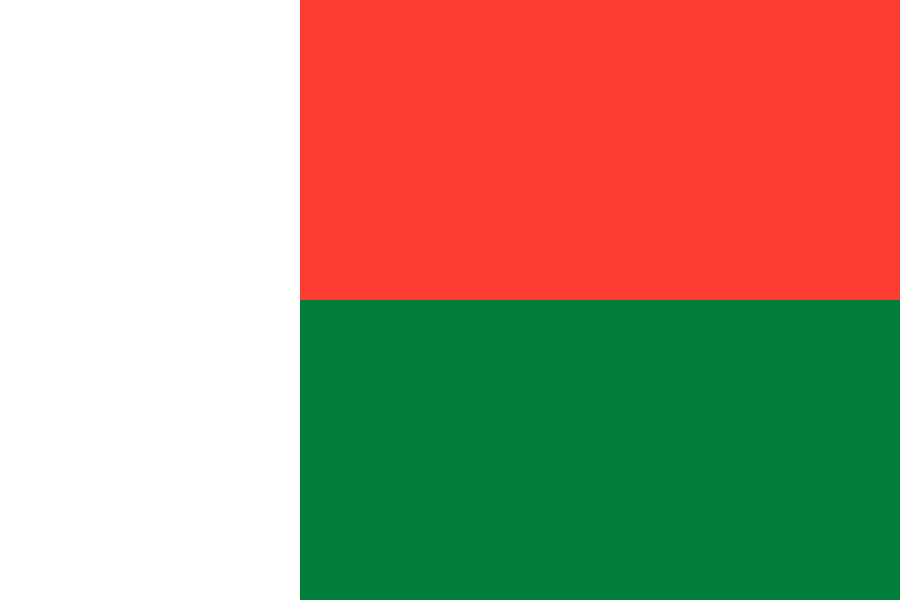
· MG

Madagascar

Madagascar

Madagascar: Where Lemurs Dance and Baobabs Reign Step onto the shores of Madagascar, and you step into a world unlike any other. This island sanctuary, cast adrift from Africa millennia ago, is a symphony of vibrant life…

#island nation#unique wildlife#biodiversity hotspot#lemurs#Indian Ocean

Top hotels & flights

Hand-picked stays and the best fares into Madagascar.

Top Hotels in Antananarivo

Top Flights to Antananarivo

Popular activities

Tours, tickets and experiences travelers book most in Madagascar.

Tours

Explore the Avenue of the Baobabs

A stunning dirt road lined with ancient Baobab trees in Menabe, Madagascar, offering a unique and majestic landscape for visitors.

Tsimbazaza Zoo Visit

Discover a variety of native species at Tsimbazaza Zoo, a perfect place for family outings in Antananarivo.

Discover Andasibe-Mantadia National Park

A natural haven for observing diverse flora and fauna, especially the indri lemur, in Madagascar's rainforest.

Antananarivo City Tour

A guided tour through Antananarivo, exploring its historical sites, markets, and vibrant city life.

Antsiranana Bay Exploration

Discover the natural beauty of Madagascar's largest bay, suitable for sightseeing and outdoor activities.

Shopping

Shopping at Zoma Market

Experience local life and shop for traditional crafts, spices, and souvenirs at Zoma Market in Antananarivo.

Outdoor

Isalo National Park Adventure

Embark on a journey through Madagascar's diverse landscapes in Isalo National Park, featuring canyons, oases, and unique wildlife.

Whale Watching in Sainte Marie

Experience the majestic sight of Humpback whales in their natural habitat around the waters of Île Sainte-Marie.

Explore Nosy Be Beaches

Escape to the idyllic beaches of Nosy Be, offering stunning scenery and vibrant coral reefs, perfect for relaxation and water activities.

Visit Lemur Island

An island sanctuary dedicated to the conservation of lemurs near Andasibe, providing an up-close experience with these unique primates.

Location videos

Real reels from travelers, plus longer watches to get the full picture.

From travelers
Watch & explore

Practical info

The essentials for planning your time in Madagascar.

Currency
Ar | MGA | Malagasy Ariary
Population
30.2 million
Languages
Malagasy, French
Average weather
Madagascar
Jan
rain
30°23°
Feb
rain
30°23°
Mar
rain
29°22°
Apr
cloud
28°21°
May
cloud
26°18°
Jun
clear
24°16°
Jul
clear
23°15°
Aug
clear
24°15°
Sep
sun
26°16°
Oct
sun
28°18°
Nov
sun
29°20°
Dec
rain
30°22°

Local guide

What travelers love, what to watch for, and a deeper read on Madagascar.

What people love

There are several pros to traveling to Madagascar:

  1. Biodiversity: Madagascar is known for its unique and diverse wildlife, with over 90% of its plant and animal species found nowhere else on Earth. Travelers can visit national parks and reserves to see lemurs, chameleons, and other fascinating species in their natural habitats.

  2. Stunning landscapes: From lush rainforests and pristine beaches to towering mountains and arid deserts, Madagascar offers a wide variety of landscapes for travelers to explore and enjoy.

  3. Rich culture: Madagascar has a rich cultural heritage influenced by African, Asian, and European traditions. Travelers can experience traditional music, dance, cuisine, and crafts, as well as visit historical sites and museums.

  4. Adventure activities: Madagascar is a great destination for adventure seekers, with opportunities for hiking, trekking, diving, and wildlife watching. Travelers can also explore caves, go whale watching, or relax on the beach.

  5. Affordable travel: Compared to other popular travel destinations, Madagascar can be a more affordable option for budget-conscious travelers. Accommodation, food, and transportation costs are generally lower than in many other countries.

Overall, traveling to Madagascar can offer a unique and unforgettable experience for those seeking adventure, nature, and culture in a less-visited destination.

Enjoy your trip!

What to know

Traveling to Madagascar, like any destination, has its own set of challenges and potential downsides. Here are some cons to consider when planning a trip to Madagascar:

  1. Health and Safety Concerns: Madagascar has a high risk of infectious diseases such as malaria, dengue fever, and plague. Travelers are advised to take necessary precautions, including vaccinations and antimalarial medication.

  2. Limited Infrastructure: Infrastructure in Madagascar, especially outside major cities, can be basic and unreliable. This can impact travel logistics, accommodation options, and access to amenities.

  3. Language Barrier: The official languages in Madagascar are Malagasy and French. English is not widely spoken, which can make communication difficult for English-speaking travelers.

  4. Political Instability: Madagascar has a history of political instability and occasional civil unrest. Travelers should stay informed about the current situation and follow any travel advisories issued by their government.

  5. Environmental Challenges: Deforestation, habitat loss, and endangered species are pressing environmental issues in Madagascar. Visitors should be mindful of their impact on the environment and support sustainable tourism practices.

  6. Limited Connectivity: Internet and mobile phone coverage may be limited in some areas of Madagascar, making it challenging to stay connected while traveling.

  7. Bargaining Culture: Bargaining is common in Madagascar, especially in markets and with street vendors. Some travelers may find this aspect of the local culture uncomfortable or difficult to navigate.

These are just a few of the potential cons to consider when traveling to Madagascar. It's important to research and plan ahead to mitigate these challenges and have a safe and enjoyable trip.

Early History

  • Settlement and Early Inhabitants: Madagascar, the fourth largest island in the world, was first settled by Austronesian peoples who arrived by canoe from Borneo around the first century AD. Later, Bantu-speaking groups from East Africa brought their culture and agricultural practices to the island.

  • Diverse Societies: Over time, the island developed a unique blend of Asian and African cultures, with a variety of tribes and kingdoms emerging. These included the Merina in the central highlands, the Betsimisaraka on the eastern coast, and the Sakalava in the west, among others.

European Contact and Colonization

  • Early European Contact: The Portuguese were the first Europeans to sight Madagascar in the early 16th century. Throughout the 17th and 18th centuries, the island became a stopover for European traders and pirates.

  • French Interest: The French attempted to establish a settlement in the 17th century at Fort Dauphin, but it was ultimately unsuccessful. However, French interest in the island persisted.

19th Century Kingdoms

  • Rise of the Merina Kingdom: In the early 19th century, King Andrianampoinimerina united much of the island under the Merina Kingdom. His son, Radama I, continued his work, modernizing the kingdom and establishing relations with the British.

  • Queen Ranavalona I: Following Radama I's death, Queen Ranavalona I took the throne in 1828. Her reign was marked by efforts to preserve Malagasy independence against European influence, often through brutal tactics.

  • French Colonization: French colonization began in earnest in the late 19th century. After a series of military campaigns, Madagascar became a French protectorate in 1885 and was officially annexed in 1896, becoming a French colony.

20th Century and Independence

  • Colonial Era: Under French rule, Madagascar saw significant infrastructure development but also faced exploitation and suppression of its culture.

  • World War II: During the war, Madagascar was initially under Vichy France but came under Free French control after the Battle of Madagascar in 1942.

  • Path to Independence: Nationalist sentiment grew after World War II, leading to the Malagasy Uprising of 1947, which was brutally suppressed by the French. In 1960, Madagascar gained independence, with Philibert Tsiranana becoming its first president.

Post-Independence Era

  • Political Instability: Post-independence Madagascar was marked by political turmoil, including military coups and the establishment of a socialist regime by Didier Ratsiraka in 1975.

  • Transition to Democracy: In the 1990s, Madagascar shifted towards a multi-party democracy. However, political instability persisted, with several disputed elections and coups, including the 2009 political crisis that saw Andry Rajoelina take power.

  • Recent Developments: In recent years, Madagascar has faced challenges such as poverty, corruption, and environmental issues, but it has also seen efforts to stabilize its political landscape.

Historical Figures

  • Andrianampoinimerina: A king who united the Merina people and laid the foundation for the Merina Kingdom.
  • Radama I: Known for modernizing the Merina Kingdom and fostering international relations.
  • Ranavalona I: A queen noted for her resistance to European influence and maintaining Malagasy sovereignty.

Important Landmarks

  • Rova of Antananarivo: The royal palace complex in the capital, a symbol of the Merina monarchy.
  • Avenue of the Baobabs: A famous grouping of baobab trees near Morondava, a natural landmark.
  • Isalo National Park: Known for its unique sandstone formations, canyons, and diverse wildlife.

Cultural Heritage

Madagascar is renowned for its biodiversity and unique ecosystems, home to species found nowhere else on Earth, such as lemurs and various endemic plants.

The island's rich cultural tapestry is reflected in its music, dance, and arts, which draw from its Austronesian and African roots, creating a distinct Malagasy identity.