

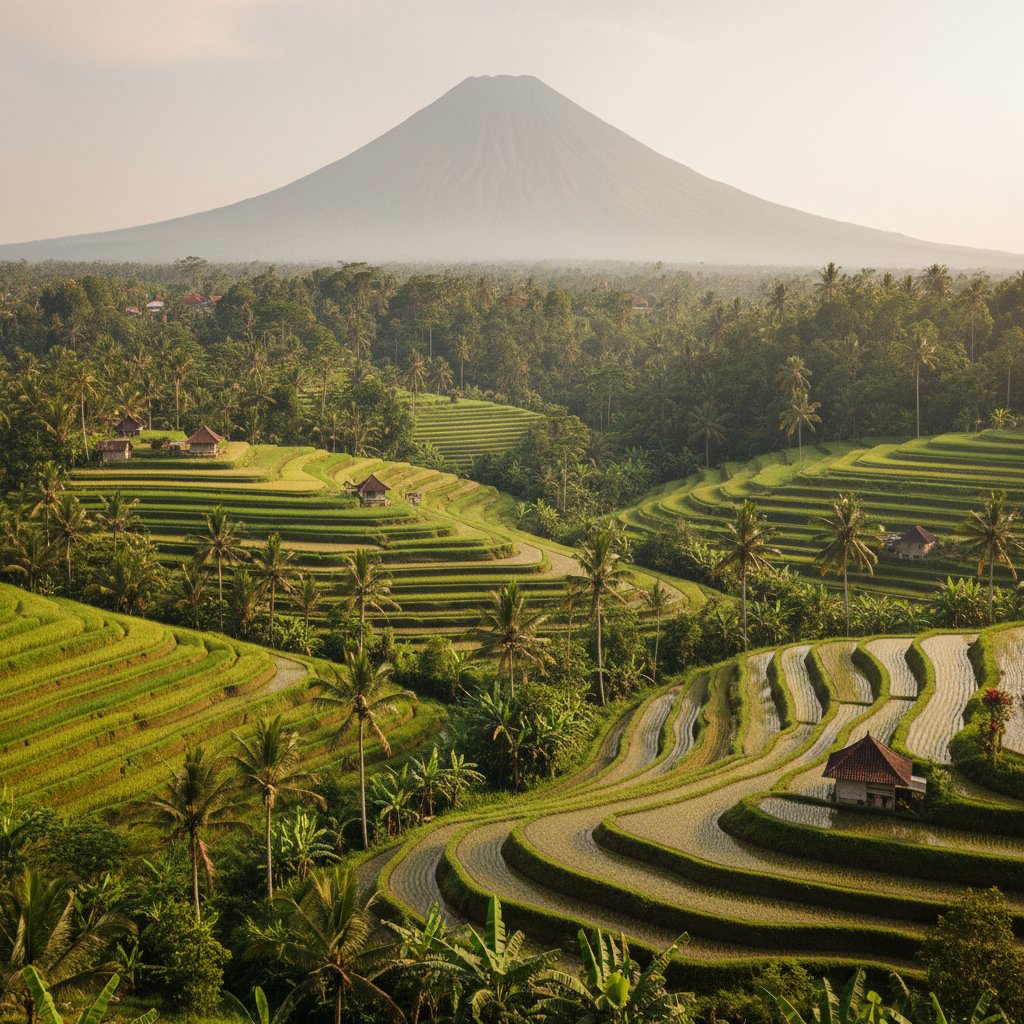

Indonesia
· ID

Indonesia

Indonesia

Indonesia, a sprawling archipelago of over 17,000 islands, is a land of unparalleled beauty, cultural diversity, and vibrant energy. From the bustling streets of Jakarta to the serene beaches of Bali, Indonesia offers a …

#archipelago#tropical climate#diverse culture#volcanoes#beaches
1/3

Top hotels & flights

Hand-picked stays and the best fares into Indonesia.

Top Hotels in Bali

Top Flights to Bali

Popular activities

Tours, tickets and experiences travelers book most in Indonesia.

Tours

Explore Borobudur Temple

Visit the world's largest Buddhist temple, Borobudur, a UNESCO World Heritage Site.

Shopping

Shop at Tanah Abang Market

Experience the hustle and bustle of one of Southeast Asia's largest textile markets.

Location videos

Real reels from travelers, plus longer watches to get the full picture.

From travelers
Watch & explore

Practical info

The essentials for planning your time in Indonesia.

Currency
Rp | IDR | Indonesian Rupiah
Population
273 million
Languages
Indonesian, Javanese, Sundanese
Average weather
Indonesia
Jan
rain
30°24°
Feb
rain
30°24°
Mar
rain
31°24°
Apr
rain
31°24°
May
rain
31°24°
Jun
rain
31°24°
Jul
rain
31°23°
Aug
rain
31°23°
Sep
rain
32°23°
Oct
rain
32°24°
Nov
rain
32°24°
Dec
rain
31°24°

Local guide

What travelers love, what to watch for, and a deeper read on Indonesia.

What people love

Traveling to Indonesia offers a wide range of benefits and experiences for tourists. Here are some pros of traveling to Indonesia:

  1. Diverse Culture: Indonesia is a melting pot of diverse cultures, languages, and traditions. Travelers can experience a wide range of cultural practices, arts, and cuisines as they explore different regions of the country.

  2. Stunning Natural Beauty: Indonesia is home to breathtaking landscapes, including pristine beaches, lush rice terraces, active volcanoes, and dense rainforests. Travelers can enjoy activities such as hiking, surfing, diving, and wildlife spotting in the country's stunning natural surroundings.

  3. Rich History and Heritage: Indonesia has a rich history and heritage, with ancient temples, historic sites, and traditional villages waiting to be explored. Travelers can learn about the country's fascinating past and cultural heritage through visits to sites such as Borobudur, Prambanan, and Bali's Ubud.

  4. Warm Hospitality: Indonesian people are known for their warm hospitality and friendliness towards visitors. Travelers can expect to be greeted with smiles and kindness wherever they go, making their experience in Indonesia even more enjoyable and memorable.

  5. Affordable Travel: Indonesia offers a wide range of accommodation options, from budget guesthouses to luxury resorts, making it a destination that can cater to travelers with different budgets. Food, transportation, and activities are also generally affordable, allowing travelers to explore the country without breaking the bank.

Overall, traveling to Indonesia offers a unique and rewarding experience for visitors, with its diverse culture, stunning natural beauty, rich history, warm hospitality, and affordability making it a popular destination for tourists from around the world.

What to know

Some potential cons of traveling to Indonesia include:

  1. Health and Safety Concerns: Indonesia is a tropical country with certain health risks such as mosquito-borne diseases like malaria and dengue fever. Travelers should take precautions such as getting vaccinated, using mosquito repellent, and drinking only bottled or purified water to avoid getting sick.

  2. Traffic and Infrastructure Issues: Major cities in Indonesia, such as Jakarta, can experience heavy traffic congestion which can be frustrating for travelers trying to get around. Additionally, the infrastructure in some areas may not be as developed as in other countries, leading to potential challenges in transportation and communication.

  3. Language Barrier: While English is spoken in tourist areas and hotels, the local language in Indonesia is Indonesian (Bahasa Indonesia). Travelers who do not speak the language may face difficulties in communication, especially in more remote areas.

  4. Natural Disasters: Indonesia is located in a seismically active region known as the "Ring of Fire," making it prone to earthquakes, volcanic eruptions, and tsunamis. Travelers should stay informed about potential natural disasters and follow any evacuation orders if necessary.

  5. Cultural Sensitivities: Indonesia is a diverse country with various ethnicities and cultures. Travelers should be respectful of local customs and traditions, especially when visiting religious sites or participating in traditional ceremonies.

It's important to note that these cons should not deter travelers from visiting Indonesia, as the country offers stunning natural beauty, rich cultural experiences, and warm hospitality. By being prepared and informed, travelers can have a safe and enjoyable trip to Indonesia.

Indonesia, located in Southeast Asia, has a rich and diverse history that has been shaped by various civilizations, cultures, and influences over the centuries. Here is a brief overview of Indonesia's history, significant events, historical figures, and important landmarks:

  1. Early History: The early history of Indonesia is marked by the presence of indigenous cultures and kingdoms, such as the Srivijaya and Majapahit empires, which flourished in the archipelago from the 7th to the 14th centuries. These kingdoms played a crucial role in shaping the region's culture, trade, and political landscape.

  2. Colonial Period: Indonesia came under Dutch colonial rule in the 17th century, with the Dutch East India Company establishing trading posts and exploiting the region's resources. The Dutch colonial period lasted for over three centuries and had a profound impact on Indonesia's society and economy.

  3. Independence Struggle: Following World War II, Indonesia declared its independence from Dutch colonial rule on August 17, 1945, under the leadership of Sukarno and Mohammad Hatta. The country's struggle for independence was marked by various conflicts and negotiations with the Dutch colonial authorities.

  4. Modern History: Indonesia officially became an independent republic in 1949 and has since experienced periods of political instability, economic growth, and social change. The country has seen the rise of influential leaders such as Sukarno, Suharto, and more recently, Joko Widodo.

  5. Significant Events: Some significant events in Indonesia's history include the 1965 coup d'état, the establishment of the New Order regime under Suharto, the Asian financial crisis of 1997, and the democratic transition in the late 1990s.

  6. Historical Figures: Indonesia has been home to numerous influential historical figures, including Sukarno (the first president of Indonesia), Suharto (Indonesia's second president), and Megawati Sukarnoputri (the country's first female president).

  7. Important Landmarks: Indonesia is known for its diverse and stunning natural landscapes, including the island of Bali with its temples and beaches, the Borobudur Temple in Central Java, and the Komodo National Park, home to the famous Komodo dragons. Jakarta, the capital city, is a bustling metropolis with a mix of modern and traditional landmarks.

Overall, Indonesia's history is a tapestry of diverse cultures, traditions, and influences that have shaped the country into the vibrant and dynamic nation it is today.