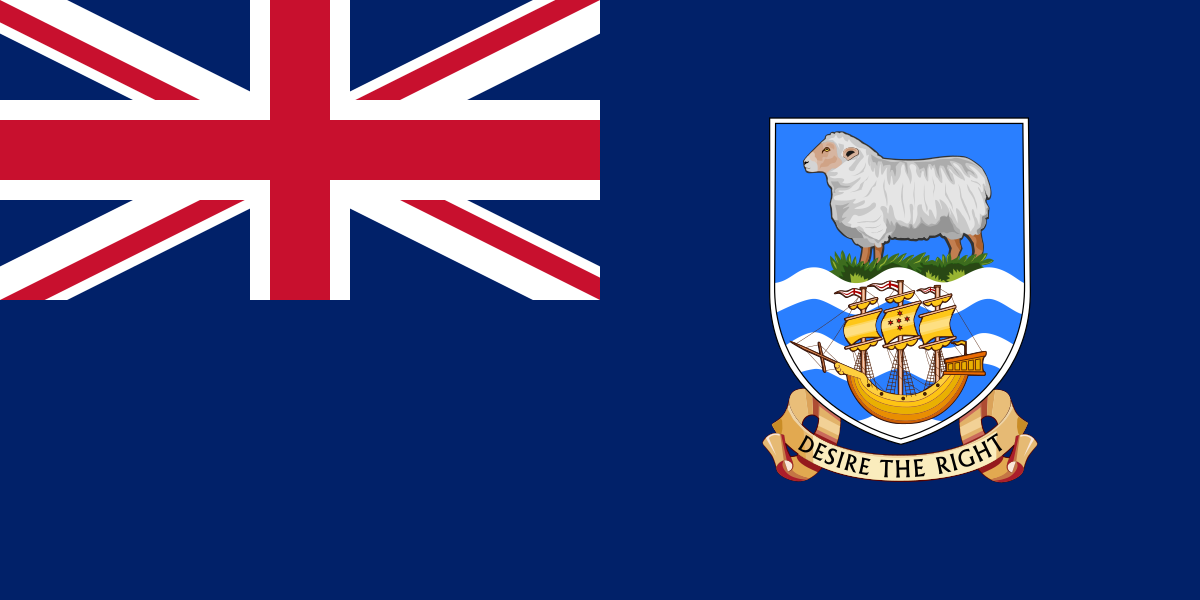
Falkland Islands (Islas Malvinas)
· FK

Falkland Islands (Islas Malvinas)

Falkland Islands (Islas Malvinas)

The Falkland Islands, also known as Islas Malvinas, is a remote and stunning archipelago located in the South Atlantic Ocean. Despite its small size and population, the islands offer a unique and unforgettable travel exp…

#remote location#British Overseas Territory#wildlife#ocean views#historical sites
1/3

Top hotels & flights

Hand-picked stays and the best fares into Falkland Islands (Islas Malvinas).

Top Hotels in Stanley

Top Flights to Stanley

Popular activities

Tours, tickets and experiences travelers book most in Falkland Islands (Islas Malvinas).

Tours

Explore the Wildlife of Volunteer Point

Visit Volunteer Point to witness the largest King Penguin colony in the Falkland Islands along with Gentoo and Magellanic penguins.

Historic Tour of Port Stanley

A guided tour through the historic sites of Port Stanley including Government House and Whalebone Arch.

Falklands Battlefield Tour

Visit key battlefield sites from the 1982 conflict between Britain and Argentina.

Visit the Falkland Islands Museum

Delve into the islands' history at this quaint museum showcasing local artifacts and exhibits.

Shopping

Local Crafts Shopping in Stanley

Discover local handicrafts and souvenirs at various shops in Stanley.

Outdoor

Hiking at Mount Usborne

Trek to the summit of Mount Usborne, the highest point in the Falkland Islands, offering stunning panoramic views.

Kayaking in Stanley Harbour

Experience the scenic beauty of Stanley Harbour from a kayak on guided tours.

West Falkland Wildlife Safari

Embark on a safari to spot diverse wildlife including sea lions, dolphins, and various bird species.

Pebble Island Adventure

Explore the serene beaches and wildlife of Pebble Island, known for its diverse bird species.

Fishing Trip in Falkland Sound

Join a fishing expedition in the pristine waters of the Falkland Sound.

Location videos

Real reels from travelers, plus longer watches to get the full picture.

From travelers
Watch & explore

Practical info

The essentials for planning your time in Falkland Islands (Islas Malvinas).

Currency
£ | FKP | Falkland Islands Pound
Population
Approximately 3,400.
Languages
English, English
Average weather
Falkland Islands (Islas Malvinas)
Jan
cloud
15°8°
Feb
cloud
15°8°
Mar
cloud
13°6°
Apr
rain
11°4°
May
rain
8°2°
Jun
cold
6°0°
Jul
cold
5°0°
Aug
cold
6°1°
Sep
cloud
8°2°
Oct
cloud
10°4°
Nov
cloud
12°6°
Dec
cloud
14°7°

Local guide

What travelers love, what to watch for, and a deeper read on Falkland Islands (Islas Malvinas).

What people love

The Falkland Islands (Islas Malvinas) offer a unique and remote travel destination with several enticing advantages:

  1. Stunning Natural Beauty: The Falkland Islands boast breathtaking landscapes, including rugged coastlines, pristine beaches, and diverse wildlife such as penguins, seals, and seabirds. Nature enthusiasts will find plenty to explore and photograph.

  2. Wildlife Watching: The islands are a paradise for wildlife enthusiasts, with abundant opportunities to observe various species in their natural habitats. The Falklands are particularly renowned for their penguin colonies, offering unforgettable encounters with these charming creatures.

  3. Birdwatching: The Falkland Islands are a haven for birdwatchers, with numerous species of seabirds and waterfowl inhabiting the islands. Visitors can witness spectacular birdlife, including albatrosses, petrels, and cormorants.

  4. Outdoor Activities: Travelers can enjoy a range of outdoor activities in the Falkland Islands, such as hiking, fishing, kayaking, and wildlife tours. The islands' pristine environment provides an ideal setting for adventurous pursuits and exploration.

  5. Cultural Immersion: The Falkland Islands have a unique cultural heritage shaped by their history and remote location. Visitors can interact with the friendly locals, learn about the islands' history, and experience traditional Falkland Islands cuisine and customs.

  6. Peaceful and Remote Setting: Traveling to the Falkland Islands offers a peaceful and remote escape from the hustle and bustle of city life. The islands' tranquility and unspoiled landscapes provide a perfect retreat for those seeking solitude and relaxation.

Overall, the Falkland Islands (Islas Malvinas) offer a one-of-a-kind travel experience characterized by stunning natural beauty, abundant wildlife, outdoor adventures, cultural immersion, and a peaceful setting.

What to know

Some potential cons of traveling to the Falkland Islands (Islas Malvinas) include:

  1. Remote location: The Falkland Islands are situated in the South Atlantic Ocean, making them fairly isolated and requiring a long journey to reach from most other countries.

  2. Harsh weather conditions: The islands experience strong winds, rain, and cool temperatures throughout much of the year, which may not be ideal for all travelers.

  3. Limited infrastructure: The Falkland Islands have a small population and limited infrastructure, which means that amenities such as accommodations, restaurants, and transportation options may be limited compared to more popular tourist destinations.

  4. Expensive travel costs: Due to their remote location, travel to and within the Falkland Islands can be costly, including flights, accommodations, and activities.

  5. Political sensitivity: The sovereignty of the Falkland Islands is a contentious issue between the United Kingdom and Argentina, which may impact travel to the region in terms of political tensions and potential protests.

It's important to research and consider these factors before planning a trip to the Falkland Islands.

The Falkland Islands, known in Spanish as Islas Malvinas, are a remote South Atlantic archipelago with a complex and often contentious history. Here is a detailed overview of their history, significant events, historical figures, and important landmarks.

Early History

  • Discovery and Early Claims: The first recorded sighting of the Falkland Islands was in 1592 by the English navigator John Davis. The islands were later mapped by the Dutch in the early 17th century. The French were the first to establish a settlement in 1764 at Port Louis on East Falkland, naming the islands "Îles Malouines."

  • Colonial Claims: In 1765, the British established a presence on West Falkland at Port Egmont. Spain, which had claimed the islands as part of its South American territories, took control in 1767 from the French, renaming the settlement Puerto Soledad.

19th Century Developments

  • British Reassertion: In 1833, the British reasserted control over the islands, expelling the Argentine military garrison that had been established there since 1829. This marked the beginning of continuous British administration.

  • Economic Activities: Throughout the 19th century, the islands developed economically through sealing, whaling, and sheep farming. The sheep-farming industry became particularly significant and remains an important part of the economy.

20th Century and Beyond

  • World War Influences: During both World Wars, the Falkland Islands served as a strategic naval base for the British.

  • Falklands War: The most significant event in the modern history of the Falkland Islands was the 1982 Falklands War. Argentina, claiming sovereignty over the islands, invaded in April 1982. The British dispatched a task force, and after intense fighting, the Argentine forces surrendered in June 1982. The war resulted in significant loss of life and led to a reinforcement of British military presence on the islands.

Historical Figures

  • Luis Vernet: An influential figure in the early 19th century, Vernet was appointed as the islands' governor by the United Provinces of the Rio de la Plata (Argentina) and played a key role in establishing the Argentine settlement before the British reassertion.

  • Leopoldo Galtieri: The Argentine president during the Falklands War, Galtieri ordered the invasion of the islands.

  • Margaret Thatcher: The British Prime Minister during the Falklands War, Thatcher authorized the military response to reclaim the islands.

Important Landmarks

  • Port Stanley: The capital and only city, known for its British colonial architecture, including Christ Church Cathedral with its whalebone arch.

  • Gypsy Cove: A notable scenic area near Stanley, known for its wildlife, including penguins.

  • Goose Green: A settlement known for being a significant battle site during the Falklands War.

  • San Carlos Water: The site of the British landing during the Falklands War, often referred to as "Blue Beach."

Current Status

Today, the Falkland Islands remain a British Overseas Territory with a degree of self-governance. The sovereignty dispute with Argentina continues, although the islands' residents have expressed a strong desire to remain under British rule. The economy is primarily based on fishing, tourism, and agriculture, with a growing interest in oil exploration.

This history highlights the strategic importance of the islands, the cultural influences from both British and Argentine claims, and the enduring geopolitical tensions surrounding their sovereignty.