Siem Reap
City · Cambodia

Siem Reap

Siem Reap, Siem Reap, Cambodia

Siem Reap is the vibrant gateway to the ancient world of the Khmer Empire, most famously the magnificent Angkor Wat. While the breathtaking temple…

#Angkor Wat#Temples#Tourism#Khmer culture#Historical sites

Top Hotels in Siem Reap

Top Flights to Siem Reap

Flying from

Top Activities in Siem Reap

Highlights

Things to do in Siem Reap

What travellers talk about most.

Tours

Phare, The Cambodian Circus

Enjoy an evening of Cambodian culture with circus performances blending traditional and modern theater.

4.8(6.4k)KHR 72,000

Angkor Wat Sunrise Tour

Experience the breathtaking beauty of Angkor Wat at sunrise, followed by a guided tour of the temple complex.

5.0(3)KHR 1,50,000

Banteay Srei Temple Visit

Visit the 'Citadel of Women', known for its beautiful carvings.

4.8(2.1k)KHR 1,50,000

Shopping

Old Market Shopping

Discover local crafts, souvenirs, and street food at Siem Reap's Old Market.

4.2(2k)

Outdoor

Tonle Sap Lake Boat Tour

Explore the largest freshwater lake in Southeast Asia and visit floating villages.

3.3(176)KHR 1,00,000

Quad Bike Adventure

Ride through the countryside of Siem Reap on a thrilling quad bike tour.

4.8(356)KHR 1,40,000

See it for yourself

Location videos

Reels and longer watches.

Featured for Siem Reap

Traveller clips picked out for this place.

Watch & explore

Good to know

Practical info

Weather, costs and getting around.

Siem Reap, Siem Reap, Cambodia Open in Google Maps
When to go

Scored from each month’s typical high and its usual conditions.

GoodMixedAvoid
Best monthsNov – Feb
Worth avoidingMay – Oct
November · cloudHigh 30°C Low 23°C
Good

Siem Reap has a tropical climate with two main seasons: the wet season from May to October and the dry season from November to April. During the wet season, expect heavy but brief rain showers often in the afternoon, with high humidity and temperatures ranging from 25°C to 35°C (77°F to 95°F). The dry season is characterized by cooler temperatures, especially from November to February, with temperatures ranging from 20°C to 30°C (68°F to 86°F), making it the most comfortable time for outdoor activities. March and April can be very hot, with temperatures rising above 35°C (95°F).

All 12 monthshighs, lows and conditions
Jan
sun
31°21°
Feb
sun
32°22°
Mar
hot
34°24°
Apr
hot
35°26°
May
rain
34°26°
Jun
rain
33°25°
Jul
rain
32°25°
Aug
rain
32°25°
Sep
rain
31°25°
Oct
rain
31°24°
Nov
cloud
30°23°
Dec
sun
30°21°
Currency
៛ | KHR | Cambodian Riel
Population
139,458 (2019)
Density
295 / km²
Local time
Languages
Khmer mainly · English, French
Budget / day
៛100000 - ៛600000
Also known as
Siemreab, Siem Reap Ville, Siem Reab, សៀមរាប, Siem Reap Municipality

Know before you go

Local guide

A deeper read on Siem Reap.

What people love

Siem Reap is an unforgettable destination anchored by the awe-inspiring Angkor Wat temple complex, a true wonder of the ancient world. Beyond the ruins, the city offers incredible value for money, with affordable luxury accommodations and cheap, delicious street food. The local Khmer people are renowned for their genuine warmth and hospitality. Visitors can easily access diverse experiences, from exploring floating villages on Tonle Sap Lake to enjoying a vibrant nightlife and rich cultural performances. The city's compact size also makes it highly walkable and easy to navigate.

What to know

The most significant drawback to Siem Reap is the intense tropical heat and high humidity, which can make temple exploration exhausting, especially during the dry season. The sheer volume of tourists at major sites like Angkor Wat can lead to severe overcrowding and detract from the spiritual atmosphere. Visitors must also navigate persistent touts and tuk-tuk drivers, which can become tiring. Additionally, while the city center is developed, surrounding rural areas lack infrastructure, and petty scams targeting tourists are relatively common in busy market areas.

Siem Reap, located in northwestern Cambodia, is a city with a rich history deeply intertwined with the rise and fall of the Khmer Empire and the subsequent colonial and modern periods of Cambodian history. Here is a detailed history of Siem Reap:

Ancient and Medieval History

  • Khmer Empire (9th to 15th Century):
    • Siem Reap's history is most prominently linked to the Khmer Empire, which dominated much of Southeast Asia from the 9th to the 15th century. The city is the gateway to the Angkor region, which was the imperial capital of the Khmer Empire.
    • The area is renowned for the Angkor Wat temple complex, one of the most significant archaeological sites in Southeast Asia. Built in the early 12th century by King Suryavarman II, Angkor Wat is a UNESCO World Heritage Site and a symbol of Cambodia.
    • The Angkor Thom complex, constructed by King Jayavarman VII in the late 12th century, served as the last and most enduring capital city of the Khmer Empire.

Colonial Era

  • French Protectorate (1863-1953):
    • In the late 19th century, Cambodia became part of French Indochina. Siem Reap, like much of Cambodia, was under French colonial administration.
    • During this period, French explorers and archaeologists, including figures like Henri Mouhot, began documenting and restoring Angkor's ruins, drawing international attention to the site.
    • The French influence is still evident in parts of Siem Reap, particularly in its colonial architecture.

Post-Independence and Modern Era

  • Independence and Civil War:

    • Cambodia gained independence from France in 1953. However, the country faced significant turmoil in the subsequent decades, including the Cambodian Civil War and the Khmer Rouge regime (1975-1979), which had devastating effects on the nation.
    • During these turbulent times, many of the ancient sites in and around Siem Reap were neglected or damaged.
  • Rebirth and Tourism (Late 20th Century - Present):

    • In the late 20th century, as Cambodia stabilized politically, Siem Reap began to develop as a major tourist destination, driven largely by interest in Angkor Wat.
    • The city has grown rapidly, with significant investment in infrastructure to support tourism. Siem Reap now hosts a range of hotels, restaurants, and cultural attractions.

Significant Landmarks

  • Angkor Wat:

    • The largest religious monument in the world, originally constructed as a Hindu temple for the god Vishnu, and later converted to a Buddhist temple.
  • Angkor Thom and the Bayon Temple:

    • Famous for its massive stone faces and intricate bas-reliefs.
  • Ta Prohm:

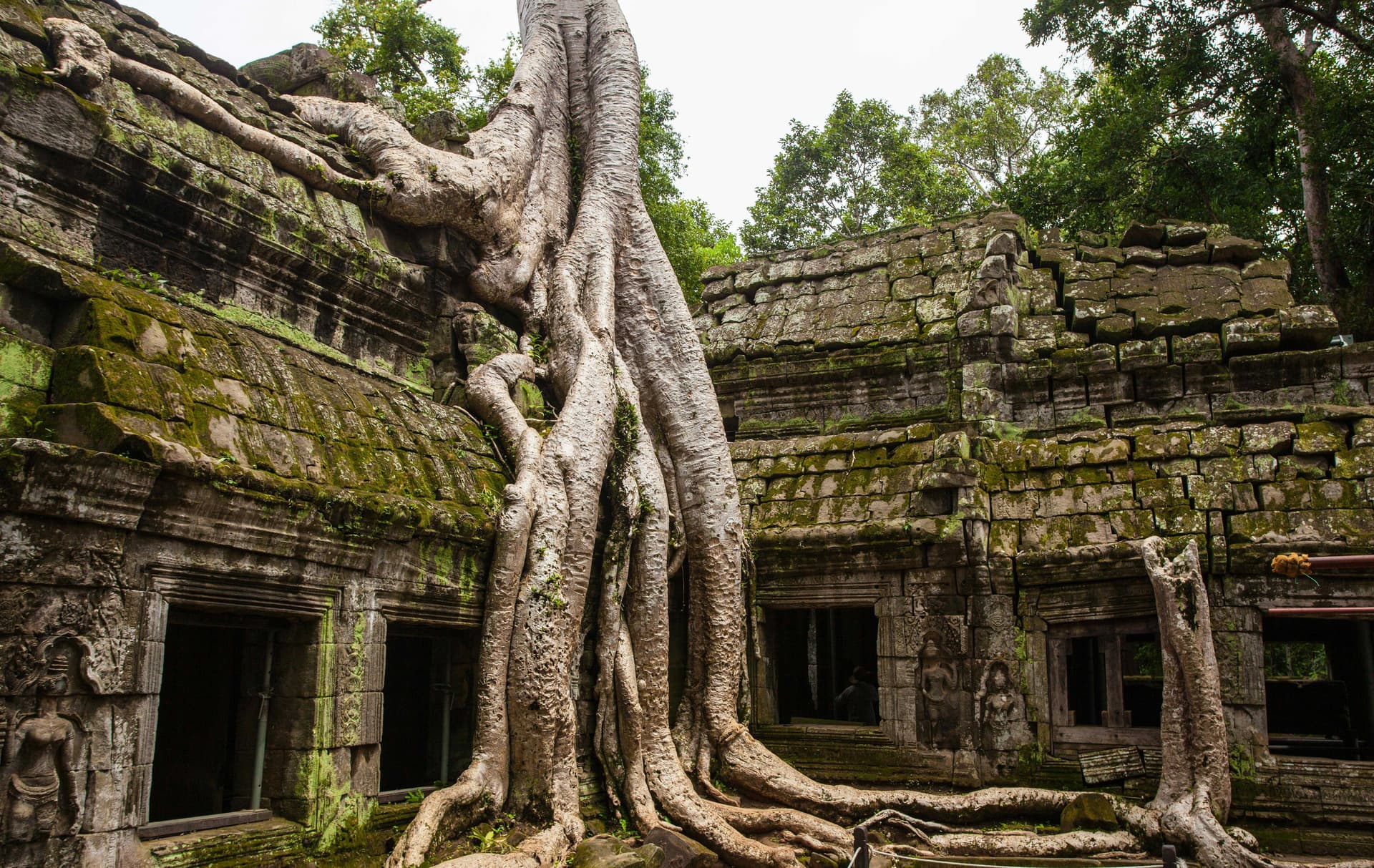
    • Known for the trees growing out of the ruins, it is one of the most picturesque and popularly photographed temples in the Angkor complex.
  • Banteay Srei:

    • A 10th-century temple dedicated to the Hindu god Shiva, noted for its intricate carvings and pink sandstone construction.

Cultural and Historical Figures

  • Jayavarman VII:

    • One of the most powerful Khmer monarchs, known for his extensive building projects and the expansion of the empire.
  • Henri Mouhot:

    • A French naturalist and explorer credited with popularizing Angkor Wat in the West after his travels in the 1860s.

Siem Reap continues to be a vibrant city, blending its ancient heritage with modern-day attractions, making it a fascinating destination for millions of visitors each year.

Traveler ratings

How Siem Reap rates

From verified Travafa trips.

4.0
Very good
Based on 1 rating
Things to Do
3.5
Accommodation Quality
3.5
Local Transportation
3.0
Safety
3.5
Scenic Beauty
4.5
Shopping
4.0
Friendliness of People
2.0
Cleanliness
3.0
Value for Money
3.0
Internet Connectivity
2.5
Good for
0%
Friends
0%
Family
100%
Couple
0%
Solo
0%
Pets

Who is Siem Reap for?

By the travellers who rated it on Travafa. Each page states the places, months and budget for that kind of trip.