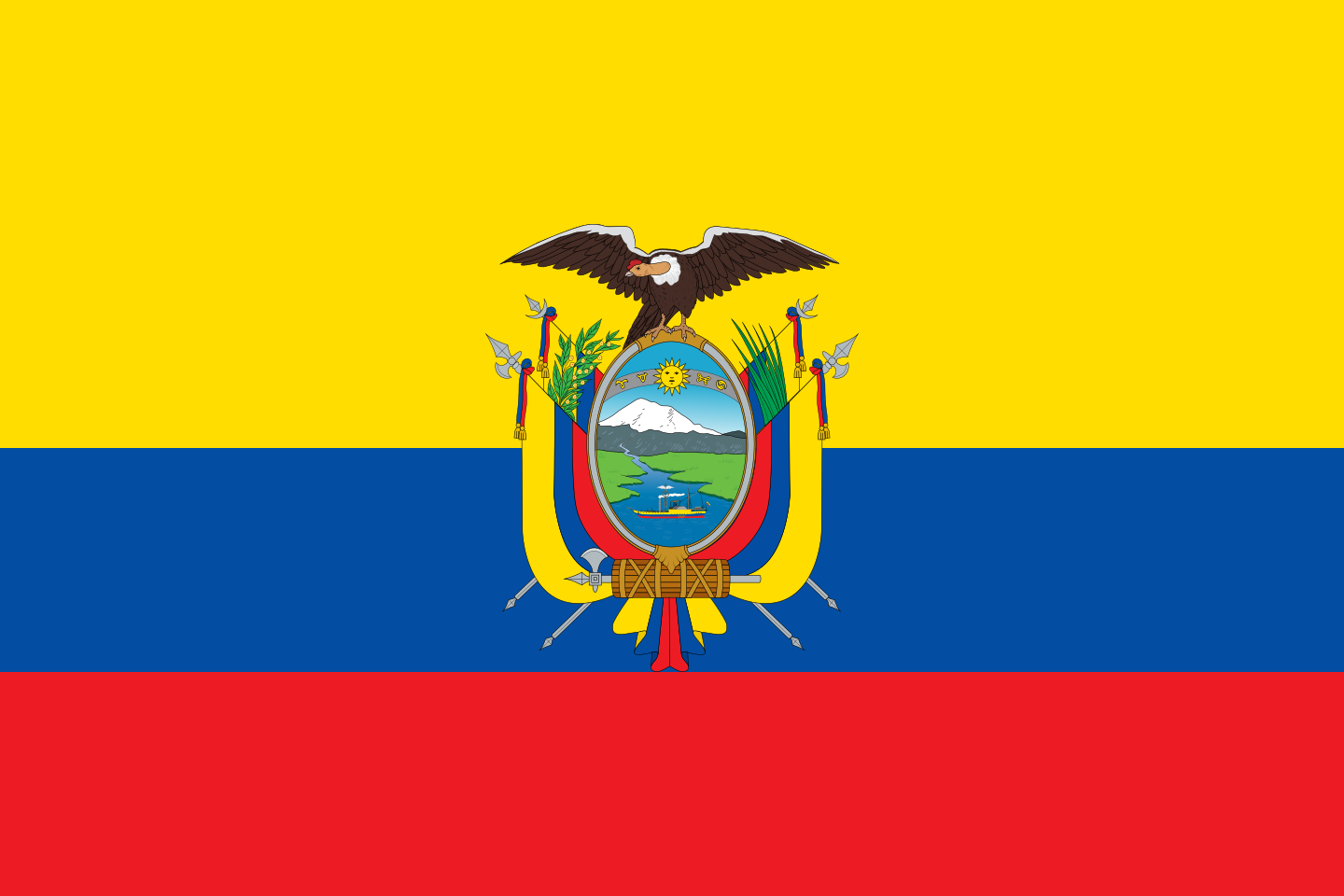
Ecuador
· EC

Ecuador

Ecuador

Ecuador: Where Volcanoes Kiss the Sky and Adventure Knows No Bounds Imagine a land where snow-capped volcanoes pierce the clouds, their slopes cloaked in emerald rainforest teeming with life. Picture vibrant markets bur…

#South America#Andes Mountains#Amazon Rainforest#Galapagos Islands#Spanish-speaking country
1/5

Top hotels & flights

Hand-picked stays and the best fares into Ecuador.

Top Hotels in Quito

Top Flights to Quito

Popular activities

Tours, tickets and experiences travelers book most in Ecuador.

Tours

Quito Old Town Exploration

Discover the historic center of Quito, a UNESCO World Heritage site with rich colonial architecture and vibrant culture.

Outdoor

Cotopaxi National Park Adventure

Explore the stunning Cotopaxi Volcano and its surrounding national park with opportunities for hiking and wildlife viewing.

Galápagos Island Tour

Experience the unique wildlife and landscapes of the Galápagos Islands, one of the world’s foremost destinations for wildlife-viewing.

Location videos

Real reels from travelers, plus longer watches to get the full picture.

Watch & explore

Practical info

The essentials for planning your time in Ecuador.

Currency
$ | USD | US Dollar
Population
approximately 17.8 million
Languages
Spanish, Spanish, Quechua, Other indigenous languages
Average weather
Ecuador
Jan
cloud
20°10°
Feb
rain
20°10°
Mar
rain
20°10°
Apr
rain
19°10°
May
cloud
19°10°
Jun
cloud
19°9°
Jul
cloud
19°9°
Aug
cloud
20°9°
Sep
cloud
20°9°
Oct
rain
20°10°
Nov
rain
20°10°
Dec
rain
20°10°

Local guide

What travelers love, what to watch for, and a deeper read on Ecuador.

What people love

Ecuador is a beautiful country located in South America, known for its diverse landscapes, rich culture, and friendly people. Here are some of the pros of traveling to Ecuador:

  1. Breathtaking natural beauty: Ecuador is home to the Amazon Rainforest, the Andes Mountains, and the Galapagos Islands, offering a wide range of natural landscapes to explore. Visitors can enjoy hiking, bird-watching, and wildlife spotting in the diverse ecosystems of the country.

  2. Cultural heritage: Ecuador has a rich indigenous heritage, with many traditional communities preserving their customs and way of life. Visitors can immerse themselves in the local culture by visiting markets, festivals, and historical sites.

  3. Adventure activities: Ecuador is a paradise for adventure enthusiasts, offering opportunities for hiking, mountain climbing, whitewater rafting, and more. The country's diverse geography provides a wide range of outdoor activities for all levels of experience.

  4. Affordable travel: Compared to other destinations, Ecuador offers good value for money, with affordable accommodation, transportation, and food options. Travelers on a budget can explore the country without breaking the bank.

  5. Delicious cuisine: Ecuadorian cuisine is diverse and delicious, with a variety of traditional dishes to try. From ceviche to empanadas to llapingachos (potato patties), visitors can enjoy a culinary adventure during their stay.

Overall, traveling to Ecuador offers a unique and enriching experience for visitors looking to explore nature, culture, and adventure.

Enjoy your trip to Ecuador!

What to know

Traveling to Ecuador does have some potential cons that travelers should be aware of:

  1. Altitude sickness: Many parts of Ecuador, including Quito, are located at high altitudes. Travelers who are not used to high altitudes may experience symptoms of altitude sickness, such as headaches, fatigue, and shortness of breath.

  2. Safety concerns: While Ecuador is generally a safe country for tourists, there are some areas, particularly in cities like Quito and Guayaquil, where petty crime such as pickpocketing and theft can occur. It is important for travelers to be cautious and take necessary precautions to ensure their safety.

  3. Natural disasters: Ecuador is located in an area prone to natural disasters such as earthquakes, volcanic eruptions, and flooding. Travelers should be aware of the potential risks and stay informed about safety measures in case of emergencies.

  4. Limited infrastructure in some areas: While major cities in Ecuador have well-developed infrastructure, some rural areas may have limited access to amenities such as healthcare facilities, ATMs, and reliable transportation. Travelers should be prepared for potential challenges when visiting remote regions.

  5. Language barrier: While many people in Ecuador speak Spanish, English is not widely spoken, especially in rural areas. Travelers who do not speak Spanish may face communication challenges, making it difficult to navigate and interact with locals.

Overall, while there are some potential cons to traveling to Ecuador, with proper planning and awareness, travelers can have a safe and enjoyable experience in this beautiful country.

Ecuador, officially the Republic of Ecuador, is a country in South America bordered by Colombia to the north, Peru to the east and south, and the Pacific Ocean to the west. It also includes the Galápagos Islands in the Pacific. Here is a detailed history of Ecuador, focusing on significant events, historical figures, and important landmarks:

Pre-Columbian Era

  • Indigenous Cultures: Before the arrival of the Spanish, Ecuador was home to a variety of indigenous cultures, including the Quitu, Cara, and Cañari. These groups had developed advanced societies with agricultural systems and trade networks.
  • Inca Expansion: In the 15th century, the Inca Empire expanded into Ecuador under the leadership of Pachacuti and later Huayna Capac. The region became an important part of the Inca Empire, with the city of Quito becoming a significant center.

Spanish Conquest and Colonial Period

  • Conquest by Spain: In 1534, Spanish conquistadors, led by Sebastián de Belalcázar and Francisco Pizarro, conquered the region. Quito was founded in 1534.
  • Colonial Administration: Ecuador became part of the Spanish Viceroyalty of Peru and later the Viceroyalty of New Granada. The colonial period was marked by the exploitation of indigenous peoples and the establishment of a colonial economy based on agriculture and mining.

Independence and the 19th Century

  • Struggle for Independence: Inspired by the broader Latin American independence movement, Ecuador began its fight for independence from Spain in the early 19th century. Key figures in this struggle included Antonio José de Sucre and Simón Bolívar.
  • Battle of Pichincha: On May 24, 1822, the decisive Battle of Pichincha was fought near Quito, leading to Ecuador's independence from Spanish rule.
  • Joining Gran Colombia: After gaining independence, Ecuador joined the Republic of Gran Colombia, a union of several South American countries led by Bolívar. However, this union dissolved in 1830, and Ecuador became an independent republic.

The 19th and Early 20th Century

  • Political Instability: The 19th century was marked by political instability, with numerous changes in leadership and civil conflicts.
  • Conservative and Liberal Tensions: Two main political factions, conservatives and liberals, vied for power. Significant leaders included Gabriel García Moreno, a conservative who played a dominant role in the mid-19th century, and Eloy Alfaro, a liberal leader who enacted significant reforms in the late 19th and early 20th centuries.

Mid to Late 20th Century

  • Economic Challenges and Political Changes: The mid-20th century saw economic difficulties, military coups, and social unrest. In the 1970s, Ecuador experienced an oil boom that transformed its economy.
  • Return to Democracy: After periods of military rule, democracy was restored in 1979. The subsequent decades saw efforts to stabilize the economy and address social issues.

Recent History

  • Economic and Political Reforms: In the early 21st century, leaders like Rafael Correa (2007-2017) implemented significant economic and social reforms, focusing on reducing poverty and improving infrastructure.
  • Current Challenges: Recent years have presented challenges, including political tensions, economic concerns, and environmental issues, particularly regarding the Amazon rainforest and indigenous rights.

Important Landmarks

  • Quito: The capital city is known for its well-preserved historic center, a UNESCO World Heritage site, with colonial architecture and important religious sites like the Church of the Society of Jesus.
  • Galápagos Islands: Famous for their unique biodiversity and association with Charles Darwin's theory of evolution, the islands are a UNESCO World Heritage site and a major tourist attraction.
  • Cotopaxi National Park: Home to one of the highest active volcanoes in the world, Cotopaxi, and a popular destination for hiking and nature enthusiasts.
  • Cuenca: Known for its colonial architecture and cultural heritage, Cuenca's historic center is also a UNESCO World Heritage site.

Ecuador's history is marked by its rich indigenous heritage, colonial legacy, struggles for independence, and ongoing efforts toward political and economic development.