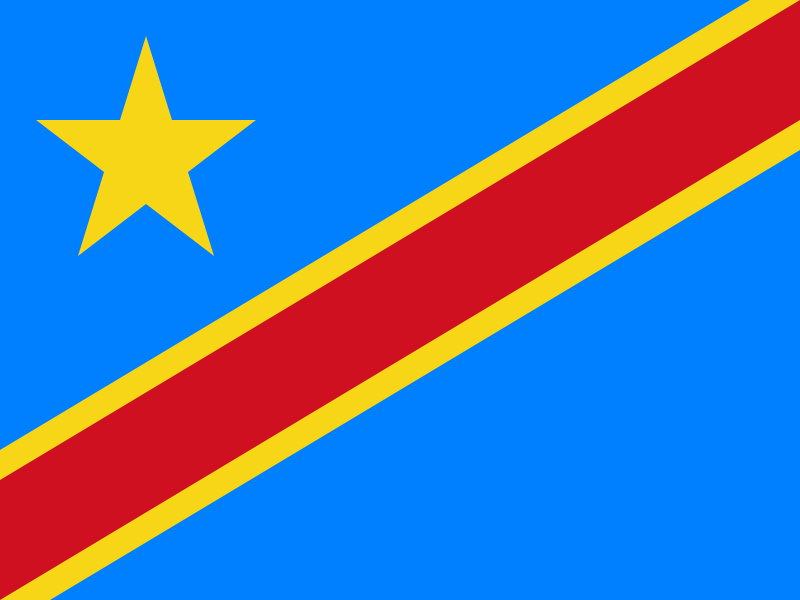
Congo (Kinshasa)
· CD

Congo (Kinshasa)

Congo (Kinshasa)

The Democratic Republic of the Congo (DRC), often called Congo-Kinshasa, is a vast, vibrant country in Central Africa. Known for its incredible biodiversity, the Congo Basin is home to a wide array of wildlife, including…

#Central Africa#Democratic Republic of the Congo#Kinshasa#French-speaking#Rainforest
1/1

Top hotels & flights

Hand-picked stays and the best fares into Congo (Kinshasa).

Top Hotels in Kinshasa

Top Flights to Kinshasa

Popular activities

Tours, tickets and experiences travelers book most in Congo (Kinshasa).

Tours

Explore Virunga National Park

Virunga National Park is Africa's oldest national park and a UNESCO World Heritage site, known for its diverse wildlife including mountain gorillas and active volcanoes.

Kinshasa City Tour

Discover Kinshasa's vibrant culture, history, and art through its museums and galleries.

The Art of Kinshasa

A journey through Kinshasa's creative landscape, from street art to modern galleries.

Lola ya Bonobo Sanctuary

Visit the only sanctuary in the world for orphaned bonobos, located just outside Kinshasa.

Outdoor

River Congo Adventure

Engage in thrilling outdoor activities on the majestic River Congo.

Mbudi Nature

A serene escape into nature within Kinshasa, ideal for picnics and leisure walks.

Location videos

Real reels from travelers, plus longer watches to get the full picture.

From travelers
Watch & explore

Practical info

The essentials for planning your time in Congo (Kinshasa).

Currency
CF | CDF | Congolese Franc
Population
Information not available.
Languages
French, French, Lingala, Kikongo, Swahili, Tshiluba
Average weather
Congo (Kinshasa)
Jan
rain
31°22°
Feb
rain
31°22°
Mar
rain
31°22°
Apr
rain
31°22°
May
rain
30°21°
Jun
cloud
28°19°
Jul
cloud
27°18°
Aug
cloud
28°18°
Sep
cloud
30°20°
Oct
rain
31°21°
Nov
rain
31°22°
Dec
rain
31°22°

Local guide

What travelers love, what to watch for, and a deeper read on Congo (Kinshasa).

What people love

Pros of Traveling to Congo (Kinshasa):

  1. Rich Culture and History: Congo (Kinshasa) has a diverse cultural heritage with over 200 ethnic groups, each with its own traditions, music, and dance. Visitors can immerse themselves in the vibrant local culture and learn about the country's fascinating history.

  2. Breathtaking Natural Beauty: The country is home to stunning natural landscapes, including lush rainforests, majestic rivers like the Congo River, and diverse wildlife in national parks such as Virunga National Park. Nature lovers will appreciate the opportunity to explore the country's unique ecosystems.

  3. Adventure Opportunities: Congo (Kinshasa) offers a range of adventure activities for thrill-seekers, such as gorilla trekking in Virunga National Park, hiking to active volcanoes, and exploring the Congo River by boat. These activities provide an unforgettable and off-the-beaten-path experience.

  4. Warm Hospitality: Congolese people are known for their warm and welcoming hospitality towards visitors. Travelers can expect to be greeted with open arms and experience the genuine friendliness of the local population.

  5. Culinary Delights: Food enthusiasts will enjoy sampling the diverse cuisine of Congo (Kinshasa), which includes dishes like fufu (a staple food made from cassava), grilled fish, and various plantains dishes. Exploring the local markets and trying traditional meals is a must for food lovers.

  6. Cultural Festivals and Events: The country hosts various cultural festivals and events throughout the year, showcasing music, dance, and art forms unique to the region. Attending these celebrations provides insight into the local culture and allows visitors to participate in traditional festivities.

  7. Opportunities for Volunteering and Giving Back: Travelers interested in making a positive impact can participate in volunteer programs that support local communities in Congo (Kinshasa). Engaging in meaningful volunteer work allows visitors to contribute to the well-being of the country and its people.

Overall, traveling to Congo (Kinshasa) offers a rich cultural experience, breathtaking natural landscapes, adventure opportunities, and the chance to connect with the welcoming local community. It is a destination that promises a unique and memorable journey for those willing to explore its hidden gems.

What to know

Traveling to Congo (Kinshasa) may have some cons that travelers should be aware of:

  1. Safety and Security Concerns: Congo (Kinshasa) has experienced political instability, armed conflicts, and violence in certain regions. Travelers should stay informed about the current situation and potential risks before planning their trip.

  2. Health Risks: Congo (Kinshasa) has a high prevalence of diseases such as malaria, yellow fever, and Ebola. Travelers should take necessary health precautions, including vaccinations and antimalarial medications, before traveling to the country.

  3. Poor Infrastructure: Infrastructure in Congo (Kinshasa) is often underdeveloped, with limited access to basic services such as healthcare, transportation, and communication. Travelers may face challenges related to road conditions, lack of medical facilities, and unreliable public services.

  4. Language Barrier: The official language in Congo (Kinshasa) is French, and communication in English may be limited in some areas. Travelers who do not speak French may encounter difficulties in communicating with locals and navigating their way around the country.

  5. Limited Tourist Facilities: Congo (Kinshasa) is not a popular tourist destination compared to other countries in Africa, resulting in fewer tourist facilities and amenities. Accommodation options, tour guides, and tourist services may be limited in some regions.

It is essential for travelers to conduct thorough research, follow travel advisories, and consider the risks before traveling to Congo (Kinshasa).

The Democratic Republic of the Congo (DRC), often referred to as Congo (Kinshasa) to distinguish it from its neighbor, the Republic of Congo, has a rich and complex history marked by pre-colonial civilizations, colonial exploitation, and post-independence challenges.

Pre-Colonial Era

  • Early Societies: The region now known as the DRC was inhabited by a variety of Bantu-speaking peoples who established complex societies. Notable pre-colonial kingdoms included the Kingdom of Kongo, the Luba Empire, and the Lunda Empire. These societies were characterized by advanced systems of governance and trade networks.

Colonial Era

  • Leopold II and the Congo Free State (1885-1908): In 1885, King Leopold II of Belgium established the Congo Free State as his private possession, exploiting its resources and people. The period is infamous for its brutal exploitation and human rights abuses, including forced labor and violent repression, leading to millions of deaths.

  • Belgian Congo (1908-1960): Due to international outcry over the atrocities, the Belgian government took over administration in 1908, renaming it the Belgian Congo. While slightly more regulated, the colonial administration continued to exploit the country's resources and people.

Independence and Post-Colonial Challenges

  • Independence (1960): The Congo gained independence on June 30, 1960. Patrice Lumumba became the first Prime Minister, and Joseph Kasa-Vubu was the first President. The new nation quickly faced political instability and secessionist movements, such as the Katanga Crisis.

  • Lumumba and Mobutu: Patrice Lumumba was deposed and assassinated in 1961, a pivotal event often attributed to Western interests concerned about his pro-Soviet leanings. Joseph Mobutu (later Mobutu Sese Seko) seized power in a coup in 1965, establishing a dictatorial regime that lasted until 1997. Mobutu renamed the country Zaire in 1971 and implemented policies of Africanization and kleptocracy.

Transition and Conflict

  • First Congo War (1996-1997): Mobutu's regime was overthrown by a coalition led by Laurent-Désiré Kabila, who became president. This was part of a broader regional conflict involving neighboring countries.

  • Second Congo War (1998-2003): Often called the "African World War," this conflict involved multiple African nations and resulted in millions of deaths, primarily from disease and starvation.

Modern Era

  • Post-War Reconstruction: Following a peace accord in 2003, Joseph Kabila (son of Laurent-Désiré Kabila, who was assassinated in 2001) became president. The country has faced ongoing challenges, including armed conflict in the eastern regions, political instability, and humanitarian crises.

Significant Historical Figures

  • Patrice Lumumba: First Prime Minister and a symbol of African independence and resistance against neocolonialism.
  • Mobutu Sese Seko: Longtime dictator known for his autocratic rule and corruption.
  • Laurent-Désiré Kabila: Rebel leader who overthrew Mobutu and became president.
  • Joseph Kabila: Former president who led the country through post-war reconstruction.

Important Landmarks

  • Kinshasa: The capital city, known as a vibrant cultural and political center.
  • Virunga National Park: A UNESCO World Heritage site, home to diverse wildlife, including mountain gorillas.
  • Boyoma Falls: A series of seven cataracts on the Lualaba River, significant in local trade.
  • Mount Nyiragongo: An active volcano near Goma, known for its lava lake.

The DRC remains a nation of immense potential due to its vast natural resources but continues to grapple with significant developmental and security challenges.