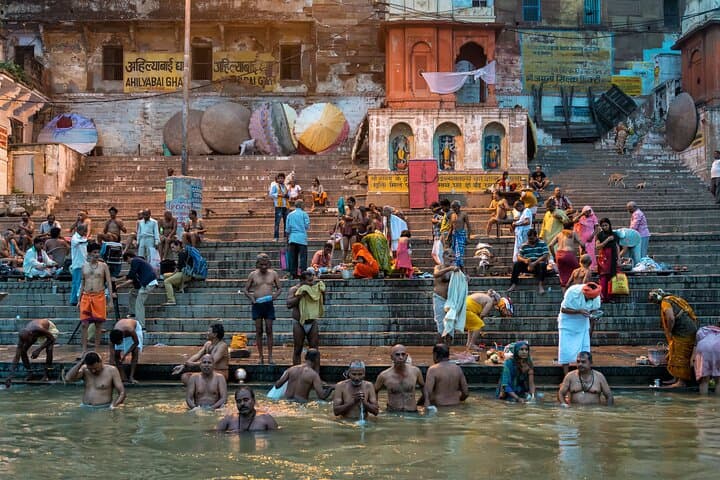

Varanasi
City · India

Varanasi

Varanasi, India

Varanasi, often referred to as Kashi or Benares, is one of the oldest continuously inhabited cities in the world and holds a special place in the…

Top Hotels in Varanasi

Top Flights to Varanasi

Flying from

Top Activities in Varanasi

From the journal

Varanasi guides & stories

What to see, when to go, what it costs.

3 stories

Highlights

Things to do in Varanasi

What travellers talk about most.

Tours

Explore the Ghats of Varanasi

Experience spirituality and witness daily rituals along the Ganges River.

Sarnath Visit

Visit the historic site where Buddha delivered his first sermon.

Shopping

Shopping in Varanasi

Explore the bustling markets for silk, handicrafts, and souvenirs.

Outdoor

Boat Ride on the Ganges

Enjoy an early morning or evening boat ride to view the city from the river.

Street Food Tour

Indulge in the authentic flavors of Varanasi by trying the local street food.

See it for yourself

Location videos

Reels and longer watches.

Featured for Varanasi

Traveller clips picked out for this place.

Good to know

Practical info

Weather, costs and getting around.

Varanasi, India Open in Google Maps
When to go

Scored from each month’s typical high and its usual conditions.

GoodMixedAvoid
Best monthsOct – Mar
Worth avoidingApr – Sep
September · rainHigh 32°C Low 25°C
Avoid

Varanasi, located in northern India, experiences a humid subtropical climate. Summers (April to June) are extremely hot, with temperatures often soaring above 40°C (104°F). Monsoon season spans from July to September, bringing heavy rainfall and high humidity. Winter months (November to February) are cooler and more pleasant, with temperatures ranging from 5°C to 15°C (41°F to 59°F), making it an ideal time to visit. Spring and autumn have moderate temperatures, providing comfortable conditions for exploring the city.

All 12 monthshighs, lows and conditions
Jan
clear
22°
Feb
clear
25°11°
Mar
sun
31°16°
Apr
hot
37°21°
May
hot
40°26°
Jun
hot
38°28°
Jul
rain
33°27°
Aug
rain
32°26°
Sep
rain
32°25°
Oct
sun
32°21°
Nov
clear
29°15°
Dec
clear
24°10°
Population
1.4 million
Density
198 / km²
Local time
Also known as
Kashi, Banaras, Benares

Know before you go

Local guide

A deeper read on Varanasi.

What people love

Traveling to Varanasi, India, offers a range of unique experiences and benefits. Here are some of the pros of visiting this ancient city:

  1. Cultural and Spiritual Significance:

    • Varanasi, also known as Kashi or Benares, is one of the oldest continuously inhabited cities in the world. It is considered the spiritual capital of India, with significant importance in Hinduism, Buddhism, and Jainism.
    • It is a major pilgrimage destination for Hindus, who believe that dying in Varanasi and being cremated on the banks of the Ganges river leads to moksha, or liberation from the cycle of rebirth.
  2. The Ganges River:

    • The city is situated on the banks of the sacred Ganges River, where you can witness the famous Ganga Aarti, a spectacular evening ritual involving chants, fire, and music.
    • Visitors can take a boat ride at dawn to see the ghats (steps leading down to the river) and observe the rituals performed there, which is a deeply immersive experience.
  3. Rich Historical and Architectural Heritage:

    • Varanasi is home to numerous temples and historical sites, such as the Kashi Vishwanath Temple, one of the most revered Hindu temples dedicated to Lord Shiva.
    • The city's narrow lanes are filled with old-world charm, featuring traditional houses, bustling bazaars, and historic buildings.
  4. Cultural Experiences:

    • The city is a hub for classical Indian music and dance. Visitors can attend concerts and performances showcasing traditional art forms.
    • Varanasi is famous for its silk weaving, and visitors can purchase exquisite Banarasi sarees and other handicrafts.
  5. Diverse Culinary Scene:

    • The city's street food is renowned for its variety and flavor. You can enjoy local delicacies like chaat, lassi, and sweet treats such as jalebi and malaiyo.
    • Varanasi offers both vegetarian and non-vegetarian options, reflecting the diverse culinary practices of the region.
  6. Educational and Enlightening:

    • For those interested in learning, Varanasi is home to Banaras Hindu University, one of the largest residential universities in Asia, which often hosts cultural and educational events.
    • The city provides an opportunity to understand and appreciate the diverse philosophies and practices that have thrived in India for centuries.
  7. Vibrant Festivals:

    • Varanasi hosts numerous festivals throughout the year, such as Diwali, Holi, and the Dev Deepawali, where the ghats are lit with thousands of lamps, creating a magical atmosphere.

Traveling to Varanasi can be a deeply personal and transformative experience, offering insights into India's rich cultural and spiritual landscape.

What to know

Traveling to Varanasi, one of the oldest cities in the world and a significant cultural and religious hub in India, can be an enriching experience. However, there are some cons or challenges that travelers might face:

  1. Crowded and Chaotic Environment: Varanasi is a bustling city with narrow streets that can be overwhelming for some travelers. The city is often crowded with pilgrims, tourists, and locals, which can make navigating the streets a bit challenging.

  2. Pollution and Cleanliness: Like many cities in India, Varanasi struggles with air and water pollution. The Ganges River, while sacred, is heavily polluted in certain parts, which can be a concern for visitors. The streets can also be less clean than what some travelers might be accustomed to.

  3. Intense Weather: Varanasi experiences extreme weather conditions. Summers can be intensely hot with temperatures soaring above 40°C (104°F), while winters can be quite chilly. The monsoon season brings heavy rains that can lead to flooding and disrupt travel plans.

  4. Hustlers and Scams: Tourists may encounter touts and scammers around popular tourist areas. These individuals may try to overcharge for goods and services or offer misleading information to extract money from unsuspecting travelers.

  5. Cultural Sensitivity: Varanasi is a deeply religious city with many sacred sites. Travelers need to be mindful of local customs and traditions, which may be unfamiliar to them. There are also cremation ceremonies that occur along the ghats, which can be intense for some visitors.

  6. Limited Modern Amenities: While Varanasi is developing, some areas might lack modern amenities that international travelers expect, such as high-speed internet, varied dining options, and luxury accommodations.

  7. Traffic and Transportation: The traffic in Varanasi can be chaotic, with a mix of cars, rickshaws, bicycles, and pedestrians. This can make getting around the city time-consuming and stressful, especially for those not used to such conditions.

Despite these challenges, many travelers find the city's spiritual atmosphere and historical significance to be worth the visit. Proper planning and an open mind can help mitigate some of these cons.


Varanasi, also known as Kashi or Benares, is one of the oldest continuously inhabited cities in the world and holds immense historical, cultural, and religious significance in India. Located in the northern Indian state of Uttar Pradesh, Varanasi sits on the banks of the holy river Ganges.

Ancient and Medieval History

  • Early History: Varanasi's history dates back over 3,000 years. It is mentioned in ancient texts such as the Rigveda and is considered a major cultural and religious center in Hinduism.
  • Religious Significance: The city is believed to have been founded by Lord Shiva, making it one of the most sacred places in Hinduism. It is part of the Sapta Puri, the seven holy pilgrimage centers in Hindu tradition.
  • Buddhism and Jainism: In the 6th century BCE, Varanasi was a prominent center for the development of Buddhism and Jainism. Gautama Buddha gave his first sermon at nearby Sarnath, marking the beginning of the Buddhist Sangha.
  • Mauryan and Gupta Periods: Under the Mauryan and Gupta empires, Varanasi thrived as a center of religion, education, and commerce.

Medieval to Early Modern Period

  • Muslim Conquests: During the medieval era, Varanasi came under Muslim rule, beginning with the conquest by Muhammad Ghori in the 12th century. Despite the destruction of many temples, the city remained a significant center of Hindu learning and culture.
  • Mughal Era: Under the Mughal Empire, particularly during the reign of Akbar, Varanasi enjoyed a period of relative peace and prosperity. Akbar's policy of religious tolerance allowed Hindu scholarship to flourish.
  • Maratha Patronage: In the 18th century, the Marathas, particularly Queen Ahilyabai Holkar, played a significant role in restoring and building temples, including the famous Kashi Vishwanath Temple.

British Colonial Period

  • Colonial Influence: The British East India Company took control of the city in the 18th century. Varanasi became part of the British Raj, but retained its status as a center of Indian culture and religion.
  • Indian Independence Movement: Varanasi was also a hub of political activity during the struggle for independence from British rule. Many freedom fighters hailed from the city, and it hosted numerous political gatherings.

Post-Independence

  • Cultural Renaissance: After India gained independence in 1947, Varanasi continued to be a major center for education, culture, and spirituality. It is home to Banaras Hindu University (BHU), one of Asia's largest residential universities.
  • Modern Developments: In recent years, Varanasi has seen significant infrastructure development, aimed at enhancing its status as a cultural and religious tourist destination.

Significant Landmarks

  • Kashi Vishwanath Temple: One of the most famous Hindu temples dedicated to Lord Shiva, it is considered one of the twelve Jyotirlingas.
  • Dashashwamedh Ghat: The most famous ghat in Varanasi, known for its evening Ganga Aarti.
  • Sarnath: Located a few kilometers from Varanasi, it is where Buddha delivered his first sermon.
  • Ramnagar Fort: A historical fortification that houses a museum showcasing the history of the region.
  • Bharat Mata Temple: Unique for its relief map of India carved in marble.

Varanasi remains a vibrant blend of the ancient and modern, a city where history and spirituality continue to shape its identity.