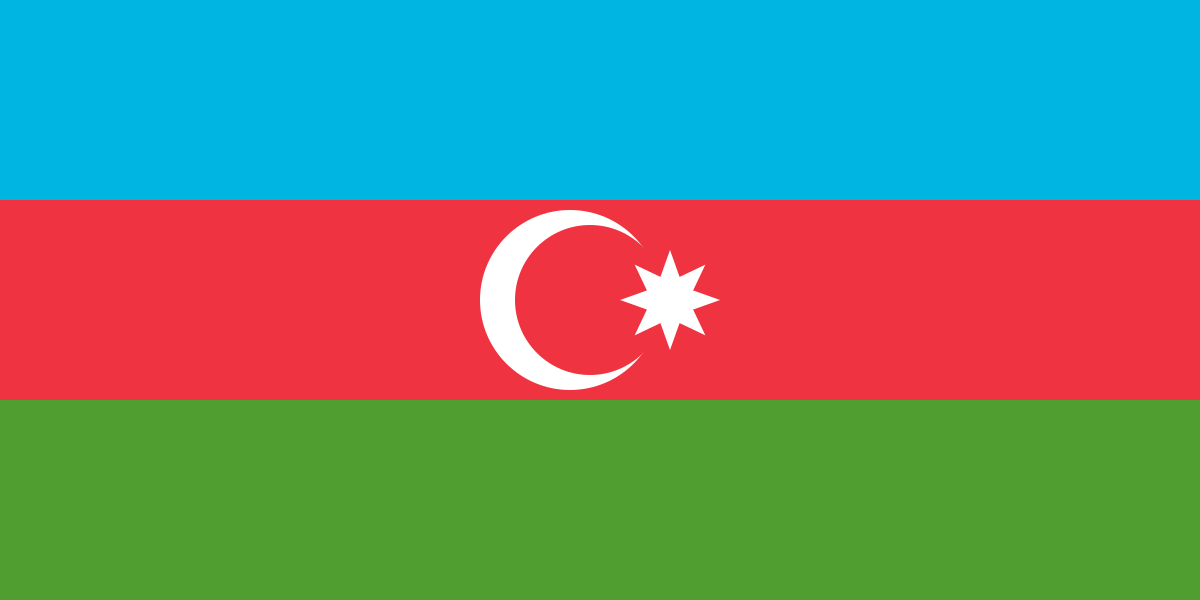
Azerbaijan
· AZ

Azerbaijan

Azerbaijan

Azerbaijan: Where East Meets West in a Tapestry of Fire and Flame Nestled at the crossroads of Europe and Asia, Azerbaijan is a land of captivating contrasts. Ancient fire temples whisper tales of Zoroastrianism, while f…

#Eastern Europe#Caspian Sea#Cultural diversity#Oil-rich#Baku
1/4

Top hotels & flights

Hand-picked stays and the best fares into Azerbaijan.

Top Hotels in Baku

Top Flights to Baku

Popular activities

Tours, tickets and experiences travelers book most in Azerbaijan.

Tours

Baku Old City Tour

Explore the UNESCO World Heritage site of the Old City of Baku, where you can see ancient buildings, narrow alleys, and local culture.

Sheki Khan's Palace Visit

Visit the opulent Sheki Khan's Palace, renowned for its stunning architecture and colorful stained-glass windows.

Visit the Heydar Aliyev Center

An architectural masterpiece designed by Zaha Hadid featuring exhibitions on Azerbaijani culture and history.

Tour of the Ateshgah Fire Temple

Explore the ancient temple known for its unique connection to fire worship, featuring a central altar flame.

Shopping

Shopping at Ganjlik Mall

Visit Ganjlik Mall for a modern shopping experience with a variety of international brands.

Shopping at Taza Bazaar

Experience local culture and flavors at Baku's oldest market, Taza Bazaar.

Explore Nizami Street

A pedestrian street in central Baku filled with shops, cafes, and restaurants offering vibrant city life.

Outdoor

Hiking in Gobustan National Park

Discover prehistoric petroglyphs and unique muddy volcanoes in Gobustan National Park.

Explore the Tufandag Mountain Resort

A popular resort for skiing in winter and hiking in summer offering breathtaking views.

Adventure in Shahdag Mountain Resort

An all-season resort offering activities like skiing, hiking, and mountain biking in the scenic Caucasus.

Location videos

Real reels from travelers, plus longer watches to get the full picture.

From travelers
Watch & explore

Practical info

The essentials for planning your time in Azerbaijan.

Currency
₼ | AZN | Azerbaijani manat Azerbaijan
Population
10.2 million
Languages
Azerbaijani, Russian, Armenian, Avar, Lezgian, Tat
Average weather
Azerbaijan
Jan
cold
7°1°
Feb
cold
8°2°
Mar
cloud
12°5°
Apr
cloud
17°9°
May
sun
22°14°
Jun
sun
27°18°
Jul
hot
31°22°
Aug
hot
30°21°
Sep
clear
26°18°
Oct
cloud
20°13°
Nov
rain
14°8°
Dec
cold
9°3°

Local guide

What travelers love, what to watch for, and a deeper read on Azerbaijan.

What people love

Azerbaijan, located at the crossroads of Eastern Europe and Western Asia, offers a unique travel experience with a mix of cultural heritage, natural beauty, and modern developments. Here are some pros of traveling to Azerbaijan:

  1. Rich Cultural Heritage: Azerbaijan has a rich cultural heritage with influences from Persian, Russian, Turkish, and Soviet cultures. Visitors can explore historical sites such as the UNESCO-listed Old City of Baku, Gobustan Rock Art Cultural Landscape, and the ancient fire temple of Ateshgah.

  2. Diverse Landscapes: Azerbaijan boasts diverse landscapes ranging from the Caspian Sea coast to the Greater Caucasus mountains. Travelers can enjoy activities such as hiking, skiing, and water sports in various regions of the country.

  3. Modern Infrastructure: Azerbaijan has invested in modern infrastructure, making travel within the country convenient and comfortable. The capital city of Baku features modern amenities, luxury hotels, and a vibrant nightlife scene.

  4. Delicious Cuisine: Azerbaijani cuisine is a delightful mix of flavors influenced by the country's diverse cultural heritage. Visitors can savor local dishes such as kebabs, pilaf, dolma, and baklava.

  5. Hospitality: Azerbaijani people are known for their warm hospitality and welcoming nature towards visitors. Travelers can expect to be greeted with genuine friendliness and kindness during their stay in Azerbaijan.

Overall, traveling to Azerbaijan offers a blend of cultural exploration, outdoor adventures, and modern comforts, making it a compelling destination for tourists seeking a unique experience.

What to know

Some potential cons of traveling to Azerbaijan may include:

  1. Visa requirements: Depending on your nationality, you may need to obtain a visa in advance to travel to Azerbaijan. This process can be time-consuming and may require providing various documents.

  2. Language barrier: While many people in tourist areas and larger cities speak English, the majority of the population in Azerbaijan speaks Azerbaijani. Communicating in English may be challenging in more remote or rural areas.

  3. Cultural norms: Azerbaijan is a predominantly Muslim country with conservative social norms. Travelers should be respectful of local customs, such as dressing modestly and avoiding public displays of affection.

  4. Safety concerns: While Azerbaijan is generally considered safe for tourists, like any other destination, it's important to be cautious and aware of your surroundings, especially in crowded areas and at night.

  5. Limited transportation options: Public transportation in Azerbaijan may not be as developed as in some other countries. Renting a car or hiring a private driver may be necessary to explore more remote areas.

Please note that these are general considerations and may not apply to all travelers. It's always a good idea to research and prepare for your specific travel needs and preferences.

Azerbaijan, a country located at the crossroads of Eastern Europe and Western Asia, has a rich and complex history that spans several millennia. Here is a detailed overview of its history, significant events, historical figures, and important landmarks:

Ancient and Medieval Periods

  • Early Inhabitants: The territory of present-day Azerbaijan has been inhabited since the Stone Age, with evidence of human settlements dating back to the Stone Age, including the Azykh Cave, which is one of the ancient sites of human habitation.

  • Caucasian Albania: In antiquity, the region was known as Caucasian Albania, which was a kingdom located in the eastern Caucasus. It existed from about the 4th century BC to the 8th century AD.

  • Persian and Roman Influence: Azerbaijan was influenced by Persian empires, notably the Achaemenid Empire, and later witnessed Roman incursions.

  • Sassanian and Byzantine Periods: The region was under the control of the Sassanian Empire, and later, the Byzantine Empire exerted influence.

  • Islamic Conquest: In the 7th century, the Islamic Caliphate conquered the region, leading to the widespread adoption of Islam.

The Medieval Era

  • The Shirvanshahs: An important medieval dynasty, the Shirvanshahs, ruled parts of Azerbaijan from the 9th to the 16th century. They are known for contributing to the region's cultural and architectural development.

  • The Safavid Dynasty: The Safavids, who established one of the most significant Persian empires, originated from Azerbaijan. The dynasty's founder, Shah Ismail I, was born in Ardabil, in what is now northwestern Iran but was part of historical Azerbaijan.

  • The Mongol Invasions: In the 13th century, the Mongol invasions led by Hulagu Khan devastated the region but also integrated it into the vast Mongol Empire.

The Early Modern Period

  • The Qajar and Russian Influence: In the 18th and 19th centuries, Azerbaijan became a battleground for regional power struggles, especially between the Persian Qajar dynasty and the expanding Russian Empire.

  • Treaties of Gulistan (1813) and Turkmenchay (1828): These treaties divided Azerbaijani territories between Russia and Persia. Northern Azerbaijan became part of the Russian Empire.

The 20th Century

  • First Republic: In 1918, following the Russian Revolution, Azerbaijan declared independence and established the Azerbaijan Democratic Republic, the first secular democratic Muslim-majority state. However, this independence was short-lived.

  • Soviet Era: In 1920, Azerbaijan was incorporated into the Soviet Union as the Azerbaijan Soviet Socialist Republic. During this period, significant industrialization and urbanization occurred.

  • Nagorno-Karabakh Conflict: In the late 1980s, ethnic tensions between Armenians and Azerbaijanis over the Nagorno-Karabakh region escalated into a full-scale war after the dissolution of the Soviet Union.

  • Independence: Azerbaijan declared independence from the Soviet Union on August 30, 1991. The independence was formally recognized in December 1991.

The Modern Era

  • Oil Boom and Economic Development: With its rich oil reserves, Azerbaijan has experienced significant economic growth since gaining independence. The capital, Baku, has developed rapidly and is known for its modern architecture.

  • Nagorno-Karabakh War (2020): In 2020, Azerbaijan and Armenia engaged in a 44-day war over Nagorno-Karabakh, resulting in Azerbaijan regaining control over parts of the region and surrounding territories.

Significant Historical Figures

  • Shah Ismail I: Founder of the Safavid dynasty, which played a crucial role in the history of Iran and Azerbaijan.

  • Heydar Aliyev: The third president of Azerbaijan, serving from 1993 to 2003, credited with stabilizing the country post-independence.

Important Landmarks

  • Maiden Tower: Located in Baku, this 12th-century monument is shrouded in mystery and is a UNESCO World Heritage site.

  • Palace of the Shirvanshahs: A 15th-century palace complex in Baku, recognized as a UNESCO World Heritage site.

  • Gobustan Rock Art: This site contains ancient petroglyphs and is recognized for its archaeological significance.

  • Baku Flame Towers: Modern skyscrapers that symbolize the development and modernization of Azerbaijan.

Azerbaijan's history is marked by a tapestry of cultural influences and significant geopolitical developments, making it a unique and strategically important nation in the region.