Uzbekistan by Rail: Tashkent, Samarkand, and Bukhara
Eight days along the ancient trade routes of Central Asia
Tashkent metro rides and market domes
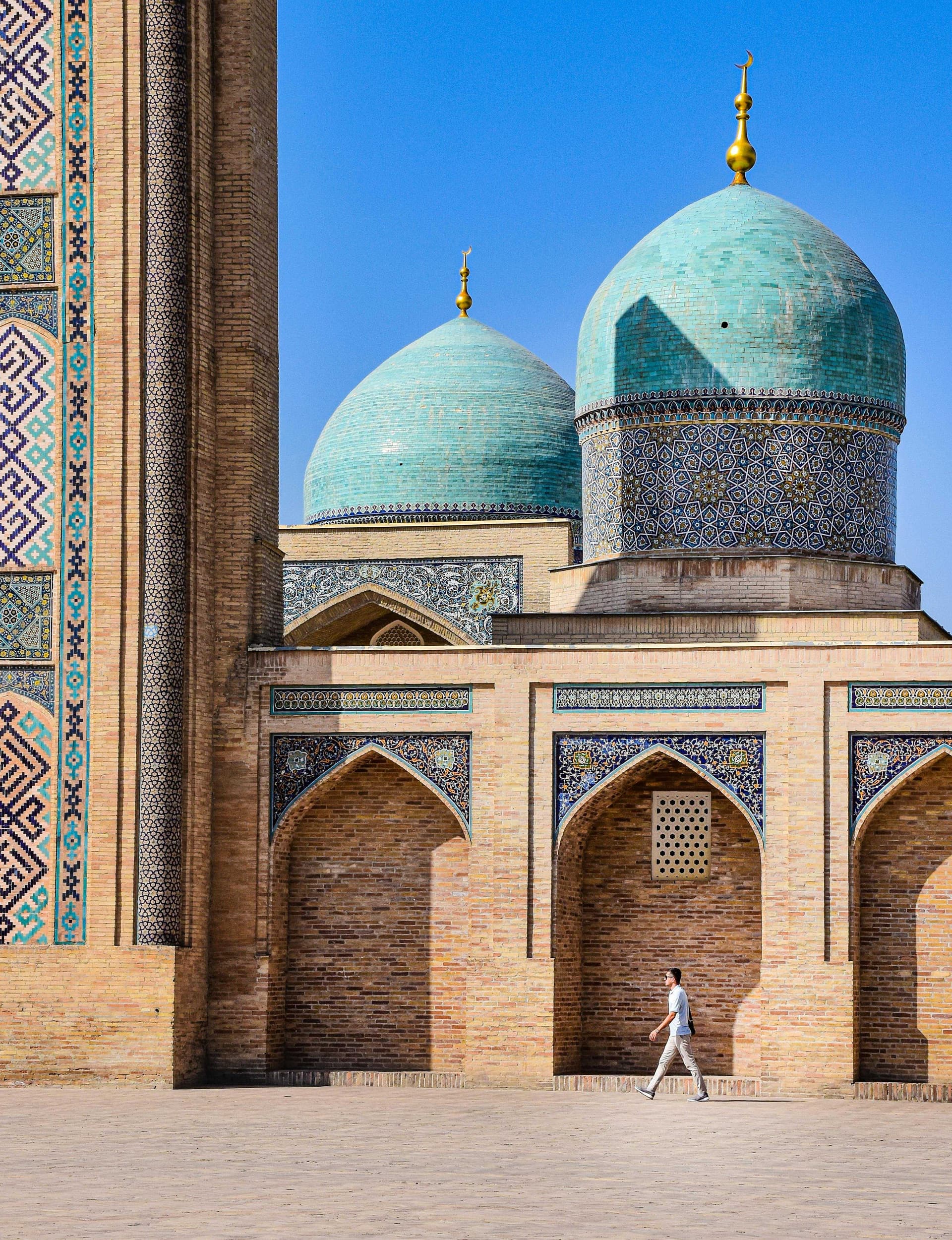
Tashkent feels vast and surprisingly green when you step out of Islam Karimov Tashkent International Airport. Most travellers treat the Uzbek capital as a quick pitstop, but spending two nights here grounds you before heading west along the ancient Silk Road. Start at Chorsu Bazaar under its massive concrete turquoise dome. Inside, vendors carve slabs of horsemeat, heap mounds of freshly baked non bread still steaming from clay tandoor ovens, and pile dried apricots and walnuts high on wooden counters. You can try a hot bowl of shurpa broth at the open-air food stalls for less than 30,000 Uzbek som. Don't skip Exploring Historical Monuments in Tashkent, especially the Hazrati Imam Complex where the 7th-century Uthman Quran is kept inside a climate-controlled vault.
Underneath the city lies one of the most remarkable Soviet legacy projects in Central Asia: the Tashkent Metro. A single ride costs 2,000 som regardless of distance. Step off at Alisher Navoi station to admire dark wooden carvings and arched blue ceramic pillars, or at Kosmonavtlar for wall tiles honoring Soviet space travel. For a half-day trip into green hills, book a Chimgan Mountains Adventure to see the rocky ridges surrounding Charvak Reservoir, roughly two hours northeast of the center. Spend your second evening sitting at a chaikhana (teahouse) in the Old Town, sipping green tea from porcelain pialas while watching locals play backgammon into the evening.
Getting from Tashkent to Samarkand: High-speed Afrosiyob trains connect Tashkent Central Station to Samarkand daily, covering the 340-kilometer journey in just over two hours. Conventional Sharq trains and shared taxis from the Olmazor metro station are slower alternatives taking around four hours. Train tickets sell out weeks in advance during peak spring and autumn months, so check current schedules and reserve seats well ahead of travel.
Samarkand tilework and royal mausoleums
Arriving in Samarkand for a three-night stay puts you at the geometric heart of Timurid architecture. The centerpiece is Registan Square, flanked by three grand madrasahs covered in intricate blue glazed tiles that shimmer under the midday sun. It is worth paying the site entry fee early in the morning around 8:00 AM before tour buses crowd the courtyard. To grasp the sheer scale of the empire, book an Explore Registan Square tour or hire a Guide / excursion service in Samarkand, which starts from Rs 2,409 for roughly half a day of historical context. If you want high-quality photos without scrambling for camera angles, the Samarkand City Tour with a Professional Photographer costs around Rs 8,997 and covers the finest light conditions at Gur-e-Amir, the tomb of Tamerlane.
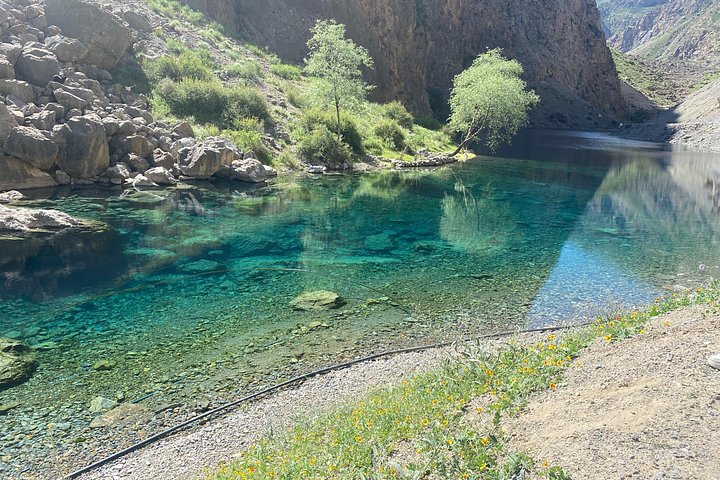
Just a short walk north of the center brings you to Shah-i-Zinda, an avenue of mausoleums painted in vivid cobalt, lapis lazuli, and turquoise. Walk slowly up the stone staircase; local legend says if you count the same number of steps going up as coming down, your mind is clear. After visiting the tomb of Bibi-Khanym, head directly to Shopping at Siyob Bazaar adjacent to the mosque. Here, you can sample Samarkand’s famous dense flatbreads alongside sweet halva made from sesame and pistachios. For travellers seeking day trips beyond the city, a Full Day Trip from Samarkand to the Seven Lakes in Tajikistan costs around Rs 29,508, crossing the border into rugged Alpine valleys. Alternatively, consider a Yurt Camp from Samarkand to Bukhara Self-Guided Tour starting at Rs 42,154 to sleep under desert stars en route to your next city.
Full Day Trip from Samarkand to the Seven Lakes in Tajikistan
Getting from Samarkand to Bukhara: The Afrosiyob high-speed train makes the run west from Samarkand to Bukhara in about one hour and thirty minutes. Regional passenger trains and private shared taxis departing from Samarkand’s main station take roughly three to four hours across the semi-desert landscape. Be sure to check live departure times and book rail tickets well in advance.
Bukhara trading domes and ancient bathhouses
Step into Bukhara for your final three nights, and the city’s unpaved lanes and mud-brick walls immediately shift the pace of your journey. Unlike Tashkent’s wide avenues or Samarkand’s grand detached monuments, Bukhara’s old center is compact and best explored entirely on foot. Start at Lyabi-Khauz, a calm plaza built around a 17th-century pool shaded by ancient mulberry trees. A Historic Tour of Bukhara or a general City Tour Around Bukhara costs around Rs 7,829 for a half-day guided walk through the Kalyan Minaret—a 47-meter brick tower so impressive that Genghis Khan spared it from destruction—and the massive Ark Fortress that once housed the city's emirs.
City Tour Around Bukhara
The real joy of Bukhara is wandering beneath its medieval domed bazaars: Toqi Zargaron (jewelers), Toqi Telpak Furushon (cap makers), and Toqi Sarrofon (money changers). Here, craftspeople continue ancient trades, hammering copper platters, stitching Suzani embroideries, and forging damascus steel knives. For local handicrafts and souvenir rugs, Shopping in Bukhara requires friendly haggling over pots of saffron tea. After a day on dusty cobblestones, book a session at the 16th-century Bozori Kord hammam; a Bukhara Bath Hammam with Massage and Hotel Pick up runs about Rs 14,634 for three hours of scrub baths and essential oils. If you want to venture further out, the Desert yurt camp and Mountain tour - 3 days costs around Rs 39,143 for an immersive trek into the Kyzylkum Desert. Make sure you set up an Uzbekistan Data eSIM from 0.5GB daily to 50GB 30 Days (from Rs 376) so you stay connected while navigating regional roads.
Uzbek tables teahouses and practical timing
Eating in Uzbekistan is serious business, centered almost entirely on plov—a rich dish of rice, lamb, yellow carrots, and spices cooked in giant iron cauldrons. Every region claims its own version: Tashkent serves a dark, garlic-heavy plov, while Samarkand layers rice and meat without mixing them during cooking. Eat your heavy plov at lunchtime, as local shops often sell out by 2:00 PM. Accompany your meal with achichuk (a sharp salad of thinly sliced tomatoes, onions, and chili) and carafes of hot green tea, which helps digest the fat. Samsa—flaky pastry pockets stuffed with spiced beef or pumpkin and baked on the clay walls of a tandoor—make the best mid-morning snack for under a dollar.
The best months to visit Uzbekistan are April through May and September through October. Summer temperatures regularly top 40°C (104°F), making sightseeing brutal, while winter brings freezing winds off the steppe. Budget around $40 to $80 per day for mid-range comfortable hotels, dining, and entrance fees. While credit cards are accepted in major Tashkent hotels, cash is king everywhere else; bring crisp, undamaged US Dollar bills to exchange at bank kiosks. Dress codes are relaxed for tourists, but modest attire covering shoulders and knees is expected when entering working mosques and religious shrines.
Keep reading
More blogs
Written for real trips, priced from the city you fly out of.