Swap tour buses for riverside walks and medieval city wall circuits in Franconia.
Paddling and hiking through Pegnitz Valley West
Most people arrive in Franconia expecting bratwurst and timber-framed houses, completely missing the fact that a green ribbon cuts straight through the city westwards. The Adventure Walk in Pegnitz Valley West starts near the city border and follows the winding river toward Fürth. It costs nothing to access the trails, though you will need a standard VGN single transit ticket for three euros and seventy cents to return on the U-Bahn from Jakobinenstraße. Plan for two to three hours on foot depending on how often you stop along the grassy riverbanks.
Late spring through early October offers the best conditions, when the willow trees overhang the water and local beer gardens open near the path. What most visitors get wrong is treating this area like an urban park with paved loops. The trails shift quickly from asphalt bike paths to dirt track along riverbanks, requiring sturdy shoes rather than casual sneakers. If you want outdoor exercise without leaving the urban district, this green corridor provides a five-kilometer escape that feels entirely separate from the city center.
Cobblestones and ramparts in the Old Town
To Explore the Old Town of Nuremberg on foot requires stamina for steep stone lanes and uneven medieval pavement. Start at the Hauptmarkt early in the morning, around seven, before the day-trippers crowd the square and the heat builds up against the sandstone walls. Walking the five-kilometer perimeter along the old city walls takes roughly two and a half hours. The loop gives you uninterrupted views of the fortress ditch, massive stone bastions, and wood-framed gate towers.
Accessing the public walkways along the medieval walls costs absolutely nothing. Most people make the mistake of sticking purely to the central shopping streets near the river, missing the quieter northern wall sections near Tiergärtnertor. Take the steep climb up toward the Imperial Castle grounds for an elevated view over the tiled rooftops. Autumn is ideal for this walk because cooler air makes the uphill climbs manageable, and early morning fog often hangs over the Pegnitz bridges, making early starts exceptionally rewarding for photographers and walkers alike.
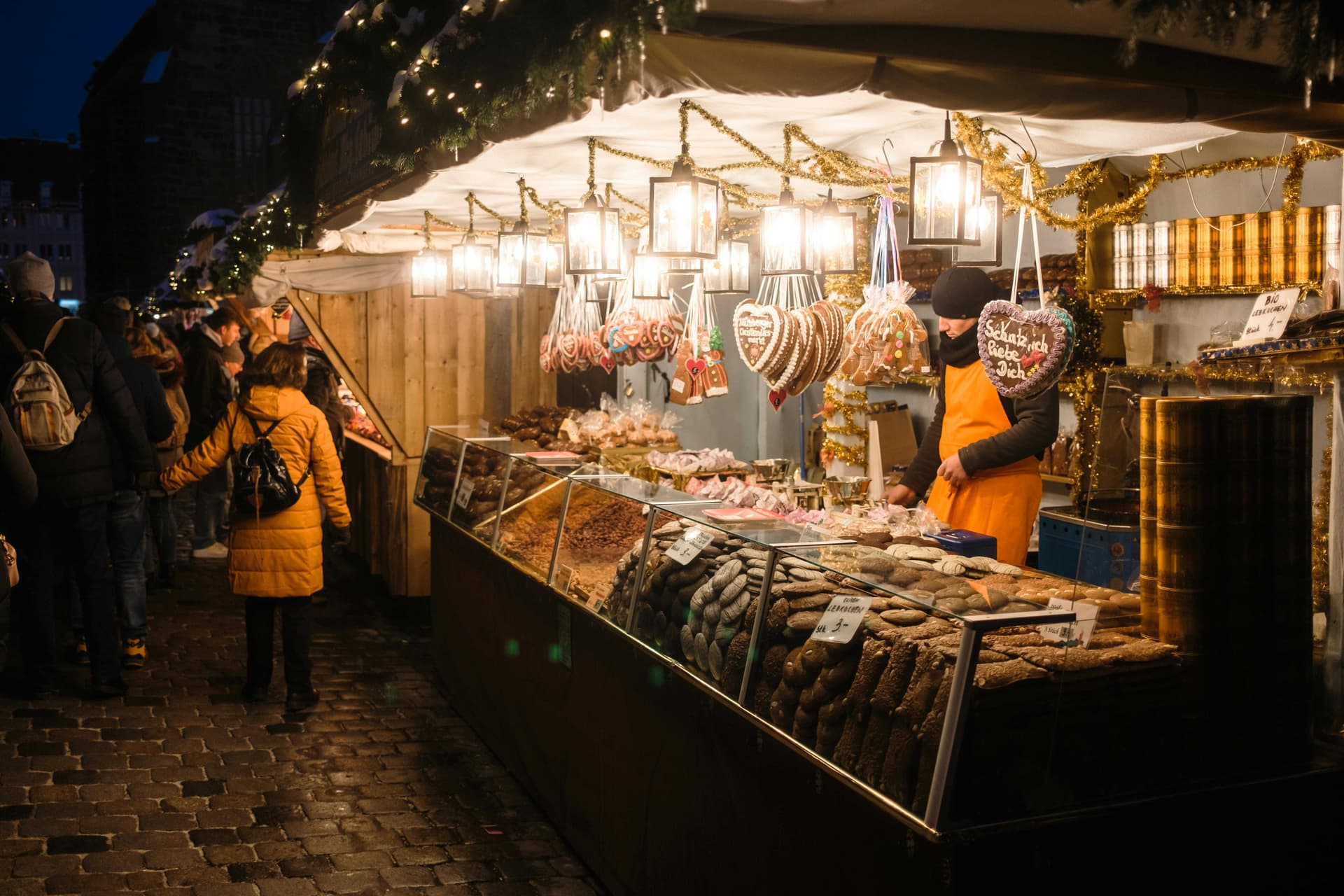
AI-generated impression of Nuremberg: Explore the Old Town of Nuremberg, as a visitor would see it
History lessons around the Rally Grounds
A trip to the southern edge of Nuremberg brings you to the expanse around the Dutzendteich lake system. Taking a walk around the area to Visit the Nazi Party Rally Grounds reveals a stark contrast between massive granite architecture and open natural parkland. Take the S-Bahn line S2 from the main train station directly to Dutzendteich stop, which takes less than ten minutes and costs three euros and seventy cents each way. Walking the full circle around the lake and through the monumental grounds takes roughly three hours.
While entry to the outdoor grounds is completely free year-round, entering the documentation center inside the unfinished Congress Hall costs around six euros for adults. Many people assume the site is strictly a formal indoor museum, missing the reality that the surrounding park is now heavily used by local runners, cyclists, and inline skaters. Visiting in late afternoon allows you to combine a sober historical walk along the Great Road with a loop around the water, where rowboats are available to hire during summer months for ten euros per hour.
Gothic monuments and gravestones at St John
To Visit St. John's Cemetery in the St. Johannis district, hop on Tram 6 from Plärrer and ride six minutes to the St. Johannis stop. This historic burial ground doubles as one of Nuremberg's most atmospheric outdoor walking sites, filled with centuries of heavy sandstone tombs, bronze epitaphs, and sprawling rose bushes. Admission is entirely free, and an hour is plenty of time to explore the pathways without feeling rushed.
Visitors often assume cemeteries in Germany close early or operate as restricted quiet zones, but St. John's functions almost like a botanical garden where locals quietly read on benches under old tree canopies. May and June are the best months to visit, when hundreds of rose bushes planted on top of the stone graves bloom in deep pinks and reds. Combine this peaceful walk with a short stroll through the nearby Hesperidengärten, baroque gardens situated just behind the cemetery walls, which offer free entry and manicured hedge mazes perfect for a quiet morning wander.
Keep reading
More blogs
Written for real trips, priced from the city you fly out of.