Skip the resort markups with cheap transit, local eats, and low-cost sights.
Public buses and timing the heat
Most travelers landing at Zayed International Airport walk straight to the taxi line and shell out AED 80 to AED 100 for a twenty-minute ride into downtown. Skip the cab rank entirely. The city's public bus network is spotless, air-conditioned, and costs a fraction of the price. Buy a reusable Hafilat smart card at the airport terminal machine for AED 10, load AED 20 onto it, and board the A2 bus. It runs every 30 minutes straight into the central city for AED 4.
Timing matters just as much as transport. Visiting between June and September means enduring outdoor temperatures that routinely pass 45°C. You will spend your days running between air-conditioned malls and taxis, which forces your spending up. Plan your trip between November and March instead. The days stay around 24°C, meaning you can walk along the waterfront and explore street markets without melting or paying for private transport every two hours.
Getting around the city during your stay is equally cheap if you stick to the bus system. Fares inside the municipal area start at AED 2 per swipe. Buses run frequently along major arterial roads like Sheikh Rashid Bin Saeed Street and Sultan Bin Zayed the First Street, connecting downtown to the main sights. Taxis are metered and relatively fair, but taking four or five short rides a day quickly adds up to AED 120, whereas the bus tops out at a few dirhams.
Palaces grand mosques and low entry fees
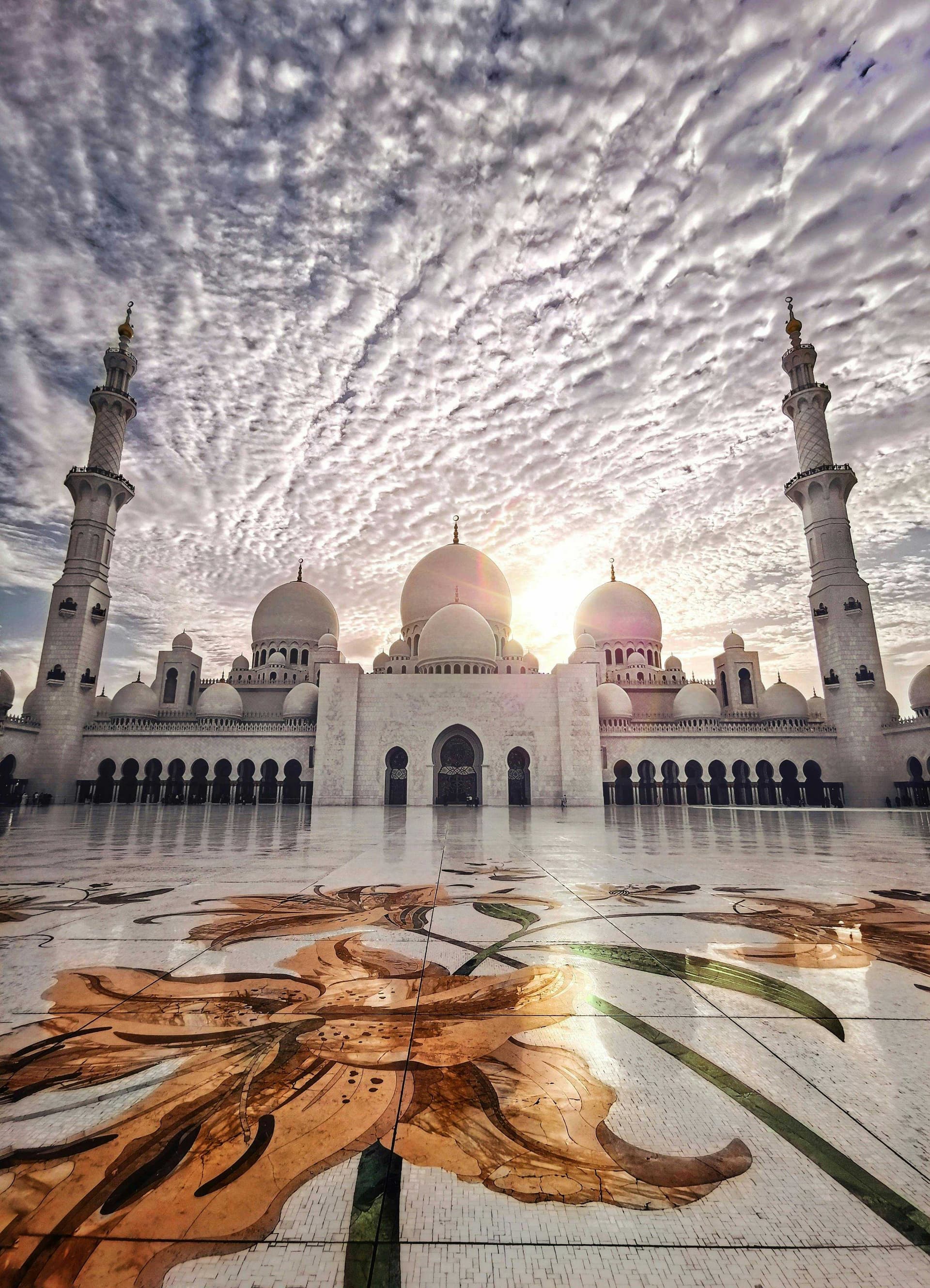
Abu Dhabi has a reputation for high-end extravagance, but its best cultural landmarks are remarkably affordable. The Sheikh Zayed Grand Mosque, built with white Greek marble and housing massive hand-knotted carpets, costs nothing to enter. You must reserve a free access pass online before arriving to skip the massive entry queue. Go at 4:30pm so you can see the white minarets in daylight and watch the blue floodlights turn on as sunset finishes around 6:00pm.
For historical depth, skip the glitzy shopping centers and take a Cultural Visit to Qasr Al Hosn for AED 30. It is the oldest standing structure in Abu Dhabi, centered around an 18th-century watchtower that originally guarded the island's fresh water source. Just down the road, the Qasr Al Watan Tour costs AED 65, granting access to the working Presidential Palace. Walking through the Great Hall with its 37-meter dome costs a fraction of a theme park ticket and delivers far more substance.
Art lovers do not need to spend big either. Entry to the Louvre Abu Dhabi costs AED 63, giving you access to Jean Nouvel’s domed museum complex and galleries spanning millennia of global history. What is not worth your money on a tight budget? Theme parks like Ferrari World Abu Dhabi, where entry starts at AED 345 per person, or Yas Waterworld at AED 295. Unless you are traveling specifically for roller coasters, those single-day tickets will swallow a huge chunk of your spending money for very little local flavor.
Base in Al Danah and skip hotel dining
Where you sleep determines your daily budget. Saadiyat Island and Yas Island house luxury beachfront resorts where standard rooms regularly exceed AED 1,500 per night. Instead, look for hotels around the Al Danah neighborhood or the Tourist Club Area downtown. Mid-range business hotels and service apartments here often cost between AED 180 and AED 300 per night, put you within walking distance of public transit, and place you right next to low-cost eateries.
Food is where standard travel guides steer budget travelers wrong by pointing them to hotel buffets or resort dining rooms, where dinner easily costs AED 250 a head. The real food scene in Abu Dhabi lives in the side streets of Al Danah and Madinat Zayed. South Asian and Levantine expatriates make up a massive portion of the city's population, and the street-level cafeterias cater directly to them.
Walk down Electra Street or Hamdan Street for lunch. You can get a piping hot plate of chicken biryani or chana masala with fresh parathas for AED 12 to AED 18. Lebanese bakeries serve warm manakish topped with za'atar and cheese for AED 6 each. A full meal with fresh mango juice rarely crosses AED 25. Save high-end dining for a single special night if you must, but for everyday meals, eating where local workers eat keeps your daily food bill under AED 60.
AI-generated impression of Abu Dhabi: a busy everyday street in Abu Dhabi — small shops, street food, people going about their day
Desert trips that do not cost a fortune
Desert tours are a standard item on any United Arab Emirates itinerary, but prices vary wildly for essentially the same terrain. Private glamping packages and luxury dune dinners can reach Rs 80,000 to Rs 100,000 without offering much extra beyond white tablecloths. You can experience the exact same red sand dunes for a small fraction of that cost by selecting standard group tours.
A Morning Desert Safari in Abu Dhabi starts from Rs 4,906 and covers dune bashing, camel riding, and sandboarding over about half a day. If you want the evening experience with sunset views and food, an Abu Dhabi Evening Desert Safari with Camel Ride and Dinner costs from Rs 8,348. Both options pick you up directly from city hotels and take you out into the dunes without forcing you to pay luxury resort markups.
Back in the city, evening entertainment does not need to cost anything at all. Skip expensive beach clubs and head to the public shores. An Evening at Corniche Beach costs just AED 10 for entry to the managed family beach section, complete with clean amenities and boardwalk access. You can take an Abu Dhabi Corniche Stroll along the eight-kilometer manicured promenade for free, watching the sunset behind the skyline alongside local families, runner clubs, and street snack vendors.
Ready-made plans
Start a trip to Abu Dhabi
Day-by-day plans built on real bookable activities. Copy one and make it yours.