How to plan around heat waves, monsoon downpours, and peak crowd seasons.
November to February Brings Clear Skies and Peak Crowds
If you step out of Suvarnabhumi Airport in December, the evening air greets you with a manageable 26°C breeze rather than a wall of humidity. This dry stretch from November through February is when Bangkok delivers clear skies and comfortable mornings. It is also when flight bookings surge and hotel room rates double across the city center. Expect to wait in line for 45 minutes just to enter The Temple of the Emerald Buddha, from THB 500, if you show up after 9:00am.
Early mornings are your secret weapon during these cool months. Take the BTS Skytrain to Phaya Thai around 7:30am and grab an iced dirty coffee at Factory Coffee - BKK, from THB 300, before the morning rush hour peaks. Walking outside is actually pleasant before 10:00am, but do not make the mistake of assuming midday street wandering will be easy. The heat still accumulates quickly along major concrete corridors like Rama I Road.
When midday heat builds, seek refuge inside large retail spaces like Siam Paragon or ICONSIAM. These air-conditioned megastructures offer relief alongside massive indoor food halls. If you are flying in during late December or January, book your accommodation at least three months in advance to avoid paying steep holiday surcharges.
March to May Heat Requires a Different Strategy
By April, afternoon temperatures regularly climb past 38°C, turning asphalt streets into heat traps. Stepping out of your hotel feels like opening an oven door, and your shirt will be soaked before you walk two blocks. What most visitors get wrong during these months is sticking to a heavy daytime walking itinerary. Trying to explore open-air sights between 11:00am and 4:00pm will drain your energy within an hour.
Instead, choose a well-connected base along the Sukhumvit or Silom BTS lines so you can move around without long walks. Spend hot afternoons exploring air-conditioned hubs like Samyan Mitrtown or centralwOrld. Shift your main activities to the late evening when temperatures drop slightly and the night markets open up.
If you arrive in mid-April, you will experience Songkran, the Thai New Year water festival. Areas around Silom and Khao San Road transform into multi-day water fights with thousands of people. It is an energetic street party, but if you want quiet sight-seeing, avoid this week entirely as many local businesses close down.
June to October Rains Offer Lower Hotel Rates
Monsoon season gets a bad reputation, but it is one of the best times to visit if you dislike crowds and inflated prices. The rain rarely falls continuously. Instead, expect intense thunderstorm bursts lasting 60 to 90 minutes in the late afternoon. Between downpours, skies clear up, temperatures drop to a comfortable 28°C, and luxury hotel prices dip significantly.
Use rainy afternoons for indoor sights and dining. Take a Jim Thompson House Museum Tour, from THB 200, to explore traditional teak architecture, or ride up to the high-altitude observation deck at King Power Mahanakhon, from THB 880, to watch storm clouds sweep over the city. Afterwards, sit down for a meal at ii, from THB 1,000, or enjoy warm toasted bread and fresh milk at Nueng Nom Nua (Banthat Thong), from THB 100.
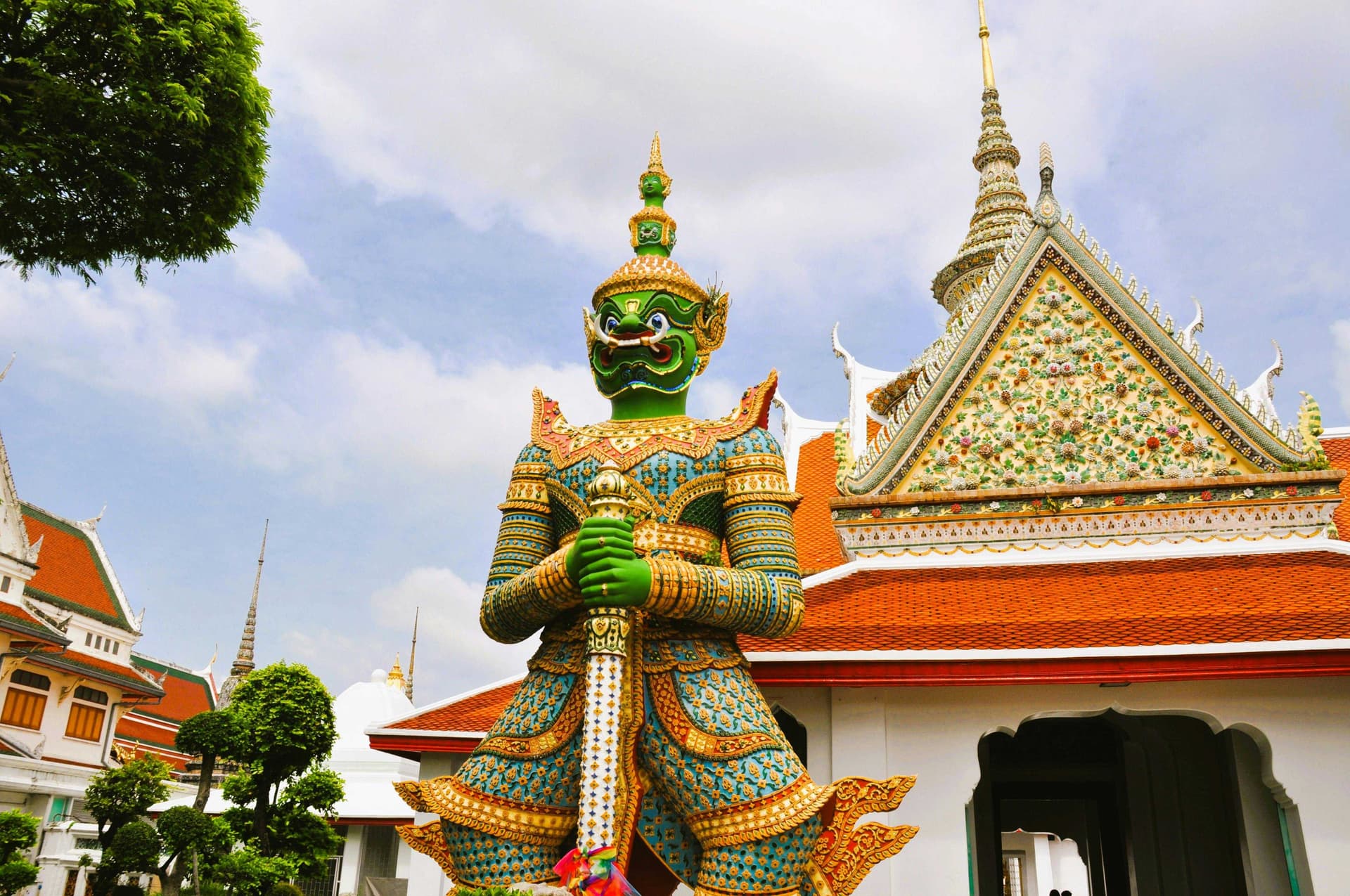
The main trap during monsoon months is trusting road taxis. Five minutes of torrential rain can freeze traffic across Sukhumvit for two hours. Stick strictly to the BTS Skytrain, MRT subway, or public express boats on the Chao Phraya River. Taking the river boat directly to Visit Wat Arun, from THB 100, lets you see wet temple spires gleaming against dark clouds without standing in long queues.
AI-generated impression of Bangkok: ii, as a visitor would see it
Structuring Your Daily Routine to Beat Heat and Traffic
Regardless of which month you travel, your daily schedule matters more than the weather forecast. Bangkok operates on two optimal windows: early morning before traffic locks up, and late evening when street food stalls ignite their burners. Midday from 11:30am to 3:30pm is prime time for resting, eating indoors, or taking cover in spa facilities.
Start your day around 6:30am at Pak Khlong Talat, where wholesale flower vendors unload mountains of fresh jasmine and orchids. Follow up with an early meal near Chinatown Bangkok (Yaowarat), sampling crab fried rice at Chula 50 Kitchen, from THB 100, or pad thai at Thipsamai Padthai Pratoopee, from THB 300. When midday sun hits its peak, book a Relax with a Traditional Thai Massage, from THB 400, for a couple of hours of quiet downtime.
As dusk arrives, take an Evening Walk Through Chinatown or stroll along the shaded waterside paths at Benjakitti Park. If you crave late-night comfort food, join the line at Jeh O Chula, from THB 300, for their famous midnight tom yum noodles. Avoid hailing tuk-tuks between 4:30pm and 7:00pm, as you will end up stuck in stationary traffic inhaling exhaust fumes.
Ready-made plans
Start a trip to Bangkok
Day-by-day plans built on real bookable activities. Copy one and make it yours.