An Outdoor Guide to Bruges: Canals, Trails, and Coast
Swap packed alleys for kayak routes, polder rides, and coastal dune runs.
Paddling the Ringvaart out toward Damme
Most visitors cluster on the cobbles, but the best way to move through Bruges is on the water under your own power. Skip the mid-day crowding by renting a kayak along the outer Ringvaart early in the morning, around 8:30am before the tour groups arrive. From the northern edge of the city, you can paddle along the tree-lined Damse Vaart canal all the way to the small town of Damme. It is a straight, flat six-kilometer stretch bordered by poplar trees and old windmills.
The paddle takes roughly ninety minutes each way. Expect to pay around EUR 25 for a two-hour single kayak rental. What most people get wrong is trying to do this in the heat of July afternoons when headwind and sun beat straight down the channel. Plan your trip for May or late September when the light is low and the water stays still. Bring water and light rain gear; weather along the Flemish polders shifts fast, turning a gentle morning workout into a wet slog within twenty minutes.
Renting bikes for the ramparts and polders
Bruges is flanked by five kilometers of green earthworks known as the Vesten. Cycling this outer ring gives you a completely different view of the city walls, four surviving windmills, and quiet residential gates. Bike rental shops cluster around the main train station, charging roughly EUR 12 to EUR 15 for a full day. Grab a sturdy Dutch-style city bike around 9am, check your tire pressure, and head counter-clockwise around the perimeter.
If you want a longer ride, keep heading north onto the LF Noordzee Route toward Oostkerke. The terrain is flat, but do not be fooled by the lack of elevation; wind off the North Sea provides plenty of resistance. A round trip loop through the polder villages covers about twenty-five kilometers and takes three hours at a steady pace. Skip the high-end carbon road bikes; the cobbled transitions at the city gates will shake your hands numb, so fat city tires or a gravel setup work far better. October brings crisp air and yellow foliage along the canals, though you will want windproof layers.
Exploring the historic core from land and canal
While open country delivers space, active exploration inside the medieval centre requires clever timing. Start your morning with a Guided Walking Tour of Bruges, from EUR 15, which takes roughly two hours and covers hidden back alleys that standard maps miss. It is a great way to map out the topography before the streets fill up with afternoon crowds. Afterward, dive into Market Square Exploration to take in the towering Belfry and surrounding guildhouses on foot before the tour buses drop off their passengers at noon.
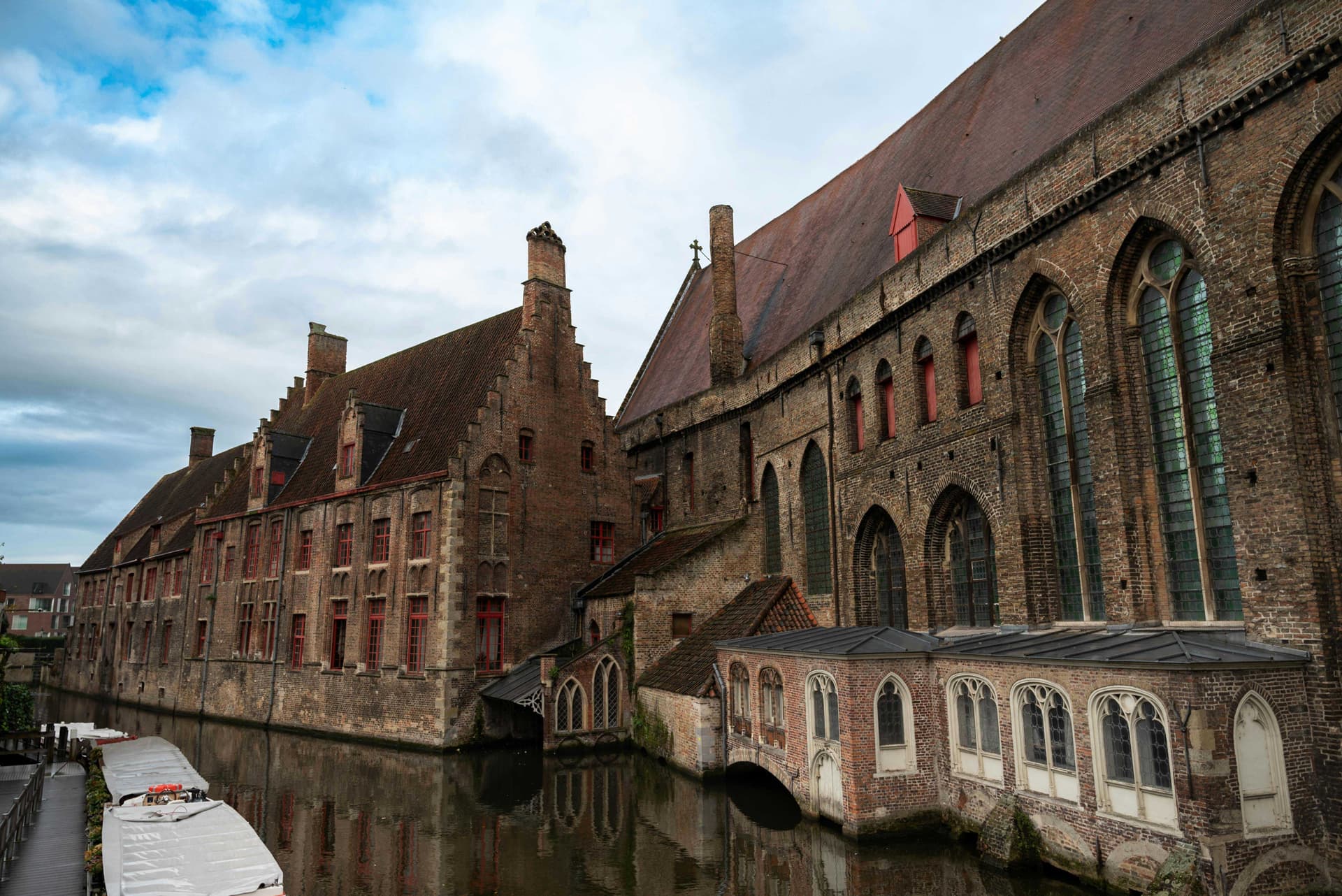
To see the city from the waterline without doing the heavy paddling yourself, board a classic open launch. A Boat Tour on Bruges Canals, from EUR 15, runs thirty minutes and slips under low stone bridges where footpaths cannot reach. Lines at the five landing stages grow long by 11am, so hop on the first departure at 10am. Do not buy tickets from unauthorized street sellers; head straight to the official wooden booths along the Dijver or Coupure canals. Seeing the brick facades rise directly out of the dark water gives you a true appreciation for medieval Flemish engineering.
AI-generated impression of Bruges: Boat Tour on Bruges Canals, as a visitor would see it
Taking the train for North Sea dune runs
When you need wide open trails and salt air, the coast sits surprisingly close. Jump on the local train from Bruges station to Blankenberge or Knokke, which costs under EUR 5 each way and takes fifteen minutes. From the station, you can run or hike directly into the dunes of the Zwin Nature Reserve, a vast coastal salt marsh stretching to the Dutch border. The marked trail loops run anywhere from five to fifteen kilometers through coastal scrub, sand dunes, and mudflats.
If you prefer water sports, head to the beach clubs at Knokke-Heist between May and October. Windsurfing and kiteboard equipment rentals start around EUR 40 per hour, with lessons available if the onshore winds are strong. Winter brings brutal gales that close the rentals down entirely, so stick to the trail runs between November and March. Bring trail running shoes with aggressive tread; sandy dunes and wet marsh tracks will ruin standard road trainers in short order.
Keep reading
More blogs
Written for real trips, priced from the city you fly out of.