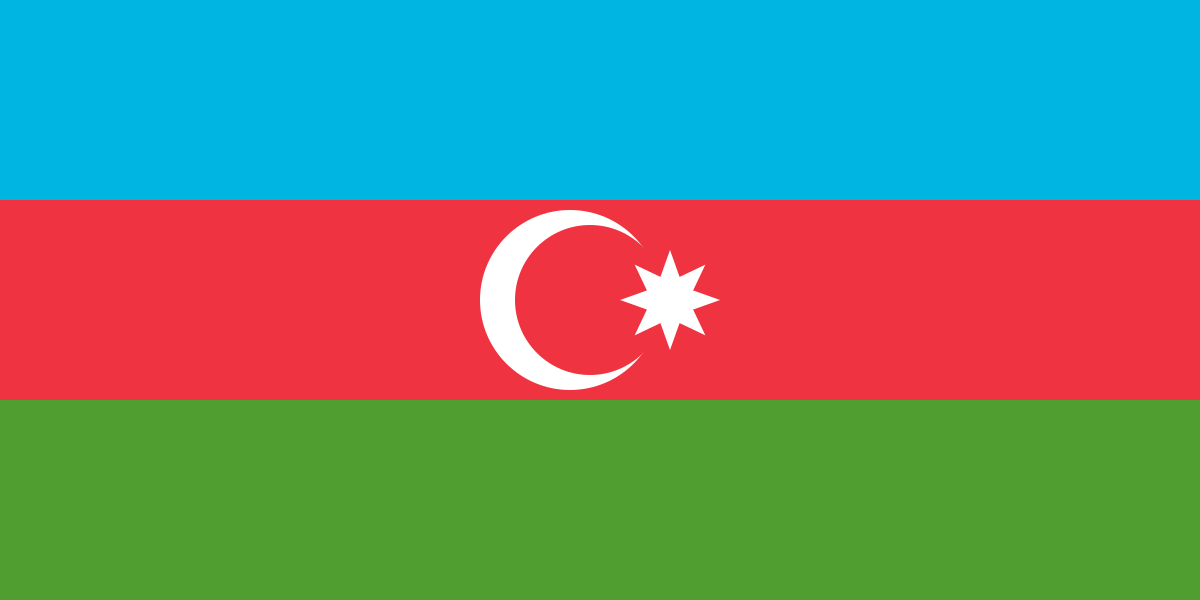
Xocavənd, also known as Hadrut, is a town in the Khojavend District of Azerbaijan. The history of this region is deeply intertwined with the broader historical events of Nagorno-Karabakh, a region that has been a focal point of conflict between Armenia and Azerbaijan.
Historical Background:
- Ancient and Medieval Periods: The area around Xocavənd has a long history, with influences from various empires and cultures, including the Persian, Roman, and Byzantine empires. The region has historically been part of Armenian and Caucasian Albanian influence zones.
- 19th to 20th Century: During the 19th century, the area came under Russian control as part of the Russian Empire's expansion into the Caucasus. Following the Russian Revolution, the Nagorno-Karabakh region, including Xocavənd, became a disputed territory between the newly independent states of Armenia and Azerbaijan.
Soviet Era:
- Under Soviet rule, Nagorno-Karabakh was established as an autonomous oblast within the Azerbaijan SSR, with Xocavənd being one of its towns. This period saw significant demographic changes and development within the region.
Nagorno-Karabakh Conflict:
- First Nagorno-Karabakh War (1988-1994): Xocavənd became a significant location during the conflict between Armenian and Azerbaijani forces. The town and surrounding areas were heavily contested, and it came under the control of ethnic Armenian forces in the early 1990s.
- Post-War Period: After the ceasefire in 1994, Xocavənd remained under the de facto control of the self-declared Republic of Artsakh (Nagorno-Karabakh Republic), although it was internationally recognized as part of Azerbaijan.
2020 Nagorno-Karabakh War:
- During the Second Nagorno-Karabakh War, which began in September 2020, Azerbaijani forces recaptured Xocavənd. This was part of a broader military operation that resulted in significant territorial changes and a subsequent ceasefire agreement brokered by Russia in November 2020.
Significant Events and Figures:
- The town has been affected by the complex geopolitical struggles in the region, with impacts on its population and infrastructure.
- Important figures are mostly military and political leaders involved in the Nagorno-Karabakh conflicts.
Landmarks:
- The region around Xocavənd contains various historical and religious sites, including ancient churches and monasteries, although specific landmark details may vary, especially following recent conflicts and changes in control.
Overall, Xocavənd's history is closely linked with the broader historical and political developments of the Nagorno-Karabakh region, marked by periods of conflict and cultural significance.