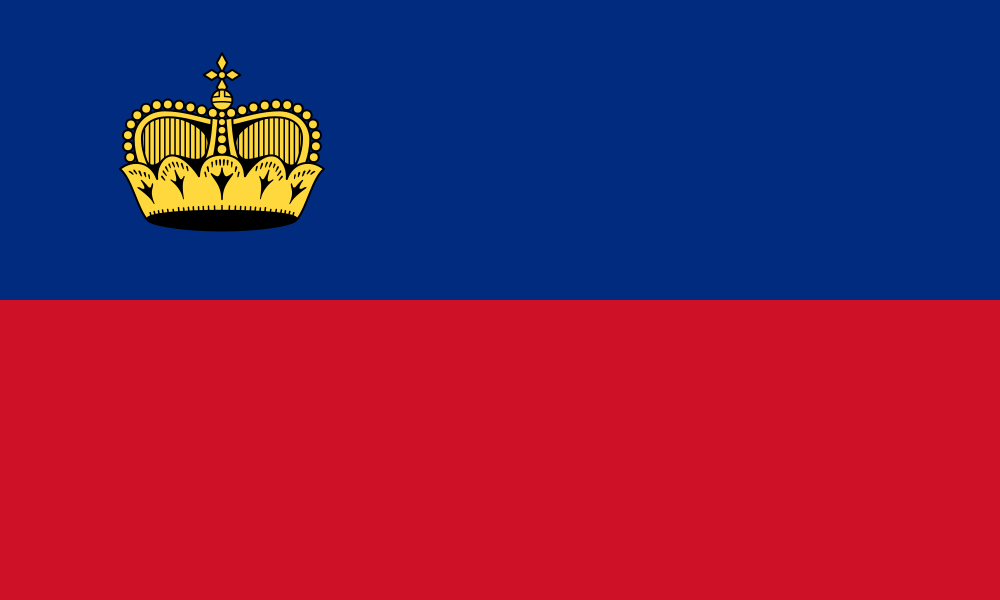
Vaduz
· LI

Vaduz

Vaduz, Vaduz, Liechtenstein

Nestled in the Alps: Discover Vaduz, the Charming Capital of Liechtenstein Imagine a fairytale setting: a medieval castle perched on a verdant hillside, overlooking a charming town nestled between snow-capped mountains a…

#capital city#small#mountainous#European#historic
1/7

Top hotels & flights

Hand-picked stays and the best fares into Vaduz.

Top Hotels in Vaduz

Top Flights to Vaduz

Popular activities

Tours, tickets and experiences travelers book most in Vaduz.

Tours

Explore Vaduz Castle

Visit the official residence of the Prince of Liechtenstein and enjoy panoramic views of Vaduz.

Stroll through the Old Town

Discover the charm of Vaduz Old Town with its traditional architecture and quaint cafes.

Visit the Kunstmuseum Liechtenstein

Explore a remarkable collection of modern and contemporary art in this architecturally stunning museum.

Shopping

Shopping at Rathausplatz

Discover unique local goods and souvenirs at the shops in Rathausplatz.

Outdoor

Outdoor Adventure in the Alps

Experience adventure sports like hiking and mountain biking in the beautiful Alpine landscape surrounding Vaduz.

Location videos

Real reels from travelers, plus longer watches to get the full picture.

Watch & explore

Practical info

The essentials for planning your time in Vaduz.

Currency
CHF | CHF | Swiss franc
Population
5696.0
Languages
German, German
Average weather
Vaduz
Jan
snow
3°-3°
Feb
snow
5°-2°
Mar
cloud
10°1°
Apr
rain
14°4°
May
rain
19°8°
Jun
sun
23°12°
Jul
sun
25°14°
Aug
sun
24°14°
Sep
cloud
20°11°
Oct
rain
14°6°
Nov
cloud
8°2°
Dec
snow
4°-1°

Local guide

What travelers love, what to watch for, and a deeper read on Vaduz.

What people love

Vaduz is the capital city of Liechtenstein, a small country nestled in the heart of the Alps between Switzerland and Austria. Here are some of the pros of traveling to Vaduz:

  1. Scenic Beauty: Vaduz is surrounded by stunning mountain scenery, making it a picturesque destination for nature lovers. Hiking and outdoor activities are popular in the area.

  2. Vaduz Castle: The iconic Vaduz Castle overlooks the city and offers panoramic views of the surrounding landscape. It is the official residence of the Prince of Liechtenstein and is a must-visit attraction for tourists.

  3. Cultural Sites: Vaduz is home to several museums and galleries showcasing the rich history and culture of Liechtenstein. The Kunstmuseum Liechtenstein houses a notable collection of modern and contemporary art.

  4. Peaceful Atmosphere: Vaduz is known for its peaceful and safe environment, making it an ideal destination for those looking to relax and unwind.

  5. Shopping and Dining: The city offers a variety of shopping and dining options, from local shops selling traditional crafts to upscale restaurants serving gourmet cuisine.

Overall, Vaduz is a charming destination with a unique blend of natural beauty, culture, and history that appeals to travelers seeking a peaceful and enriching experience.

Enjoy your trip to Vaduz!

What to know

Traveling to Vaduz, the capital of Liechtenstein, can be a unique and rewarding experience, but there are some potential disadvantages or cons to consider:

  1. Limited Attractions: Vaduz is a small city, and while it has some cultural and historical sites, such as the Vaduz Castle and the Liechtenstein National Museum, the number of attractions is quite limited compared to larger cities. Visitors might find that they can see most of what Vaduz has to offer in a short amount of time.

  2. High Costs: Liechtenstein is known for being an affluent country, and the cost of accommodations, dining, and general expenses in Vaduz can be high. Travelers on a tight budget might find it challenging to manage their expenses.

  3. Limited Nightlife and Entertainment: Vaduz is not known for a vibrant nightlife scene. Those looking for a bustling nightlife or diverse entertainment options might be disappointed.

  4. Public Transportation: While public transportation within Liechtenstein is adequate, it is not as extensive as in larger countries. Travelers relying on public transport might find it less convenient, particularly if they wish to explore more remote areas.

  5. Language Barrier: While many people in Vaduz speak English, the official language is German. Visitors who do not speak German might occasionally face language barriers, although this is typically not a significant issue.

  6. Limited Shopping Options: The shopping options in Vaduz are limited compared to larger cities. Those looking for extensive shopping experiences might need to travel to nearby cities in Switzerland or Austria.

  7. Weather Conditions: The weather in Vaduz can vary, with cold winters and the possibility of rain. Travelers should be prepared for varying weather conditions, depending on the season.

While Vaduz offers a peaceful and picturesque environment, these factors might affect the experience for some travelers.

Vaduz, the capital of Liechtenstein, is a small city with a rich history and cultural heritage. Here is a detailed history of Vaduz, including significant events, historical figures, and important landmarks:

Historical Overview

  • Early History: The area around Vaduz has been inhabited since prehistoric times, as evidenced by archaeological findings. The region was later part of the Roman Empire.

  • Founding and Middle Ages: Vaduz was founded in the 12th century. The first documented mention of Vaduz dates back to 1150. It became the center of the County of Vaduz, which was established in 1342. The medieval period saw the construction of Vaduz Castle, which dominates the city to this day.

  • 17th to 18th Century: In 1719, Emperor Charles VI combined the County of Vaduz and the Lordship of Schellenberg, forming the Principality of Liechtenstein. The principality was named after the Liechtenstein family, who purchased these territories. Vaduz became the administrative center of the new principality.

  • 19th Century: During the 19th century, Liechtenstein became more autonomous from the Holy Roman Empire. The Napoleonic Wars and the Congress of Vienna played a significant role in shaping its sovereignty.

  • 20th Century: In 1921, Liechtenstein adopted a new constitution, further establishing its independence. Vaduz grew significantly after World War II, evolving into a financial hub due to favorable banking laws established in the latter part of the century.

Significant Events

  • 1806: Liechtenstein became a sovereign state within the Confederation of the Rhine under Napoleon's influence.

  • 1868: The Liechtenstein army was disbanded, and the country remained neutral in subsequent conflicts.

  • 1921: Adoption of a new constitution, which expanded democratic principles and established the framework for the modern state.

  • 1989: Prince Hans-Adam II became the ruling prince, a position he still holds, although he transferred most powers to his son, Prince Alois, in 2004.

Historical Figures

  • Prince Johann Adam Andreas of Liechtenstein: He was instrumental in acquiring the lands that would form the principality.

  • Prince Hans-Adam II: Played a significant role in modernizing the country and expanding its financial sector.

Important Landmarks

  • Vaduz Castle: The most notable landmark, it is the residence of the reigning prince and not open to the public. It is perched on a hill overlooking the town, offering a picturesque view.

  • Cathedral of St. Florin: A neo-Gothic church built in 1874, it serves as the cathedral for the Archdiocese of Vaduz.

  • Liechtenstein National Museum: Located in Vaduz, it offers insights into the history, culture, and natural history of the principality.

  • Kunstmuseum Liechtenstein: A modern art museum that houses an impressive collection of contemporary art.

  • Liechtenstein Center: A tourist information center where visitors can learn more about the history and culture of Vaduz and Liechtenstein.

Vaduz, while small, plays a critical role as the political and cultural heart of Liechtenstein, balancing its historical roots with modern development.