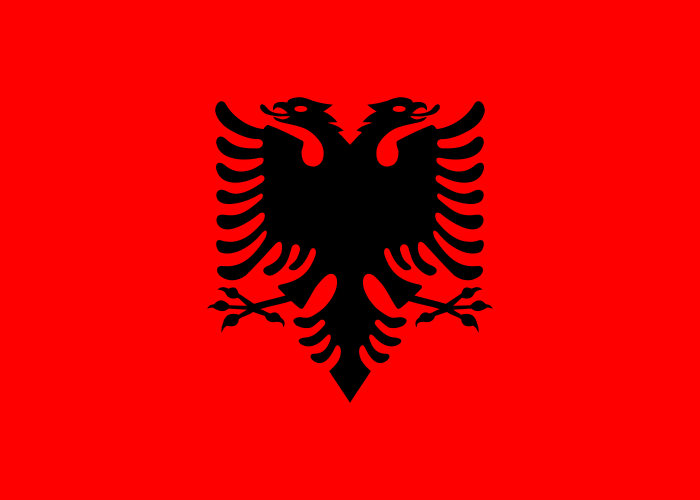
Tiranë
· AL

Tiranë

Tiranë, Albania

Tirana: Albania's Vibrant Capital Awaits Tucked between the Adriatic Coast and the foothills of Mount Dajti, Tirana, Albania, is a city brimming with energy and charm. Once shrouded in mystery, this Balkan gem is now a …

#Capital city#Cultural hub#Historic landmarks#Bustling city life#Mediterranean climate
1/1

Top hotels & flights

Hand-picked stays and the best fares into Tiranë.

Top Hotels in Tiranë

Top Flights to Tiranë

Popular activities

Tours, tickets and experiences travelers book most in Tiranë.

Location videos

Real reels from travelers, plus longer watches to get the full picture.

From travelers
Watch & explore

Practical info

The essentials for planning your time in Tiranë.

Currency
Lek | ALL | Albanian Lek
Population
The approximate estimated total population of Tiranë, Albania, is 0.9 million.
Languages
Albanian, Albanian, Greek, Macedonian

Local guide

What travelers love, what to watch for, and a deeper read on Tiranë.

What people love

Tirana, the capital city of Albania, offers a unique travel experience with several pros for visitors. Here are some detailed reasons why traveling to Tirana can be a great idea:

  1. Rich History and Culture: Tirana is a city with a long and fascinating history, influenced by various civilizations such as the Ottoman Empire and Communist rule. Visitors can explore historical sites like Skanderbeg Square, the Et'hem Bey Mosque, and the National Historical Museum to learn about Albania's past.

  2. Vibrant Atmosphere: Tirana is known for its lively atmosphere, colorful buildings, and bustling streets. Visitors can explore the city's vibrant markets, trendy cafes, and vibrant nightlife to get a taste of the local lifestyle.

  3. Delicious Cuisine: Albanian cuisine is a blend of Mediterranean and Balkan flavors, with dishes like byrek (savory pastry), qofte (meatballs), and tave kosi (baked lamb with yogurt). Travelers can indulge in delicious local food at traditional restaurants and street vendors throughout Tirana.

  4. Natural Beauty: Despite being a bustling city, Tirana is surrounded by beautiful natural landscapes. Visitors can take day trips to nearby destinations like Mount Dajti National Park or Lake Bovilla for outdoor activities such as hiking, biking, and picnicking.

  5. Affordable Destination: Tirana is known for being a budget-friendly travel destination compared to other European cities. Accommodation, dining, and transportation costs are relatively low, making it an ideal choice for travelers looking to explore on a budget.

Overall, Tirana offers a mix of history, culture, cuisine, and natural beauty that can appeal to a wide range of travelers.

What to know

Some potential cons of traveling to Tiranë, Albania, could include:

  1. Air pollution: Tiranë is known to have high levels of air pollution, especially during the winter months. This could be a concern for individuals with respiratory issues or sensitivity to pollution.

  2. Traffic congestion: The city can experience heavy traffic congestion, particularly during rush hours. This may impact travel times and make getting around the city more challenging.

  3. Limited public transportation: While Tiranë does have a public transportation system, it may not be as developed or convenient as in some other European cities. This could make it more difficult for travelers to navigate the city without a car.

  4. Language barrier: Albanian is the official language in Tiranë, and while English is spoken in some tourist areas, language barriers may still pose a challenge for travelers who do not speak Albanian.

  5. Safety concerns: While Tiranë is generally a safe city for tourists, like any other destination, travelers should remain vigilant and take precautions to ensure their safety and belongings.

It's worth noting that these cons are not exhaustive and may vary depending on individual preferences and experiences. It's always a good idea to research and prepare before traveling to any destination.

Tiranë, the capital city of Albania, has a rich and varied history that reflects the complex cultural and political transformations of the region. Here is an overview of its history, significant events, historical figures, and important landmarks:

Early History

  • Founding and Ottoman Era: Tiranë was officially founded in 1614 by Sulejman Bargjini, a local Ottoman ruler who built a mosque, a bakery, and a Turkish bath. Prior to its official founding, the area was likely inhabited by Illyrian tribes and later influenced by Roman and Byzantine presence.

20th Century

  • Independence and World War I: After Albania declared independence from the Ottoman Empire in 1912, Tiranë remained a small town until it was designated the temporary capital in 1920, during the Congress of Lushnjë. The capital status was made permanent in 1925.

  • Interwar Period and King Zog: In the 1920s and 1930s, Tiranë saw significant development under King Zog I, who aimed to modernize the city. Italian architects were brought in to design government buildings, and infrastructure was developed.

  • World War II: During WWII, Tiranë was occupied first by Italian and then German forces. The city became a center of resistance against fascist forces, and in 1944, it was liberated by Albanian partisans, leading to the establishment of a communist regime under Enver Hoxha.

Communist Era

  • Enver Hoxha's Rule: From 1944 to 1985, Enver Hoxha ruled Albania as a Stalinist state. Tiranë underwent rapid urbanization and industrialization during this period, characterized by austere, utilitarian architecture. The city was largely isolated from Western influence.

Post-Communist Period

  • Transition to Democracy: Following the collapse of communism in 1991, Albania transitioned to a multi-party democracy. Tiranë experienced rapid growth and urban sprawl, with an influx of rural population moving to the capital in search of better opportunities.

Significant Events

  • Student Protests of 1990-1991: These protests in Tiranë played a crucial role in ending communist rule and transitioning Albania towards democracy.
  • 1997 Civil Unrest: Pyramid scheme collapses in the mid-1990s led to widespread civil unrest in Tiranë and across Albania.

Important Landmarks

  • Skanderbeg Square: The central square of Tiranë, named after the national hero Gjergj Kastrioti Skanderbeg, features a statue of him and is surrounded by important buildings like the National Museum of History and the Palace of Culture.
  • Et'hem Bey Mosque: Built in the early 19th century, it is one of the few mosques that survived the communist period and is a symbol of Tiranë's Ottoman heritage.
  • Pyramid of Tiranë: Originally built as a museum dedicated to Enver Hoxha, it is now a cultural landmark and a symbol of the city’s complex past.
  • Tiranë International Hotel: A prominent skyscraper in the city center, symbolizing modern Tiranë.

Historical Figures

  • Sulejman Bargjini: The Ottoman ruler credited with founding Tiranë.
  • Enver Hoxha: The communist leader who ruled Albania for over four decades.
  • Ismail Qemali: Although not directly connected to Tiranë, he was a key figure in Albanian independence.

Tiranë today is a vibrant city, reflecting its diverse history and serving as the political, economic, and cultural heart of Albania.