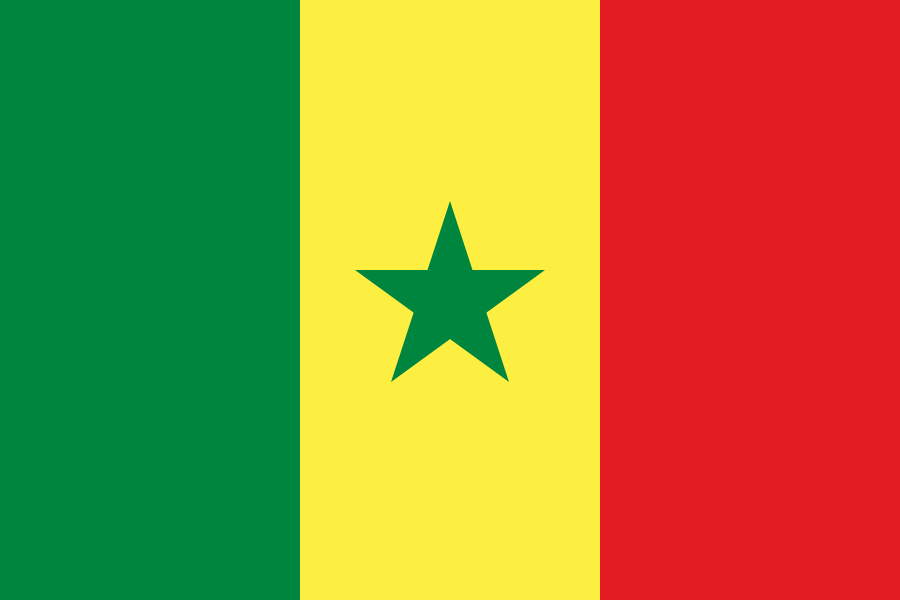
Thilogne is a town located in the Matam Region of northeastern Senegal. It is part of the Fouta Toro region, which is known for its rich cultural history and its significance as a center of the Toucouleur people, a subgroup of the larger Fulani ethnic group.
Historical Background
-
Fouta Toro Kingdom: Thilogne is situated in what was historically the Fouta Toro kingdom. This region was an important Islamic center in West Africa, particularly from the 18th century onwards when the region underwent a significant Islamic revolution led by the Toucouleur leader, Karamoko Alfa, and later by the famous religious and military leader, El Hadj Umar Tall.
-
Colonial Period: During the French colonial period, Thilogne, like much of Senegal, came under French control. The colonial administration impacted the socio-political structures of the area, including the organization of local governance and the introduction of new economic systems.
Significant Events
-
Islamic Influence: The area has been a center for Islamic learning and scholarship for centuries. The influence of Islamic leaders and clerics has played a significant role in shaping the cultural and religious landscape of Thilogne.
-
Post-Independence: Following Senegal's independence from France in 1960, Thilogne, like many other towns in Senegal, experienced changes in governance and development. The town has been part of national efforts to improve infrastructure and education.
Historical Figures
- El Hadj Umar Tall: A significant historical figure related to the broader region that includes Thilogne. Though not from Thilogne itself, his conquests and Islamic teachings had a profound influence on the entire Fouta Toro region.
Important Landmarks
-
Mosques and Islamic Schools: As a center for Islamic learning, Thilogne is home to several mosques and Quranic schools that serve as cultural and educational centers for the community.
-
Fouta Toro Cultural Sites: While specific landmarks in Thilogne may not be well-documented, the broader region of Fouta Toro is known for its historical and cultural sites, which reflect the area's heritage as a center of Islamic culture and learning.
Culture and Society
The people of Thilogne, primarily Toucouleur, maintain a rich cultural heritage that includes traditional music, dance, and crafts. The town, like much of the Fouta Toro region, is known for its vibrant cultural expressions and strong sense of community.
Information about Thilogne's detailed history and individual landmarks is limited in widely accessible sources, and much of the town's significance is tied to the broader historical and cultural context of the Fouta Toro region.