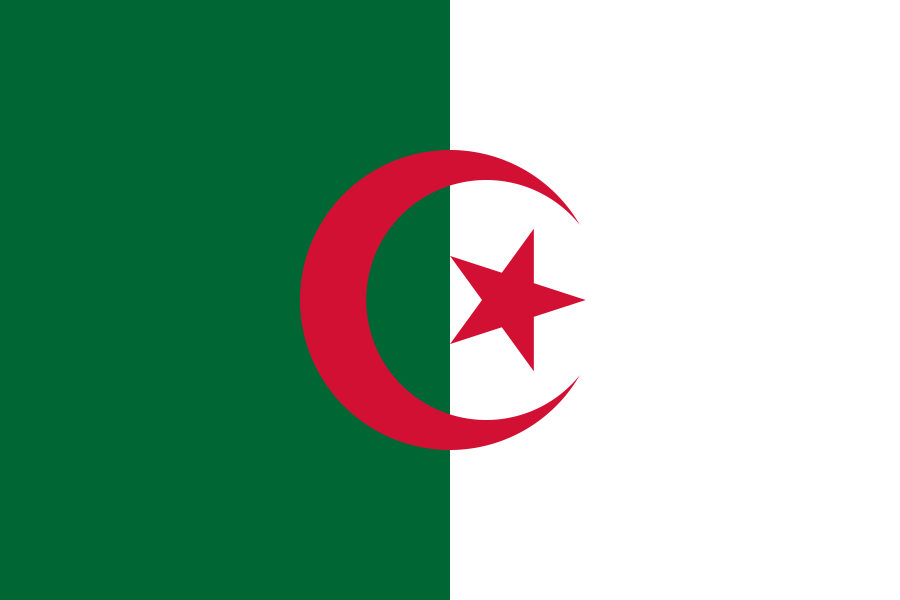
Tazmalt is a town and commune in Bouira Province, Algeria. It is situated in the Kabylie region, which is known for its mountainous terrain and rich cultural heritage. While detailed historical accounts specific to Tazmalt are not extensively documented in widely available sources, I can provide some context based on the region it's part of:
Historical Context
-
Kabylie Region: The region where Tazmalt is located has a long history of resistance against various occupying forces, from the Roman Empire to the French colonial rule. The Kabyle people, who are part of the larger Berber ethnic group, have maintained a distinct cultural and linguistic identity throughout history.
-
French Colonial Period: During French colonization, which began in the 19th century and lasted until 1962, the Kabylie region was a center of resistance. The struggle for Algerian independence was strongly supported by the people of this area. The War of Independence (1954-1962) saw significant activity in the region, with many locals participating in the fight against French rule.
-
Post-Independence: After gaining independence in 1962, Algeria, including the Kabylie region, underwent significant political and social changes. The region has often been at the forefront of movements advocating for cultural and linguistic recognition of the Berber identity.
Significant Events and Figures
-
Berber Spring (1980): While not specific to Tazmalt, the Berber Spring was a pivotal event in the Kabylie region. It was a series of protests and strikes advocating for recognition of the Berber language and culture. This movement laid the groundwork for future cultural and political activism in the region.
-
Algerian Civil War (1990s): During the civil war, the Kabylie region, including areas like Tazmalt, experienced unrest. The conflict was largely between the government and various Islamist groups, with the Kabylie region often opposing Islamist ideologies.
Landmarks
While specific landmarks in Tazmalt are not well-documented in popular sources, the town, like many in the Kabylie region, is characterized by its natural beauty, including:
- Scenic Mountains: The surrounding mountains are part of the Atlas range, offering hiking and outdoor activities.
- Local Architecture: Traditional Kabyle houses and structures can be found, reflecting the architectural style of the Berber people.
Due to the limited availability of detailed historical records specifically for Tazmalt, this overview is primarily based on the broader historical and cultural context of the Kabylie region. For more specific information, local historical or cultural sources would be necessary.
Information not available.