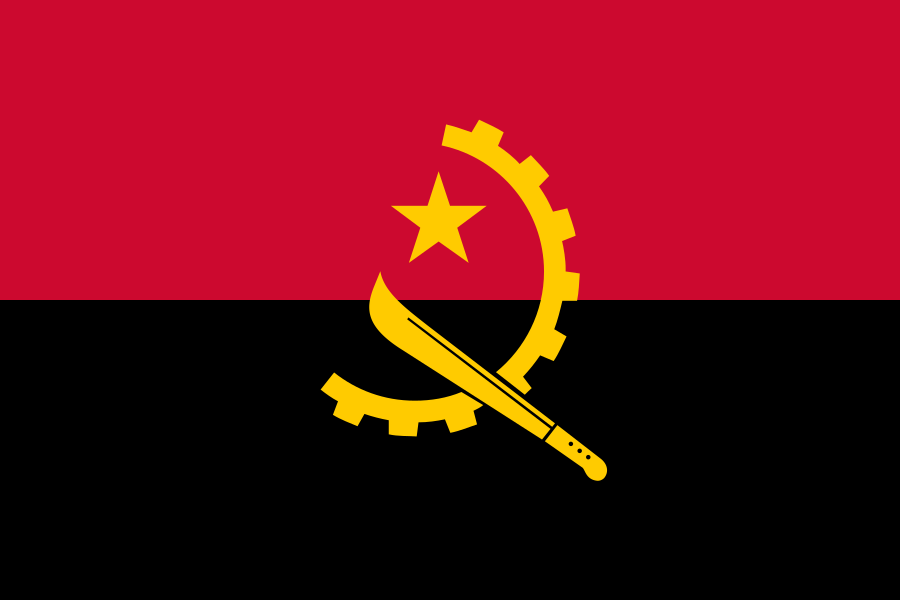
Soio, also known as Soyo, is a municipality located in the province of Zaire in Angola. It is situated near the mouth of the Congo River. Here is a detailed history of Soio:
Early History
- Pre-Colonial Period: The area around Soio was historically part of the Kingdom of Kongo, one of the most powerful kingdoms in Central Africa from the 14th to the 19th century. The kingdom had a complex political and social structure and engaged in trade with European powers from the 15th century onwards.
Colonial Era
- Portuguese Arrival: The Portuguese arrived in the region in the late 15th century, establishing trade relations with the Kingdom of Kongo. The city of Soyo was an important center for trade, particularly in ivory, copper, and slaves.
- Colonial Control: Over time, the Portuguese established greater control over the region, including Soio, as part of their colonial ambitions in Africa. By the late 19th century, Soio was under firm Portuguese colonial administration.
Modern History
- Angolan War of Independence (1961-1974): During the struggle for independence from Portuguese rule, Soio, like many parts of Angola, was affected by the conflict. Various liberation movements, including the MPLA (People's Movement for the Liberation of Angola), were active in the region.
- Post-Independence Era: Angola gained independence from Portugal in 1975, after which the country was plunged into a prolonged civil war. Soio, due to its strategic location and oil resources, was an important area during the conflict.
- Oil Industry: In the post-war period, Soio became a significant center for Angola's oil industry. The discovery and exploitation of offshore oil reserves have contributed to the town's economic importance.
Significant Events and Historical Figures
- Kingdom of Kongo Leaders: Various rulers of the Kingdom of Kongo played a significant role in the history of the region, including the area now known as Soio.
- Independence Movement Leaders: Figures such as Agostinho Neto, the first President of Angola and leader of the MPLA, were significant in the broader context of Angolan independence, which impacted Soio.
Important Landmarks
- Congo River Estuary: The proximity to the Congo River makes Soio a notable geographical location, historically significant for trade and transport.
- Oil Facilities: Modern landmarks include the oil extraction and processing facilities that are crucial to Angola's economy.
Cultural and Economic Importance
- Cultural Heritage: The area has a rich cultural heritage linked to the Kingdom of Kongo and its historical interactions with European powers.
- Economic Hub: Today, Soio is an important economic hub due to its oil industry, contributing significantly to the national economy.
Overall, Soio’s history is deeply connected to the broader historical narratives of the Kingdom of Kongo, Portuguese colonialism, Angolan independence, and the development of the oil industry. The town continues to play a vital role in Angola's economic landscape.