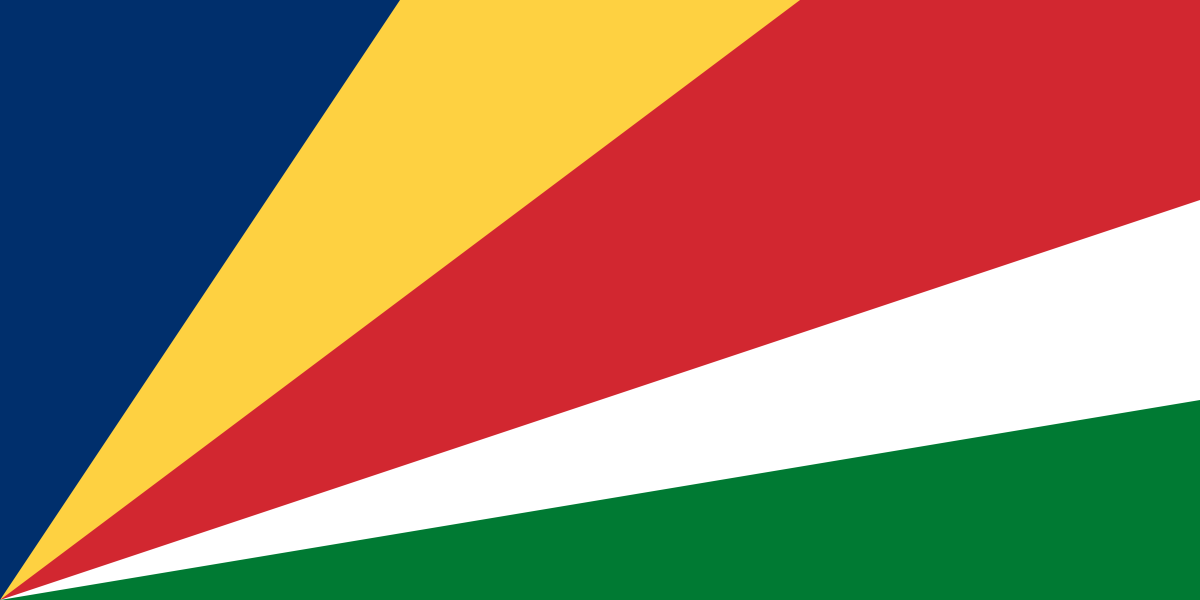
Seychelles
· SC

Seychelles

Seychelles

The Seychelles is a stunning archipelago located in the Indian Ocean, renowned for its pristine white sandy beaches, crystal-clear turquoise waters, and lush tropical landscapes. Comprising 115 islands, Seychelles offers…

#Island nation#Tropical paradise#Crystal clear waters#Luxury resorts#Breathtaking beaches
1/22

Top hotels & flights

Hand-picked stays and the best fares into Seychelles.

Top Hotels in Victoria

Top Flights to Victoria

Popular activities

Tours, tickets and experiences travelers book most in Seychelles.

Tours

Explore Curieuse Island

Visit Curieuse Island, home to giant tortoises and rich mangrove forests.

Shopping

Victoria Market Visit

Experience the vibrant local market in the heart of Seychelles' capital.

Outdoor

Hike Morne Blanc

A hike offering panoramic views of Mahé and the Indian Ocean.

Location videos

Real reels from travelers, plus longer watches to get the full picture.

From travelers
Watch & explore

Practical info

The essentials for planning your time in Seychelles.

Currency
SCR | SCR | Seychellois Rupee
Population
100 thousand
Average weather
Seychelles
Jan
rain
30°25°
Feb
rain
30°25°
Mar
rain
31°26°
Apr
rain
31°26°
May
sun
30°25°
Jun
sun
29°24°
Jul
sun
28°24°
Aug
sun
28°24°
Sep
sun
29°24°
Oct
sun
30°25°
Nov
rain
30°25°
Dec
rain
30°25°

Local guide

What travelers love, what to watch for, and a deeper read on Seychelles.

What people love

Traveling to Seychelles, located in the Indian Ocean, offers a plethora of benefits and unique experiences. Some of the pros of traveling to Seychelles include:

  1. Stunning Beaches: Seychelles is famous for its beautiful white sandy beaches lined with crystal-clear turquoise waters. Visitors can relax, swim, snorkel, and enjoy water sports in this tropical paradise.

  2. Breathtaking Scenery: The natural beauty of Seychelles is unparalleled, with lush forests, granite rocks, and vibrant coral reefs. Visitors can explore nature reserves, botanical gardens, and marine parks to witness the stunning landscapes and diverse flora and fauna.

  3. Luxury Accommodation: Seychelles boasts a range of luxurious resorts and hotels, offering world-class amenities and services. Visitors can indulge in pampering spa treatments, fine dining, and exclusive experiences in these upscale accommodations.

  4. Rich Culture: Seychelles has a unique cultural heritage influenced by African, European, and Asian traditions. Visitors can explore local markets, taste Creole cuisine, and participate in traditional festivals to immerse themselves in the vibrant Seychellois culture.

  5. Outdoor Activities: Seychelles offers a wide array of outdoor activities for adventure enthusiasts, including hiking, diving, sailing, fishing, and birdwatching. Visitors can explore the diverse landscape and marine life of Seychelles through various exciting activities.

  6. Privacy and Seclusion: Seychelles is known for its secluded and tranquil atmosphere, making it an ideal destination for those seeking privacy and relaxation. Visitors can escape the crowds and enjoy peaceful moments in the pristine surroundings of Seychelles.

Overall, traveling to Seychelles offers a unique blend of natural beauty, luxury, culture, and adventure, making it a dream destination for many travelers seeking a memorable and enriching experience.

Enjoy your trip to Seychelles!

What to know

Some potential cons of traveling to Seychelles could include:

  1. Cost: Seychelles is known to be an expensive destination, with high prices for accommodation, dining, and activities. Travelers on a budget may find it challenging to manage expenses in Seychelles.

  2. Limited infrastructure: While Seychelles is a beautiful destination with pristine beaches and lush landscapes, the infrastructure may not be as developed as in some other tourist destinations. This could lead to challenges in terms of transportation, communication, and access to certain amenities.

  3. Limited shopping options: Seychelles may not offer a wide range of shopping opportunities, especially for those looking for luxury items or specific brands. Shopping options may be limited to local markets and souvenir shops.

  4. Remote location: Seychelles is located in the Indian Ocean, quite far from many major travel hubs. This can result in longer travel times and potentially higher transportation costs to reach the islands.

  5. Environmental concerns: Due to the delicate ecosystem of Seychelles, travelers are encouraged to be mindful of their environmental impact. Issues such as waste management, water conservation, and protection of marine life should be considered while visiting Seychelles.

Overall, while Seychelles is a stunning destination with much to offer in terms of natural beauty and tranquility, travelers should be aware of these potential cons before planning their trip.

Seychelles, officially known as the Republic of Seychelles, is an archipelago and country in the Indian Ocean. It consists of 115 islands, with the capital city being Victoria, located on the largest island, Mahé. Seychelles has a rich and diverse history influenced by various cultures and events.

Early History

  • Pre-European Contact: The islands were uninhabited for most of recorded history, with no evidence of human settlement before European exploration. Arab navigators likely knew of the islands, but there are no records of settlements.

European Exploration and Colonization

  • 1502: Portuguese explorer Vasco da Gama is believed to have sighted the islands, which were initially called the Amirantes after the Arabic term for "Admiral."
  • 1756: The French formally claimed the islands, naming them after Jean Moreau de Séchelles, the French Minister of Finance.

French and British Rule

  • 1770: The first settlement was established by the French on St. Anne Island, a few kilometers off Mahé.
  • 1794–1811: During the Napoleonic Wars, Seychelles was frequently visited by British ships. The French administrator, Jean Baptiste Quéau de Quincy, skillfully negotiated with the British, leading to a peaceful surrender without bloodshed.
  • 1814: The Treaty of Paris awarded Seychelles to the British, and it became a British colony, formally administered as part of Mauritius until 1903.

Colonial Developments

  • 1903: Seychelles became a separate British crown colony.
  • 19th and Early 20th Centuries: The economy of Seychelles was primarily based on agriculture, with coconut, vanilla, and cinnamon being the main exports.

Path to Independence

  • 1960s-1970s: A movement for independence gained momentum. In 1970, Seychelles held its first elections, and a new constitution was adopted.
  • 1976: Seychelles gained independence from the United Kingdom on June 29, with James Mancham becoming the first President and France-Albert René as Prime Minister.

Post-Independence and Political Changes

  • 1977: France-Albert René seized power in a coup d'état. René's government aligned more closely with socialist countries, and he ruled as a one-party state.
  • 1991: The country transitioned to a multi-party democracy.
  • 1993: New constitution adopted, allowing multi-party elections. René continued to hold power through elections.

Recent History

  • 2004: James Michel, who succeeded René as President, continued to lead the country after René stepped down.
  • 2016: The opposition party won a majority in the National Assembly for the first time since independence.
  • 2020: Wavel Ramkalawan, an Anglican priest, won the presidential election, marking the first peaceful transfer of power to an opposition candidate in modern Seychelles history.

Significant Figures

  • James Mancham: The first President of independent Seychelles.
  • France-Albert René: Long-serving President who led the country through significant political changes.
  • Wavel Ramkalawan: Current President known for leading the opposition before winning the presidency.

Important Landmarks

  • Victoria: The capital city, home to the Victoria Clocktower and the Sir Selwyn Selwyn-Clarke Market.
  • Aldabra Atoll: A UNESCO World Heritage Site, known for its biodiversity and the world’s largest population of giant tortoises.
  • Vallée de Mai: Another UNESCO World Heritage Site located on Praslin Island, famous for the coco de mer palm trees.

Seychelles today is known for its governance stability, thriving tourism industry, and efforts towards environmental conservation.