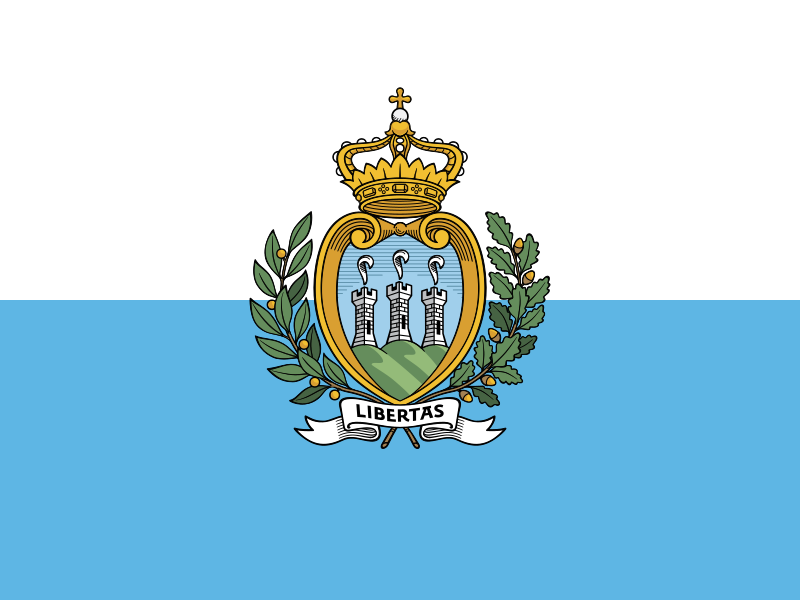
· SM

San Marino

San Marino, San Marino Citta, San Marino

Nestled in the heart of Italy, San Marino is a hidden gem waiting to be explored. As one of the world's oldest republics, this tiny enclave boasts a rich history dating back to the 4th century. San Marino is a land of an…

#European microstate#Mount Titano#UNESCO World Heritage Site#Republic#Tourist destination

Top hotels & flights

Hand-picked stays and the best fares into San Marino.

Top Hotels in San Marino

Top Flights to San Marino

Popular activities

Tours, tickets and experiences travelers book most in San Marino.

Tours

Explore the Historic Centre of San Marino

Discover the rich history of the UNESCO World Heritage Site, featuring medieval architecture and stunning views.

Visit to the Basilica di San Marino

A visit to the main church of the city with remarkable architecture and historic significance.

Shopping

Shopping in Borgo Maggiore

Experience local shopping in the bustling markets and specialty shops of Borgo Maggiore.

Outdoor

Hiking on Monte Titano

Engage in outdoor adventure by hiking up Monte Titano to enjoy breathtaking views.

Location videos

Real reels from travelers, plus longer watches to get the full picture.

From travelers
Watch & explore

Practical info

The essentials for planning your time in San Marino.

Currency
€ | EUR | Euro
Population
Not Available
Average weather
San Marino
Jan
cold
6°0°
Feb
cold
8°1°
Mar
cloud
12°3°
Apr
rain
16°7°
May
sun
21°11°
Jun
clear
25°15°
Jul
hot
29°18°
Aug
hot
29°18°
Sep
clear
25°15°
Oct
cloud
19°11°
Nov
rain
12°5°
Dec
cold
7°1°

Local guide

What travelers love, what to watch for, and a deeper read on San Marino.

What people love

San Marino, located in the city of San Marino in the country of San Marino, offers several pros for travelers:

  1. Rich history: San Marino is one of the world's oldest republics, with a history dating back to the early 4th century. Travelers can explore the historic sites such as the Three Towers of San Marino, the Basilica of San Marino, and the Palazzo Pubblico.

  2. Stunning views: San Marino is situated on a hilltop, providing breathtaking panoramic views of the surrounding countryside and Adriatic Sea. Travelers can enjoy the picturesque scenery and take stunning photos from various viewpoints.

  3. Small size: As one of the smallest countries in the world, San Marino is easily navigable on foot, allowing travelers to explore its attractions, quaint streets, and charming shops at a leisurely pace.

  4. Unique culture: San Marino has a distinct culture and identity, with its own traditions, customs, and cuisine. Travelers can immerse themselves in the local culture by trying traditional dishes, attending festivals, and interacting with the friendly locals.

  5. Shopping opportunities: San Marino is known for its shopping, particularly for luxury goods, fashion, and souvenirs. Travelers can explore the many boutiques, shops, and markets in the city to find unique items to take home.

Overall, traveling to San Marino offers a unique and enriching experience with its rich history, stunning views, small size, unique culture, and shopping opportunities.

What to know

San Marino is a beautiful destination with many attractions, but there are some potential cons to consider when traveling there:

  1. Limited public transportation: San Marino is a small country and public transportation options within the country are limited. This can make it difficult to get around, especially if you don't have a car.

  2. Crowds during peak tourist seasons: During peak tourist seasons, San Marino can get quite crowded with visitors, which may take away from the peaceful atmosphere that the country is known for.

  3. Limited nightlife: San Marino is not known for its vibrant nightlife scene. If you are looking for a destination with a bustling nightlife, you may find San Marino lacking in this aspect.

  4. Higher prices: As a popular tourist destination, San Marino can be more expensive compared to other nearby locations. Accommodation, dining, and activities may be pricier than expected.

  5. Limited accommodation options: While there are several hotels and guesthouses in San Marino, the options may be limited compared to larger tourist destinations. It's advisable to book accommodations in advance, especially during peak seasons.

Overall, while San Marino is a charming and unique destination, it's important to be aware of these potential cons when planning a trip there.

San Marino, officially known as the Republic of San Marino, is one of the world's smallest and oldest republics, completely landlocked by Italy. Its history is rich and unique, marked by its survival as an independent state through centuries of European history.

Early History

  • Foundation: According to tradition, San Marino was founded on September 3, 301 AD, by a Christian stonemason named Marinus (later Saint Marinus) from the Roman colony on the island of Rab, in modern-day Croatia. He sought refuge on Mount Titano to escape religious persecution under the Roman Emperor Diocletian.
  • Establishment: Known for its declaration of independence, San Marino quickly established itself as a monastic community. The self-governing community was known for its commitment to freedom and neutrality.

Medieval Period

  • Independence and Governance: By the 13th century, San Marino had developed its own legal system and was recognized as a commune. Its governance was based on democratic principles, with a system of councils.
  • Expansion: The territory expanded slightly during the Middle Ages, including the acquisition of the Castle of Fiorentino, the Castle of Montegiardino, and the Castle of Serravalle.

Renaissance and Early Modern Period

  • Diplomacy: Throughout the Renaissance, San Marino maintained its independence through diplomacy. Notably, it secured recognition from the Papal States and other Italian states.
  • Napoleonic Era: In 1797, during Napoleon's campaign in Italy, he offered to expand San Marino's territory. The republic declined, valuing its neutrality and independence.

19th Century

  • Unification of Italy: During the Italian unification process in the 19th century, San Marino provided refuge to revolutionaries, including Giuseppe Garibaldi, advocating for Italian unity.
  • Independence: San Marino retained its independence throughout the unification of Italy, solidifying its status as an independent microstate through diplomatic efforts.

20th Century to Present

  • World Wars: During World War I and World War II, San Marino remained neutral. In WWII, despite its neutrality, it was briefly occupied by German forces.
  • Post-War Era: After WWII, San Marino was governed by a coalition of leftist parties, including the communist party, until the 1950s. The country then transitioned to a more centrist government.
  • International Relations: San Marino joined the United Nations in 1992 and the Council of Europe in 1988, reinforcing its commitment to international cooperation.

Significant Historical Figures

  • Saint Marinus: The legendary founder of San Marino, who is celebrated for establishing the republic.
  • Giuseppe Garibaldi: Though not a native, his connection to San Marino during the Italian unification is notable.

Important Landmarks

  • Mount Titano: The highest peak in San Marino, it is home to three iconic towers: Guaita, Cesta, and Montale, which are symbols of the republic.
  • Basilica di San Marino: The main church in the capital, dedicated to Saint Marinus.
  • Palazzo Pubblico: The town hall and government building of San Marino, located in the capital city.
  • The Three Towers: These medieval fortresses on Mount Titano are UNESCO World Heritage Sites and represent the historical defense system of the republic.

San Marino's history is a testament to its resilience and commitment to maintaining its sovereignty and democratic principles. Despite its small size, San Marino has played a unique role in European history, maintaining its status as one of the world's oldest republics.