
Sandomierz
· PL

Sandomierz

Sandomierz, Swietokrzyskie, Poland

Sandomierz, nestled in the Świętokrzyskie region of Poland, is a charming and picturesque town that offers a perfect blend of history, culture, and natural beauty for visitors to explore. Steeped in centuries of history,…

#Historic town#Medieval architecture#Vistula River#Tourist destination#Cultural heritage
1/5

Top hotels & flights

Hand-picked stays and the best fares into Sandomierz.

Top Hotels in Sandomierz

Top Flights to Sandomierz

Location videos

Real reels from travelers, plus longer watches to get the full picture.

Watch & explore

Practical info

The essentials for planning your time in Sandomierz.

Currency
zł | PLN | Polish Zloty
Population
22189.0
Languages
Polish, Polish
Average weather
Sandomierz
Jan
snow
0°-5°
Feb
snow
1°-4°
Mar
cloud
6°-1°
Apr
rain
13°3°
May
rain
19°8°
Jun
sun
22°12°
Jul
sun
24°14°
Aug
sun
24°13°
Sep
cloud
19°10°
Oct
cloud
13°5°
Nov
rain
6°0°
Dec
snow
2°-3°

Local guide

What travelers love, what to watch for, and a deeper read on Sandomierz.

What people love

Sandomierz, located in the Świętokrzyskie region of Poland, is a charming and historic town that offers visitors a unique travel experience. Here are some pros of traveling to Sandomierz:

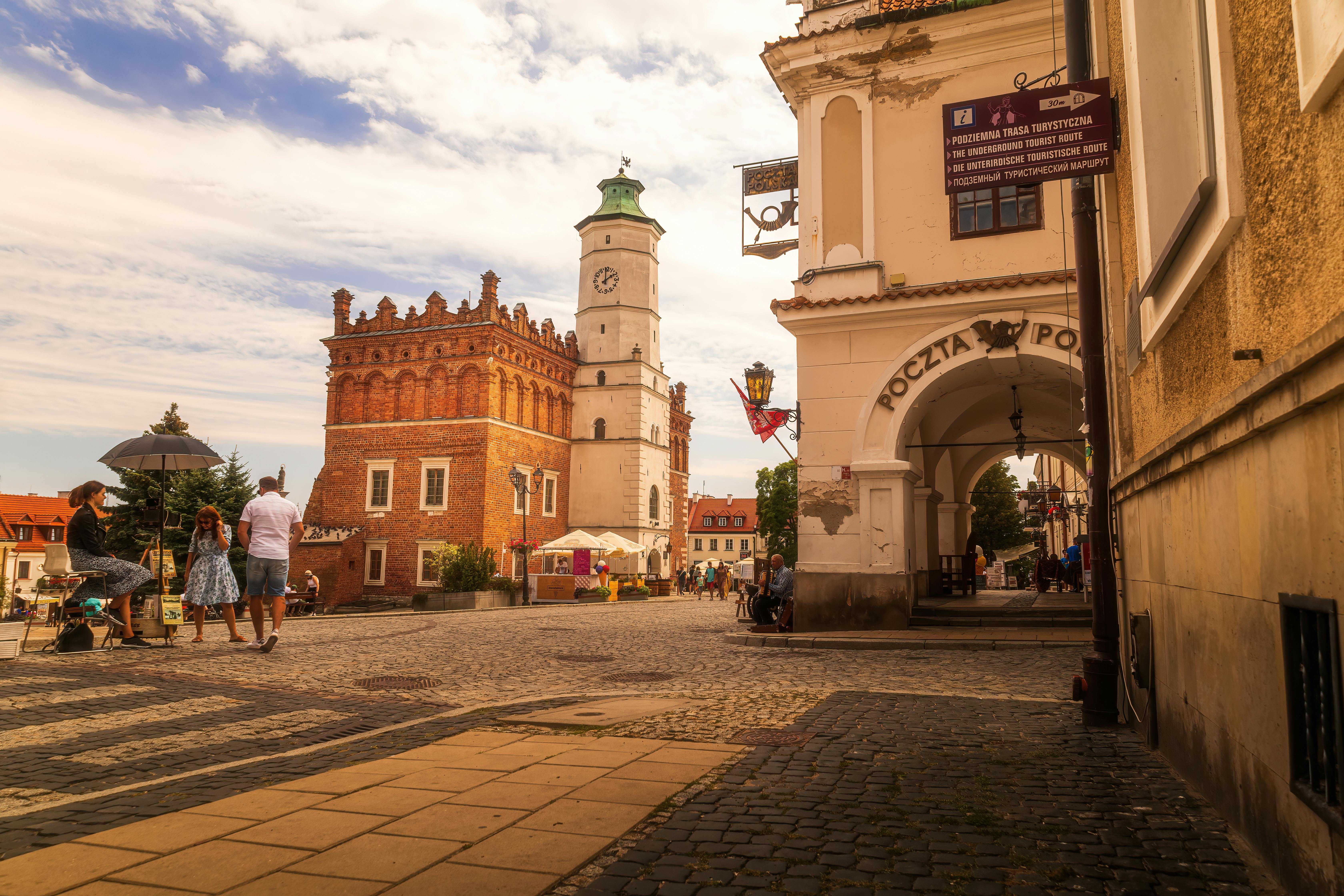
  1. Rich history: Sandomierz is one of the oldest and most historically significant cities in Poland. It has a well-preserved medieval old town with narrow cobblestone streets, historic buildings, and a picturesque market square. Visitors can explore the town's rich history by visiting landmarks such as the Sandomierz Castle, Opatowska Gate, and the Cathedral of St. James.

  2. Scenic views: Situated on the Vistula River, Sandomierz offers stunning views of the surrounding countryside and river valleys. Visitors can enjoy panoramic views of the town and its surroundings from the Sandomierz Castle or the viewing platforms located on the hill overlooking the town.

  3. Cultural attractions: Sandomierz is home to several cultural attractions, including museums, art galleries, and theaters. Visitors can learn about the town's history and culture by visiting the Diocesan Museum, the Regional Museum, or attending a performance at the Sandomierz Theater.

  4. Outdoor activities: The surrounding region of Świętokrzyskie offers plenty of opportunities for outdoor activities such as hiking, cycling, and horseback riding. Visitors can explore the nearby Świętokrzyskie Mountains or take a boat trip on the Vistula River.

  5. Culinary delights: Sandomierz boasts a vibrant culinary scene with many restaurants serving traditional Polish dishes as well as international cuisine. Visitors can sample local specialties such as pierogi, kielbasa, and oscypek cheese.

Overall, traveling to Sandomierz offers a mix of history, culture, and natural beauty, making it a great destination for travelers looking to explore a lesser-known gem in Poland.

What to know

Some potential cons of traveling to Sandomierz, Poland could include:

  1. Limited public transportation options: Sandomierz is a smaller city and may have limited public transportation options compared to larger cities. This could make it more challenging to get around the area.

  2. Language barrier: While many people in Sandomierz may speak English, there could still be some language barriers, especially in more rural areas or with older residents. This may make communication more difficult for travelers who do not speak Polish.

  3. Limited tourist infrastructure: Sandomierz is a historic city with a lot of charm, but it may not have as many tourist services and amenities as more popular tourist destinations. Travelers may find fewer options for accommodations, restaurants, and tours.

  4. Seasonal variations: Sandomierz, like many destinations, can experience seasonal variations in weather and tourism. Travelers should be prepared for potential weather fluctuations and consider the best time to visit based on their preferences.

  5. Crowds: While Sandomierz may not be as crowded as larger cities, popular tourist sites and attractions can still attract a fair number of visitors during peak seasons. Travelers looking for a quieter experience may want to plan their visit accordingly.

  6. Limited nightlife options: Sandomierz is known for its historical sites and cultural attractions, but it may not offer as many nightlife options as larger cities. Travelers looking for a vibrant nightlife scene may find Sandomierz lacking in this aspect.

Overall, Sandomierz is a charming and historic city with much to offer visitors, but travelers should be aware of these potential cons when planning their trip.

Sandomierz, located in the Świętokrzyskie Voivodeship of Poland, is a town with a rich and varied history, playing a significant role in the cultural and political life of the region throughout the centuries.

Early History

Sandomierz has been inhabited since prehistoric times. During the early Middle Ages, it became one of the principal settlements in the region. By the 10th century, it was an important stronghold of the early Polish state under the Piast dynasty.

Medieval Period

In the 12th century, Sandomierz became one of the main administrative centers of Lesser Poland and was the capital of the Duchy of Sandomierz. It was here that Henry of Sandomierz, a notable historical figure and son of Bolesław III Wrymouth, ruled. In 1241, the town suffered significant destruction during the Mongol invasion. However, it was rebuilt and soon flourished as an important trade hub.

Renaissance and Baroque Eras

The town gained its city rights under the Magdeburg Law in 1286. The 16th century was a golden age for Sandomierz, with many Renaissance buildings constructed, some of which survive to this day. The town's prosperity was reflected in its architecture and cultural life. During this period, the town's famous collegiate church, the Cathedral of the Nativity of the Blessed Virgin Mary, was richly decorated with frescoes.

17th and 18th Centuries

Sandomierz faced hardships during the Swedish invasions in the mid-17th century, which led to significant damage and decline. The Great Northern War and subsequent conflicts further impacted the town. After the Partitions of Poland at the end of the 18th century, Sandomierz fell under Austrian rule.

19th and Early 20th Centuries

During the 19th century, Sandomierz was part of the Duchy of Warsaw and later the Russian-controlled Congress Poland. The town experienced a slow economic decline but retained its historical charm. In the early 20th century, the town became part of the re-established Polish state after World War I.

World War II and Post-War Period

During World War II, Sandomierz was occupied by Nazi Germany. The town's Jewish community, which had been integral to its social fabric, was decimated during the Holocaust. After the war, Sandomierz was rebuilt and became a part of the People's Republic of Poland.

Modern Era

Today, Sandomierz is known for its well-preserved Old Town, which attracts tourists with its historical architecture and picturesque setting. Significant landmarks include the Sandomierz Cathedral, the Opatów Gate (a remnant of medieval fortifications), and the Town Hall, a fine example of Renaissance architecture.

Historical Figures

Notable figures associated with Sandomierz include:

  • Henry of Sandomierz: A 12th-century duke and a prominent member of the Piast dynasty.
  • Queen Jadwiga of Poland: Though not a resident, she is linked to the town through her marriage arrangements.

Important Landmarks

  • Sandomierz Cathedral: Known for its Baroque interior and stunning frescoes.
  • Town Hall: An iconic building in the main square, featuring Renaissance architecture.
  • Krzemionki Prehistoric Striped Flint Mining Region: A nearby UNESCO World Heritage Site, indicating the area's prehistoric significance.

Sandomierz remains a symbol of Poland's historical endurance, offering a glimpse into the country's rich medieval past and resilience through the ages.