
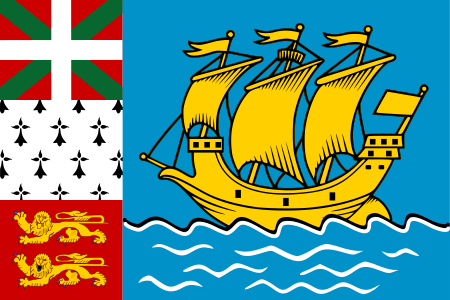
Saint Pierre and Miquelon
· PM

Saint Pierre and Miquelon

Saint Pierre and Miquelon

Saint Pierre and Miquelon is a captivating archipelago located off the coast of Newfoundland, Canada, making it the last remnant of France's colonial presence in North America. This unique destination offers a blend of F…

#French overseas territory#Island#North America#French culture#Fishing industry
1/3

Top hotels & flights

Hand-picked stays and the best fares into Saint Pierre and Miquelon.

Top Hotels in Saint-Pierre

Top Flights to Saint-Pierre

Location videos

Real reels from travelers, plus longer watches to get the full picture.

From travelers
Watch & explore

Practical info

The essentials for planning your time in Saint Pierre and Miquelon.

Currency
€ | EUR | Euro Saint Pierre and Miquelon
Population
6,000
Languages
French, French, Basque
Average weather
Saint Pierre and Miquelon
Jan
snow
0°-5°
Feb
snow
0°-5°
Mar
snow
1°-4°
Apr
cloud
5°-1°
May
cloud
9°2°
Jun
cloud
14°7°
Jul
cloud
18°11°
Aug
cloud
19°12°
Sep
rain
16°9°
Oct
rain
11°5°
Nov
cloud
6°1°
Dec
snow
2°-3°

Local guide

What travelers love, what to watch for, and a deeper read on Saint Pierre and Miquelon.

What people love

Saint Pierre and Miquelon is a unique destination with several pros for travelers:

  1. French Culture: As a French overseas territory, Saint Pierre and Miquelon offer a taste of France in North America. Visitors can experience French culture, cuisine, and language in this small archipelago.

  2. Scenic Beauty: The islands are known for their picturesque landscapes, including rugged coastlines, colorful houses, and beautiful harbors. Nature lovers will enjoy exploring the pristine beaches, cliffs, and wildlife.

  3. Historical Sites: Saint Pierre and Miquelon have a rich history, with sites such as the Museum of the Heritage, the Pointe aux Canons Lighthouse, and the shipwreck of the Grand Colombier offering insights into the islands' past.

  4. Outdoor Activities: The islands offer a range of outdoor activities, including hiking, fishing, kayaking, and diving. Visitors can also enjoy whale watching tours and birdwatching expeditions.

  5. Quaint Villages: The charming villages of Saint Pierre and Miquelon, with their colorful houses and narrow streets, provide a unique atmosphere for visitors to explore and enjoy.

Overall, Saint Pierre and Miquelon offer a combination of French charm, natural beauty, and historical significance that make it a unique and interesting destination for travelers.

What to know

Traveling to Saint Pierre and Miquelon, a small group of islands located off the coast of Newfoundland, Canada, has several cons to consider:

  1. Isolation: Saint Pierre and Miquelon are quite isolated, being far from mainland France and located in the North Atlantic Ocean. This can make travel to and from the islands more challenging and expensive.

  2. Weather: The islands have a maritime climate, which means they experience cool summers, cold winters, and frequent fog. The weather can be unpredictable and may impact outdoor activities and sightseeing.

  3. Limited transportation options: Getting to and around the islands can be limited, with only a few airlines offering flights to Saint Pierre and Miquelon and limited ferry services. This can make travel logistics more complicated.

  4. Language barrier: The official language of Saint Pierre and Miquelon is French, and while some residents may speak English, language barriers could be a challenge for English-speaking travelers.

  5. Cost of living: As the islands have to import most goods, the cost of living in Saint Pierre and Miquelon can be higher than in other places. This may result in higher prices for accommodations, dining, and activities.

  6. Limited tourist infrastructure: Saint Pierre and Miquelon are not heavily touristed compared to other destinations, so the islands may lack certain amenities and tourist infrastructure that travelers are accustomed to.

  7. Regulations and customs: Being a French territory, travelers must adhere to French regulations and customs while visiting Saint Pierre and Miquelon. This includes currency, driving rules, and other legal considerations.

While Saint Pierre and Miquelon offer a unique and off-the-beaten-path destination, travelers should consider these cons before planning a trip to the islands.

Saint Pierre and Miquelon is a small group of islands located near the coast of Newfoundland, Canada. The islands are a self-governing territorial overseas collectivity of France, with a rich history dating back several centuries.

Early History and Exploration

  • Pre-European Period: Before European contact, the islands were likely visited by Indigenous peoples, such as the Beothuk and Mi'kmaq, who were native to nearby Newfoundland.
  • 16th Century: The islands were first sighted by European explorers in the early 16th century. Portuguese explorer João Álvares Fagundes is often credited with being among the first Europeans to explore the area around 1520.
  • 1536: French explorer Jacques Cartier visited the islands, which marked the beginning of French interest in the region.

French Settlement

  • 17th Century: The islands became a base for French fishermen who exploited the rich fishing grounds of the Grand Banks. However, permanent settlement was limited due to harsh weather and isolation.
  • 1713: Under the Treaty of Utrecht, France ceded control over Newfoundland to Britain but retained fishing rights and control of Saint Pierre and Miquelon.
  • 1763: The islands were briefly ceded to the British following the Seven Years' War, but were returned to France in 1763 under the Treaty of Paris.

18th and 19th Centuries

  • 1778: During the American Revolutionary War, the British captured the islands but they were returned to France in 1783.
  • 1793: The islands were again captured by the British during the French Revolutionary Wars and were uninhabited during this period.
  • 1816: After the Napoleonic Wars, the islands were returned to France, and resettlement began.

20th Century

  • 1920s-1930s: During Prohibition in the United States, Saint Pierre and Miquelon became an important hub for smuggling alcohol into the U.S.
  • World War II: The islands were briefly under the control of Vichy France. In 1941, Free French forces under Charles de Gaulle seized control, ensuring the islands remained aligned with the Allies.

Post-War Period to Present

  • 1976: Saint Pierre and Miquelon became a French overseas department, providing the islands with greater autonomy.
  • 1985: The status was changed to that of a territorial collectivity, allowing for further self-governance.
  • 1992: A significant fishing dispute with Canada led to an international arbitration that defined the maritime boundaries between the islands and Canada.

Historical Figures

  • Jacques Cartier: The French explorer who laid the groundwork for French claims in North America.
  • Charles de Gaulle: Leader of Free French Forces who ensured the islands remained aligned with the Allies during World War II.

Important Landmarks

  • L'Arche Museum and Archives: Located in Saint Pierre, this museum offers insights into the history and culture of the islands.
  • Cathedral of Saint Pierre: A prominent religious landmark in Saint Pierre.
  • Île aux Marins: An island near Saint Pierre known for its historical fishing village and scenic views.

Saint Pierre and Miquelon, with its unique blend of French and North American influences, remains a fascinating example of colonial history and cultural resilience. The islands continue to maintain their distinct identity while enjoying a close relationship with mainland France.