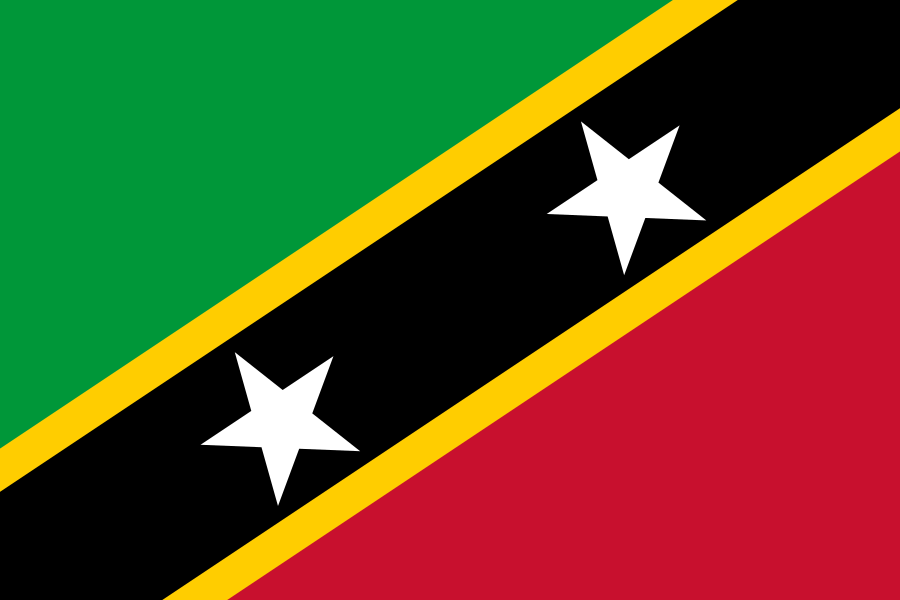
· KN

Saint Kitts and Nevis

Saint Kitts and Nevis

Saint Kitts and Nevis, a dual-island nation located in the Caribbean, is a hidden gem waiting to be explored by adventurous travelers seeking a mix of relaxation and cultural immersion. The islands boast lush tropical la…

#Caribbean#Island nation#Tropical#Beaches#Historic sites

Top hotels & flights

Hand-picked stays and the best fares into Saint Kitts and Nevis.

Top Hotels in Basseterre

Top Flights to Basseterre

Popular activities

Tours, tickets and experiences travelers book most in Saint Kitts and Nevis.

Tours

Explore Brimstone Hill Fortress

Visit the Brimstone Hill Fortress, a UNESCO World Heritage Site, offering panoramic views and rich history.

Stroll through Romney Manor

Enjoy the lush gardens and learn about local history at Romney Manor.

Visit Fairview Great House & Botanical Garden

Explore the historic Fairview Great House and its surrounding lush gardens.

Shopping

Shop at Port Zante

Explore Port Zante's vibrant shopping area, known for duty-free shops, local crafts, and souvenirs.

Outdoor

Hike Mount Liamuiga

Embark on a hiking adventure to the summit of Mount Liamuiga for breathtaking scenic views.

Catamaran Cruise

Experience the beauty of Saint Kitts from the sea with a catamaran cruise.

Zip Line Adventure

Soar through the rainforest canopy with an exciting zip line tour.

Location videos

Real reels from travelers, plus longer watches to get the full picture.

From travelers
Watch & explore

Practical info

The essentials for planning your time in Saint Kitts and Nevis.

Currency
$ | XCD | Eastern Caribbean Dollar
Population
The approximate estimated total population of Saint Kitts and Nevis is '54 thousand'.
Languages
English, English, Saint Kitts Creole
Average weather
Saint Kitts and Nevis
Jan
sun
28°22°
Feb
sun
28°22°
Mar
sun
29°22°
Apr
sun
29°23°
May
sun
30°24°
Jun
sun
31°25°
Jul
rain
31°25°
Aug
rain
31°25°
Sep
rain
31°25°
Oct
rain
30°24°
Nov
rain
29°23°
Dec
sun
28°22°

Local guide

What travelers love, what to watch for, and a deeper read on Saint Kitts and Nevis.

What people love

Traveling to Saint Kitts and Nevis offers several advantages, including:

  1. Beautiful Beaches: Saint Kitts and Nevis is known for its stunning beaches with crystal-clear waters and soft white sand. Visitors can relax, swim, snorkel, or enjoy water sports in these picturesque settings.

  2. Rich History: The islands have a fascinating history, with well-preserved colonial architecture, historic sites, and cultural landmarks. Visitors can explore places like Brimstone Hill Fortress National Park, a UNESCO World Heritage Site, to learn about the islands' past.

  3. Outdoor Activities: Saint Kitts and Nevis offer a range of outdoor activities for nature lovers and adventure seekers. From hiking through lush rainforests to zip-lining, diving, and sailing, there are plenty of options to explore the islands' natural beauty.

  4. Friendly Locals: The people of Saint Kitts and Nevis are known for their warm hospitality and friendly demeanor. Visitors can expect to receive a warm welcome and experience the local culture firsthand.

  5. Luxury Resorts: The islands boast luxurious resorts and boutique hotels that cater to all types of travelers, from honeymooners to families. These accommodations offer top-notch amenities, stunning views, and excellent service.

  6. Safety and Security: Saint Kitts and Nevis is considered a safe destination for tourists, with low crime rates and a peaceful environment. Travelers can feel secure while exploring the islands and enjoying their vacation.

Overall, traveling to Saint Kitts and Nevis provides an opportunity to experience a unique blend of natural beauty, history, culture, and hospitality in a safe and welcoming environment.

What to know

Some potential cons of traveling to Saint Kitts and Nevis include:

  1. Limited transportation options: The islands are relatively small, which means that transportation options may be limited, and getting around may be more costly and time-consuming compared to larger destinations.

  2. Limited healthcare facilities: While there are medical facilities available on the islands, they may not be as advanced as those in larger countries. In the event of a serious medical emergency, you may need to be evacuated to a neighboring island or back to your home country for proper treatment.

  3. High cost of living: Saint Kitts and Nevis is known to be relatively expensive, especially when it comes to accommodations, dining, and other services. Travelers should be prepared for higher prices compared to other Caribbean destinations.

  4. Limited activities and attractions: While the islands offer beautiful beaches and natural scenery, the range of activities and attractions may be more limited compared to larger tourist destinations. If you are looking for a wide variety of entertainment options, Saint Kitts and Nevis may not be the best choice.

  5. Weather risks: The islands are located in a hurricane-prone region, which means that travelers should be aware of the potential risks of severe weather during certain times of the year.

Overall, while Saint Kitts and Nevis offer a unique and picturesque destination, travelers should be prepared for some of the challenges that come with visiting a smaller, more remote location.

Saint Kitts and Nevis is a small island country located in the West Indies, consisting of the islands of Saint Kitts and Nevis. It is the smallest country in the Western Hemisphere in both area and population. The history of Saint Kitts and Nevis is rich and complex, shaped by indigenous peoples, European colonization, and the African slave trade.

Pre-Colonial Period

The islands were originally inhabited by the Kalinago people, also known as Caribs. Before them, the islands were settled by the Ciboney and Arawak peoples.

European Colonization

  • 1623: Saint Kitts (then known as St. Christopher Island) was the first island in the Caribbean to be colonized by the British. Sir Thomas Warner established the first British colony there.
  • 1624: The French also settled on the island, leading to a shared colonial presence. This dual occupation led to conflicts between the two European powers.
  • 1626: The native Kalinago were massacred in what is known as the Kalinago Genocide, clearing the way for European settlement.
  • 1630s-1700s: The islands changed hands repeatedly between the British and the French during various colonial conflicts.

Sugar Economy and Slavery

The economy of Saint Kitts and Nevis was largely based on sugar production, a lucrative but labor-intensive industry that relied heavily on enslaved Africans. The islands became part of the transatlantic slave trade, with thousands of Africans brought to work on the plantations.

British Rule

  • 1713: The Treaty of Utrecht ceded control of Saint Kitts entirely to the British.
  • 1834: Slavery was abolished in the British Empire, including on Saint Kitts and Nevis, leading to significant social and economic changes.

Modern History

  • 1958-1962: The islands were part of the West Indies Federation, an attempt to create a political union among British Caribbean colonies.
  • 1967: Saint Kitts and Nevis, along with Anguilla, became an Associated State of the United Kingdom, gaining full internal autonomy.
  • 1980: Anguilla separated from Saint Kitts and Nevis after a long-standing desire for secession.

Independence

  • September 19, 1983: Saint Kitts and Nevis gained full independence from Britain. It became a sovereign state with Sir Kennedy Simmonds as the first Prime Minister.

Notable Historical Figures

  • Sir Thomas Warner: Established the first British colony on Saint Kitts.
  • Sir Kennedy Simmonds: The first Prime Minister of an independent Saint Kitts and Nevis.

Important Landmarks

  • Brimstone Hill Fortress National Park: A UNESCO World Heritage site, this fortress is one of the best-preserved historical fortifications in the Americas.
  • Independence Square: Located in the capital Basseterre, it was originally known as Pall Mall and was a slave market in the 18th century.
  • The Circus: Inspired by London’s Piccadilly Circus, this is a popular meeting point in Basseterre.
  • Nevis Peak: A volcanic peak that is a prominent feature of Nevis and popular for hiking.

Today, Saint Kitts and Nevis is known for its scenic beauty, vibrant culture, and as a tourist destination. The transition from a colonial economy to one based on tourism and financial services has been a significant aspect of its post-independence development.