
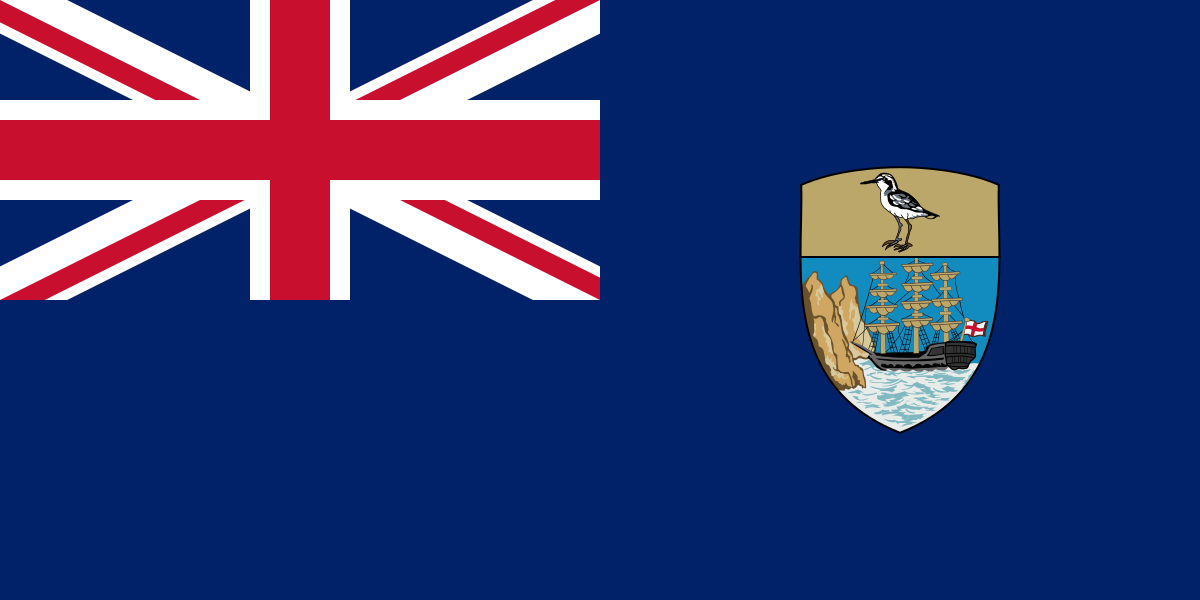
Saint Helena
· SH

Saint Helena

Saint Helena, Saint Helena, Ascension, and Tristan da Cunha

Saint Helena is a remote and enchanting island located in the South Atlantic Ocean, forming part of the British Overseas Territory of Saint Helena, Ascension, and Tristan da Cunha. This unique destination is steeped in h…

#remote island#British Overseas Territory#volcanic island#South Atlantic Ocean#historical significance
1/7

Top hotels & flights

Hand-picked stays and the best fares into Saint Helena.

Top Hotels in Saint Helena

Top Flights to Saint Helena

Location videos

Real reels from travelers, plus longer watches to get the full picture.

From travelers
Watch & explore

Practical info

The essentials for planning your time in Saint Helena.

Currency
£ | SHP | Saint Helena Pound
Population
Information not available.
Languages
English, English

Local guide

What travelers love, what to watch for, and a deeper read on Saint Helena.

What people love

Saint Helena is a remote and unique destination with several pros for travelers:

  1. Unique and Remote Location: Saint Helena is located in the middle of the South Atlantic Ocean, making it a truly remote and off-the-beaten-path destination. Travelers looking for a unique and less crowded destination will enjoy the peace and tranquility of Saint Helena.

  2. Natural Beauty: The island of Saint Helena is known for its stunning natural beauty, with dramatic landscapes, lush valleys, and rugged coastlines. Travelers can enjoy hiking, birdwatching, and exploring the island's diverse ecosystems.

  3. Historical Significance: Saint Helena has a rich history, most notably as the place where Napoleon Bonaparte was exiled and eventually died. History buffs will appreciate the opportunity to visit historic sites like Longwood House and Napoleon's Tomb.

  4. Outdoor Activities: Saint Helena offers a range of outdoor activities for adventurous travelers, including diving, fishing, and snorkeling. The island's clear waters and abundant marine life make it a great destination for water sports enthusiasts.

  5. Local Culture: Travelers to Saint Helena can immerse themselves in the local culture and traditions of the island. The friendly local population, known as "Saints," welcomes visitors and shares their unique way of life.

Overall, traveling to Saint Helena offers a one-of-a-kind experience for those seeking adventure, history, and natural beauty in a remote and peaceful setting.

What to know

Traveling to Saint Helena, located in the South Atlantic Ocean, has some cons that travelers should be aware of:

  1. Isolation: Saint Helena is one of the most remote inhabited islands in the world, making it difficult and time-consuming to reach. The island is only accessible by sea or air, with flights being infrequent. This isolation can be a challenge for those who are used to more easily accessible destinations.

  2. Limited Accommodation: Due to its small size and remote location, Saint Helena has limited accommodation options. This can result in higher prices and limited availability, especially during peak tourist seasons.

  3. Limited Activities: While Saint Helena boasts stunning natural beauty, including rugged coastline and unique wildlife, the island's small size means that there are limited activities and attractions compared to more popular tourist destinations. Visitors looking for a wide range of entertainment options may find Saint Helena lacking.

  4. Limited Infrastructure: Saint Helena's infrastructure is not as developed as in more mainstream tourist destinations. This can result in challenges such as limited transportation options, slower internet speeds, and occasional shortages of supplies.

  5. Weather: Saint Helena experiences a subtropical climate with high humidity and rainfall. Travelers should be prepared for unpredictable weather conditions, which can impact outdoor activities and sightseeing.

Overall, while Saint Helena offers a unique and off-the-beaten-path travel experience, potential visitors should consider these cons before planning a trip to the island.

Saint Helena, a remote island located in the South Atlantic Ocean, is part of the British Overseas Territory of Saint Helena, Ascension, and Tristan da Cunha. It has a rich and intriguing history, marked by exploration, exile, and its strategic importance in maritime navigation.

Early History

  • Discovery: Saint Helena was discovered by the Portuguese navigator João da Nova on May 21, 1502. Its discovery was kept secret by the Portuguese for a number of years due to its strategic importance as a replenishing station for ships.

  • Colonial Era: The island was later occupied by the Dutch and then the English. In 1659, the English East India Company formally took possession of Saint Helena, establishing a colony. It became a critical stopover for ships sailing to and from Asia and Southern Africa.

Napoleonic Exile

  • Napoleon Bonaparte: Saint Helena is most famous for being the place of exile for Napoleon Bonaparte. After his defeat at the Battle of Waterloo in 1815, Napoleon was exiled to Saint Helena by the British. He arrived on the island in October 1815 and lived there until his death on May 5, 1821. His residence, Longwood House, is now a museum and one of the island's key historical landmarks.

19th and 20th Centuries

  • Economic Changes: The opening of the Suez Canal in 1869 reduced the strategic importance of Saint Helena as a stopover point, leading to economic decline. The island's economy traditionally relied on agriculture and the provision of supplies to ships.

  • World Wars: During World War II, Saint Helena served as an emergency landing point for military aircraft crossing the Atlantic.

Modern Era

  • Ascension and Tristan da Cunha: In 1922, Ascension Island was brought under the administration of Saint Helena. Tristan da Cunha was similarly associated in 1938, formalizing the governance structure known today as Saint Helena, Ascension, and Tristan da Cunha.

  • Air Access: In 2017, the island became more accessible with the opening of Saint Helena Airport, which was a significant development for tourism and economic growth.

Significant Landmarks

  • Jamestown: The capital of Saint Helena, Jamestown, is known for its Georgian architecture and historical significance. The Ladder Hill Fort and Jacob's Ladder, a 699-step stairway, are notable features.

  • Longwood House: Napoleon’s residence during his exile, it is now a museum managed by the French government.

  • High Knoll Fort: A massive fortification offering panoramic views of the island.

  • Saint Helena Distillery: Known for producing Tungi Spirit, a unique island liquor.

Notable Figures

  • Napoleon Bonaparte: His presence on the island has been a focal point of historical tourism.

  • Jonathan the Tortoise: Claimed to be the world's oldest living terrestrial animal, Jonathan has been a resident of the island since the 19th century.

Saint Helena's history is a tapestry of colonial ambition, strategic military importance, and its role as a place of exile. Despite its remoteness, it has played a significant part in global history, particularly due to its association with Napoleon Bonaparte.