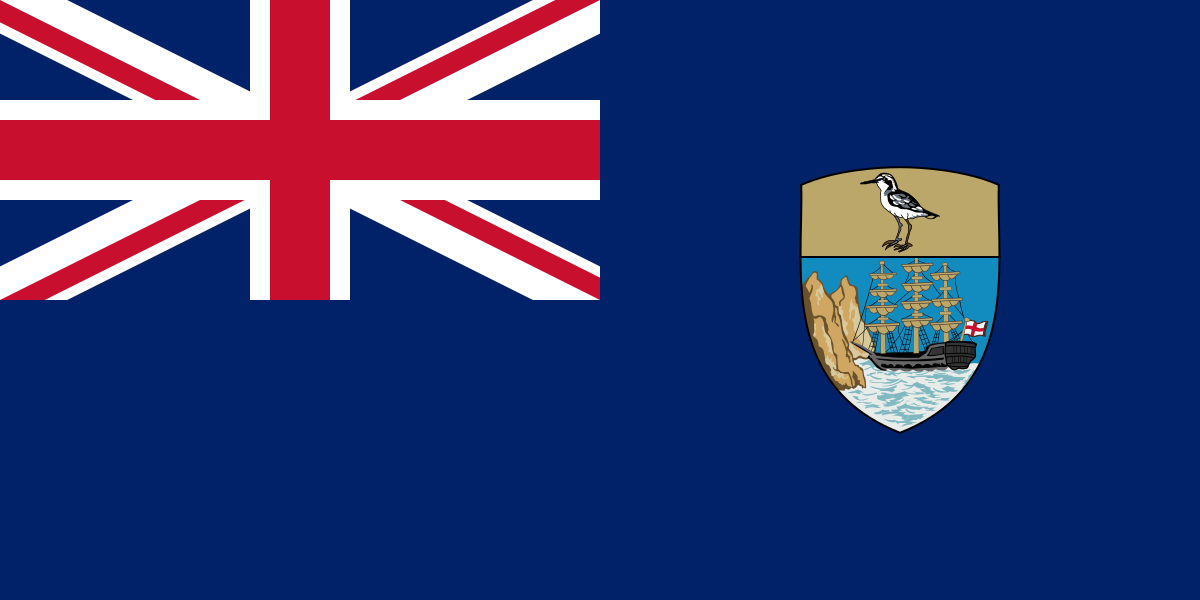
Saint Helena, Ascension, and Tristan da Cunha
· SH

Saint Helena, Ascension, and Tristan da Cunha

Saint Helena, Ascension, and Tristan da Cunha

Saint Helena, Ascension, and Tristan da Cunha is a remote and fascinating British Overseas Territory located in the South Atlantic Ocean. This unique destination offers a blend of natural beauty, historic sites, and a ri…

#remote island#volcanic#British Overseas Territory#unique ecosystem#historical significance
1/1

Top hotels & flights

Hand-picked stays and the best fares into Saint Helena, Ascension, and Tristan da Cunha.

Top Hotels in Jamestown

Top Flights to Jamestown

Popular activities

Tours, tickets and experiences travelers book most in Saint Helena, Ascension, and Tristan da Cunha.

Tours

Explore Napoleon's Exile

Visit the sites associated with Napoleon Bonaparte's exile on Saint Helena, including Longwood House and his tomb.

Jamestown Exploration

Discover the charm of the capital city, its shops, and historic sites.

Outdoor

Hiking Diana's Peak

Climb to the highest point in Saint Helena, offering breathtaking views.

Location videos

Real reels from travelers, plus longer watches to get the full picture.

From travelers
Watch & explore

Practical info

The essentials for planning your time in Saint Helena, Ascension, and Tristan da Cunha.

Currency
SHP | GBP | Pound Sterling
Population
Information not available.
Languages
English, English
Average weather
Saint Helena, Ascension, and Tristan da Cunha
Jan
sun
26°20°
Feb
sun
26°20°
Mar
sun
26°20°
Apr
sun
25°19°
May
cloud
24°18°
Jun
cloud
23°17°
Jul
cloud
22°16°
Aug
cloud
22°16°
Sep
cloud
23°17°
Oct
cloud
23°18°
Nov
cloud
24°19°
Dec
sun
25°20°

Local guide

What travelers love, what to watch for, and a deeper read on Saint Helena, Ascension, and Tristan da Cunha.

What people love

Saint Helena, Ascension, and Tristan da Cunha are three remote and isolated island territories in the South Atlantic Ocean. Each of these islands offers unique experiences and attractions for travelers seeking adventure and exploration. Here are some pros of traveling to each of these territories:

  1. Saint Helena:
  • Rich history: Saint Helena is known for being the place of Napoleon Bonaparte's exile and eventual death. Visitors can explore historical sites related to this period, such as Longwood House and Napoleon's Tomb.
  • Unique landscapes: The island features diverse landscapes, including rugged coastlines, lush valleys, and volcanic peaks. Outdoor enthusiasts can enjoy hiking, diving, and fishing in this scenic environment.
  • Wildlife viewing: Saint Helena is home to a variety of endemic species, including the Saint Helena plover and wirebird. Birdwatchers will appreciate the opportunity to spot these unique birds in their natural habitat.
  1. Ascension:
  • Volcanic landscapes: Ascension Island is a volcanic island with unique geological formations, such as Green Mountain and the volcanic cones of the Sisters. Travelers interested in geology and natural history will find plenty to explore here.
  • Diverse marine life: The waters surrounding Ascension Island are teeming with marine life, making it a popular destination for diving and snorkeling. Visitors can swim with sea turtles, dolphins, and a variety of fish species.
  • Stargazing opportunities: Thanks to its remote location and minimal light pollution, Ascension Island offers excellent conditions for stargazing. Astronomy enthusiasts will appreciate the clear night skies and visibility of celestial objects.
  1. Tristan da Cunha:
  • Remote wilderness: Tristan da Cunha is one of the most remote inhabited islands in the world, offering a truly off-the-beaten-path travel experience. Travelers can immerse themselves in the island's rugged landscapes and pristine nature.
  • Unique culture: The small community living on Tristan da Cunha has a distinct culture and way of life. Visitors can interact with locals, learn about their traditions, and gain insight into what life is like in such a remote setting.
  • Adventure activities: Hiking, birdwatching, fishing, and boat tours are popular activities on Tristan da Cunha. The island's unspoiled natural beauty provides a stunning backdrop for outdoor adventures.

Overall, traveling to Saint Helena, Ascension, and Tristan da Cunha offers a chance to explore remote and unique destinations with rich history, diverse landscapes, and abundant wildlife. It's an opportunity to disconnect from the hustle and bustle of modern life and immerse oneself in the natural beauty and tranquility of these island territories.

What to know

Traveling to Saint Helena, Ascension, and Tristan da Cunha has several cons that visitors should be aware of:

  1. Remote Location: These islands are extremely remote and isolated in the South Atlantic Ocean. Traveling there can be time-consuming and expensive due to limited transportation options.

  2. Limited Infrastructure: The islands have limited infrastructure, which can affect the availability and quality of accommodation, transportation, and other services. Visitors may need to adjust their expectations compared to more developed tourist destinations.

  3. Climate: The climate on these islands can be unpredictable and windy, with the potential for rough seas. This can impact travel plans, especially for those prone to seasickness.

  4. Limited Activities: Due to their remote location, the islands may have limited options for activities and attractions compared to more popular tourist destinations. Visitors looking for a bustling nightlife or extensive shopping options may be disappointed.

  5. Costs: Traveling to and within these islands can be expensive, as everything needs to be imported. Visitors should be prepared for higher-than-average costs for food, accommodation, and activities.

Overall, while Saint Helena, Ascension, and Tristan da Cunha offer unique and beautiful landscapes, potential visitors should be aware of the challenges and limitations associated with traveling to these remote islands.

Saint Helena, Ascension, and Tristan da Cunha is a British Overseas Territory located in the South Atlantic Ocean. It consists of the islands of Saint Helena, Ascension Island, and the Tristan da Cunha group. Each island has its own unique history and significance.

Saint Helena

Early History

  • Discovery: Saint Helena was discovered on May 21, 1502, by the Portuguese navigator João da Nova, who named it after Helena of Constantinople. The island was uninhabited upon discovery.
  • Early Colonization: The Portuguese used it as a stopover for ships traveling from Asia to Europe. The island was later visited by the Dutch, and in 1659, the English East India Company took possession and began to establish a colony.

Notable Events

  • Napoleon’s Exile: Saint Helena is perhaps most famous for being the place of exile for Napoleon Bonaparte. He was exiled there in 1815 and lived on the island until his death in 1821.
  • End of the Slave Trade: In the early 19th century, the island played a role in the suppression of the Atlantic slave trade. Captured slave ships were brought to Saint Helena, and the liberated Africans, known as "liberated Africans," were settled on the island.

Historical Figures

  • Napoleon Bonaparte: The French emperor spent the last years of his life on Saint Helena.
  • Sir Hudson Lowe: The British governor of Saint Helena during Napoleon's exile.

Landmarks

  • Longwood House: The residence of Napoleon during his exile.
  • Napoleon’s Tomb: Although his remains were later moved to Paris, the original tomb remains a site of interest.
  • Jacob’s Ladder: A steep staircase with 699 steps connecting Jamestown to the former fort on Ladder Hill.

Ascension Island

Early History

  • Discovery: Ascension Island was discovered by the Portuguese navigator Afonso de Albuquerque on Ascension Day, May 21, 1503.
  • Strategic Importance: The island was largely uninhabited until the British garrisoned it in 1815 to prevent any attempts to rescue Napoleon from Saint Helena.

Notable Events

  • Coaling Station: In the 19th century, it became an important coaling station for ships.
  • World War II: During World War II, Ascension Island was used as an airbase by the Allies.
  • NASA Tracking Station: The island played a role in the U.S. space program with a NASA tracking station.

Landmarks

  • Green Mountain: The highest point on the island, offering a unique microclimate and lush vegetation.
  • Wideawake Airfield: Built during WWII, it remains an important airbase.

Tristan da Cunha

Early History

  • Discovery: Discovered in 1506 by Portuguese explorer Tristão da Cunha, who named the main island after himself.
  • Settlement: The islands were not settled until the early 19th century, with a small garrison established by the British in 1816.

Notable Events

  • Volcanic Eruption: In 1961, a volcanic eruption forced the evacuation of the island's population to the UK. Most residents returned in 1963.
  • Isolation: Known for being one of the most remote inhabited archipelagos in the world, with limited access to the outside world.

Landmarks

  • Edinburgh of the Seven Seas: The main settlement on Tristan da Cunha.
  • Queen Mary's Peak: The highest point on the island, a dormant volcano.

General Overview

The territory of Saint Helena, Ascension, and Tristan da Cunha holds significant historical and strategic importance. Each island has contributed uniquely to historical events, such as the exile of Napoleon, the suppression of the slave trade, and serving as strategic military and nautical bases. Today, they remain under British sovereignty, with small local populations and a distinct cultural heritage.