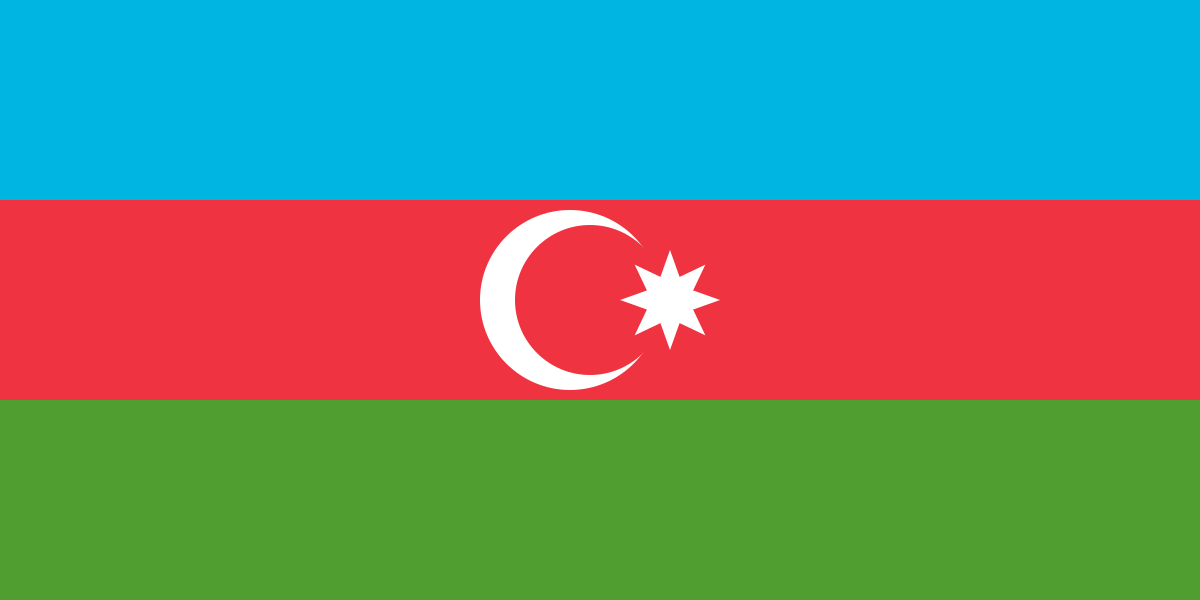
Sabirabad is a city and the administrative center of the Sabirabad District in Azerbaijan. It is located in the central part of the country, at the confluence of the Kura and Aras rivers. The region has a rich history, influenced by various empires and civilizations over the centuries.
Historical Background
-
Early History:
- The area around Sabirabad has been inhabited since ancient times due to its fertile lands and strategic location near major waterways. This made it an attractive site for early settlers and various nomadic tribes.
-
Medieval Period:
- The region was influenced by the Persian Empire and later by the Arab Caliphates, contributing to the Islamic cultural and architectural heritage in the area.
- During the medieval period, the area was part of various Azerbaijani khanates and was influenced by the Safavid and Qajar dynasties.
-
19th Century:
- In the 19th century, with the expansion of the Russian Empire into the Caucasus, the region including Sabirabad came under Russian control following the Russo-Persian Wars.
- During this time, significant changes in administrative and land policies were implemented by the Russian authorities.
-
20th Century:
- After the Russian Revolution and the subsequent fall of the Russian Empire, Azerbaijan declared independence in 1918, only to be incorporated into the Soviet Union in 1920.
- Sabirabad, during the Soviet era, underwent industrialization and collectivization. The city played a role in the agricultural sector, particularly in cotton production, which was a focus of Soviet agricultural policies.
- The city was named Sabirabad in honor of Mirza Alakbar Sabir, a prominent Azerbaijani poet known for his satirical works critical of societal norms.
-
Post-Soviet Era:
- After Azerbaijan regained independence in 1991, Sabirabad continued to develop, with agriculture remaining a significant part of its economy. The city has also seen developments in infrastructure and public services.
Significant Events
- Floods: The region has experienced significant flooding, especially due to its proximity to the Kura and Aras rivers. These floods have shaped the development and planning of the city over the years.
Notable Figures
- Mirza Alakbar Sabir (1862-1911): Although not born in Sabirabad, the city is named in his honor. He was a prominent Azerbaijani poet and satirist, known for his critical stance on social issues.
Important Landmarks
- Aras and Kura Rivers: The confluence of these rivers near Sabirabad is a significant geographical feature, contributing to the region's agricultural productivity.
- Local Parks and Monuments: There are monuments and local parks that celebrate Azerbaijani culture and history, though specific notable landmarks are less documented compared to larger cities.
Overall, Sabirabad's history is shaped by its strategic location, its agricultural base, and its development through various political regimes. The city continues to be an important part of the Sabirabad District and Azerbaijan at large.