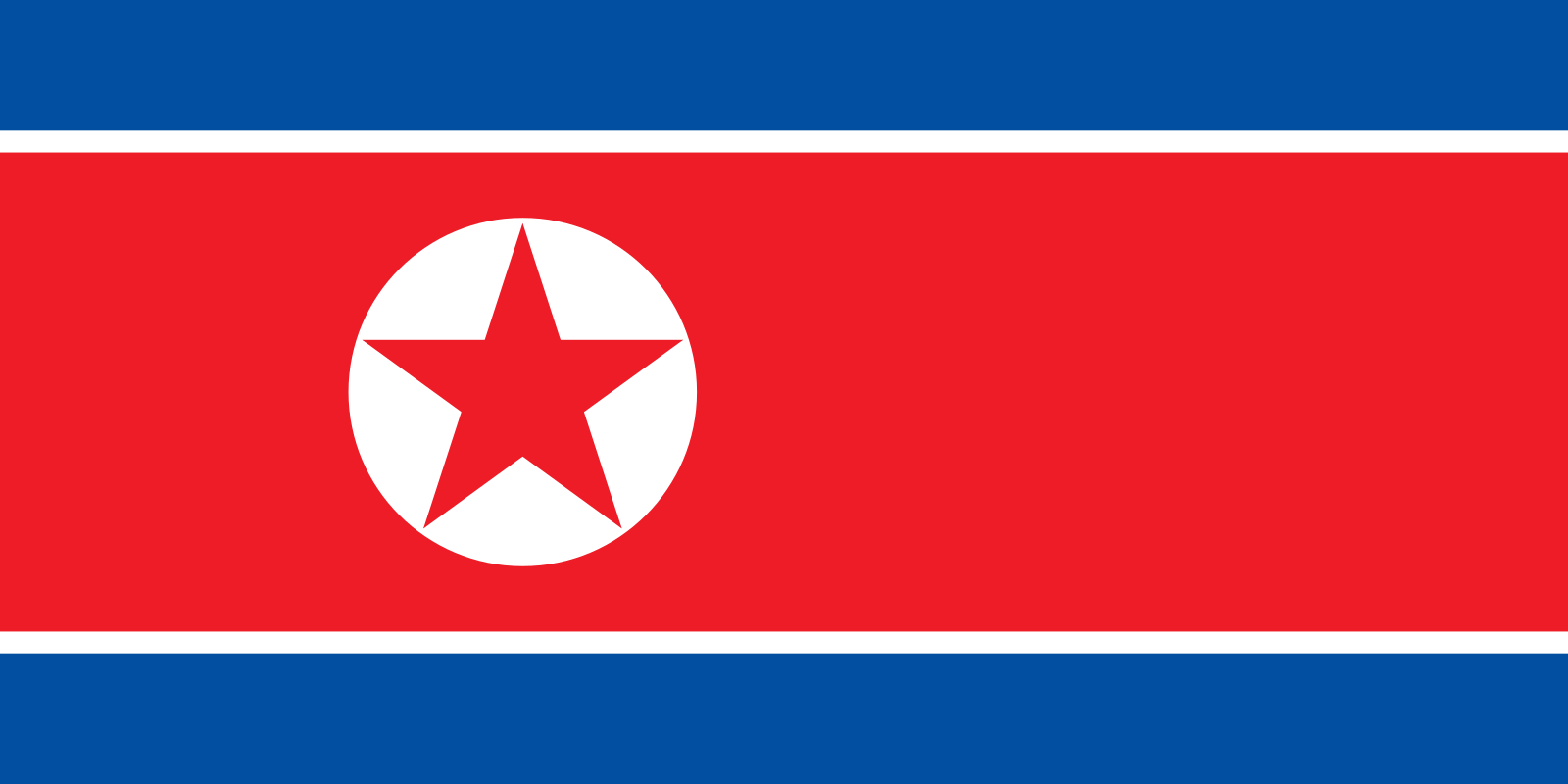
Ryanggang
· KP

Ryanggang

Ryanggang, Korea, North

Venture off the Beaten Path: Discover Ryanggang, North Korea Nestled amidst the soaring peaks of North Korea's northern frontier lies Ryanggang, a province where breathtaking natural beauty meets rugged charm. Far from t…

#North Korea#Ryanggang#East Asia#Mountains#Isolated
1/5

Top hotels & flights

Hand-picked stays and the best fares into Ryanggang.

Top Hotels in Ryanggang

Top Flights to Ryanggang

Location videos

Real reels from travelers, plus longer watches to get the full picture.

From travelers
Watch & explore

Practical info

The essentials for planning your time in Ryanggang.

Currency
₩ | KPW | North Korean Won
Population
1.2 million
Languages
Korean, Korean

Local guide

What travelers love, what to watch for, and a deeper read on Ryanggang.

What people love

Information not available.

What to know

Traveling to Ryanggang, or any location in North Korea, comes with significant challenges and concerns. Here are some of the cons of traveling to this region:

  1. Restricted Access: North Korea is one of the most isolated countries in the world, and access is heavily restricted. Tourists can only enter the country through organized tours, and these tours are tightly controlled by the government.

  2. Lack of Freedom: While in North Korea, you will have little to no freedom of movement. Tourists are required to be accompanied by government-approved guides at all times and are only allowed to visit specific, pre-approved locations.

  3. Political Sensitivity: North Korea is a politically sensitive country with strict regulations regarding behavior, photography, and interaction with locals. Violating these rules can lead to severe consequences, including detention.

  4. Safety Concerns: Although the government ensures that tourist areas are safe, the political climate in North Korea can be unpredictable. Tensions between North Korea and other countries may affect the safety and security of visitors.

  5. Limited Communication: Communication with the outside world is extremely limited. Internet access is restricted, international phone calls can be expensive and difficult, and there is very little access to international news.

  6. Cultural and Language Barriers: There is a significant cultural and language barrier. English is not widely spoken outside of tourist areas, and cultural norms are quite different from those in the West.

  7. Healthcare: Medical facilities in North Korea are limited, and in the case of a medical emergency, adequate care might not be available. Travelers are advised to have comprehensive travel insurance that covers medical evacuation.

  8. Economic Restrictions: Foreign currency usage is restricted, and credit cards are not accepted. Travelers need to bring enough cash (usually Euros or Chinese Yuan) for their entire stay.

  9. Ethical Considerations: Some travelers may have ethical concerns about visiting North Korea, as tourism can be seen as supporting the regime financially and politically.

Given these factors, traveling to Ryanggang or any part of North Korea requires careful consideration and thorough planning.

Ryanggang Province, located in the northern part of North Korea, is an area known for its mountainous terrain and significant historical and political importance. Here is a detailed history, including notable events, figures, and landmarks associated with the region:

  1. Geography and Early History:

    • Ryanggang Province is characterized by its rugged terrain, including the famous Paektu Mountain, which is the highest peak in Korea and holds cultural and spiritual significance.
    • The region has historically been sparsely populated due to its harsh climate and challenging terrain.
  2. Japanese Occupation (1910-1945):

    • During the Japanese occupation of Korea, Ryanggang was part of the larger province of South Hamgyong.
    • The area was strategically important due to its proximity to Manchuria and served as a base for anti-Japanese guerrilla activities.
  3. Korean War (1950-1953):

    • Ryanggang was affected by the Korean War, with its infrastructure and population suffering the consequences of military conflicts.
  4. Post-War Period:

    • After the war, Ryanggang Province was formally established in 1954 when it was split from South Hamgyong Province.
    • The region was developed for its natural resources, particularly timber and minerals.
  5. Significant Events and Developments:

    • Ryanggang is known for the Ryanggang Explosion, a massive explosion that occurred in 2004, which was initially speculated by some to be a nuclear test, but was later confirmed to be a large construction project involving explosives.
    • The province is also noted for its proximity to the early nuclear facilities of North Korea.
  6. Historical Figures:

    • Kim Jong Il, the former leader of North Korea, is claimed by North Korean sources to have been born on Mount Paektu, though records outside North Korea suggest he was born in Russia.
  7. Landmarks:

    • Mount Paektu: A sacred mountain considered the mythical birthplace of Dangun, the founder of the first Korean kingdom, and a symbol of Korean identity.
    • Lake Chon: A crater lake atop Mount Paektu, known for its scenic beauty.
    • Samjiyon County: Known for its revolutionary sites related to Kim Il Sung's guerrilla activities against Japanese forces.
  8. Cultural and Political Importance:

    • Mount Paektu is a central symbol in North Korea's state mythology, often linked to the ruling Kim family.
    • The region plays a key role in North Korean propaganda, emphasizing its revolutionary heritage and natural beauty.

The history and details about Ryanggang Province are deeply intertwined with North Korea's political narrative, and much of the information available is influenced by the state's official accounts.