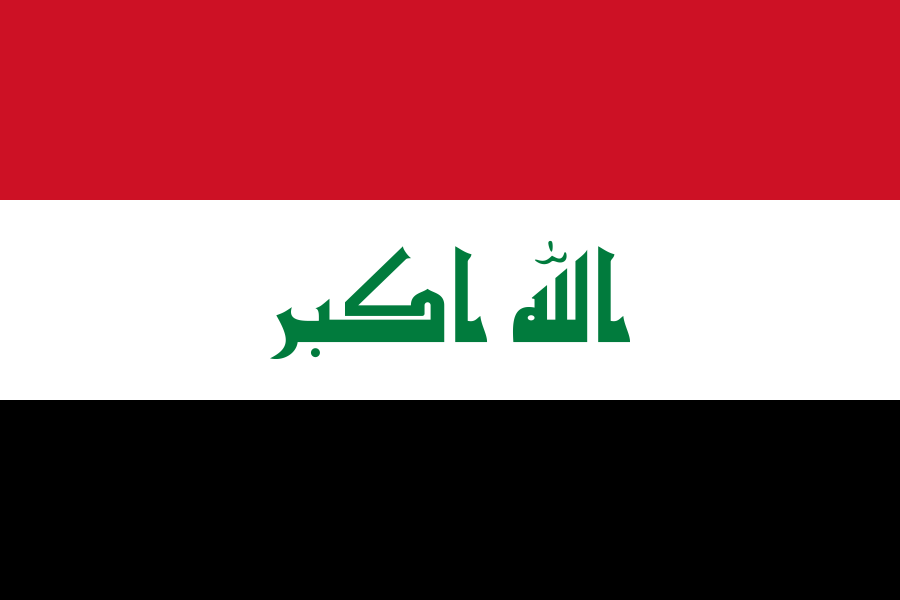
Rāwah, located in Al Anbār Province of Iraq, is a town with a history that reflects the broader historical currents of the region. It is situated on the Euphrates River, which has been a cradle of civilization for millennia. The history of Rāwah is intertwined with that of Mesopotamia and later empires that controlled the area.
Historical Background
Ancient and Medieval Periods:
- Rāwah and the surrounding region have been inhabited since ancient times, benefiting from the fertile lands of the Euphrates River Valley.
- The area was part of various empires, including the Assyrian and Babylonian empires, which held sway over the Mesopotamian region.
- During the Islamic Golden Age, the broader region of Al Anbār was significant as a center of learning and culture, although Rāwah itself was more of a strategic and trading location due to its position along the river.
Ottoman Period:
- Under Ottoman rule, Rāwah was part of a larger administrative region. The Ottomans controlled the area from the 16th century until World War I.
- The town served as a local center for trade and agriculture, with the Euphrates playing a crucial role in its economy and connectivity.
20th Century:
- After the fall of the Ottoman Empire, Rāwah became part of the newly established state of Iraq.
- The region saw development as part of the Iraqi state-building efforts in the mid-20th century.
Recent History
21st Century Conflicts:
- In the early 21st century, Rāwah was significantly affected by the conflicts that have swept through Iraq, particularly the insurgency following the 2003 U.S.-led invasion of Iraq.
- During the rise of ISIS (Islamic State of Iraq and Syria), Rāwah came under the control of ISIS forces in 2014. The group declared it part of their self-proclaimed caliphate.
- In late 2017, Iraqi forces recaptured Rāwah from ISIS. This operation was part of a broader campaign to reclaim territory in western Iraq.
Significant Events and Landmarks
- Liberation from ISIS: The recapture of Rāwah in November 2017 marked one of the last significant territorial defeats for ISIS in Iraq, symbolizing the end of the group's control over Iraqi towns.
- Euphrates River: As a geographical landmark, the Euphrates is crucial to the town's history and economy, providing water for agriculture and serving as a trade route historically.
Cultural and Historical Figures
While there are no widely recognized historical figures specifically tied to Rāwah itself, the town's cultural and historical context is deeply connected to the broader narrative of the Anbār province and Mesopotamian history.
In summary, Rāwah is a town with a rich and varied history, shaped by its strategic location along the Euphrates River and its involvement in the many historical changes that have swept through Iraq. Its recent history is marked by conflict and recovery, reflecting the broader challenges faced by the region.