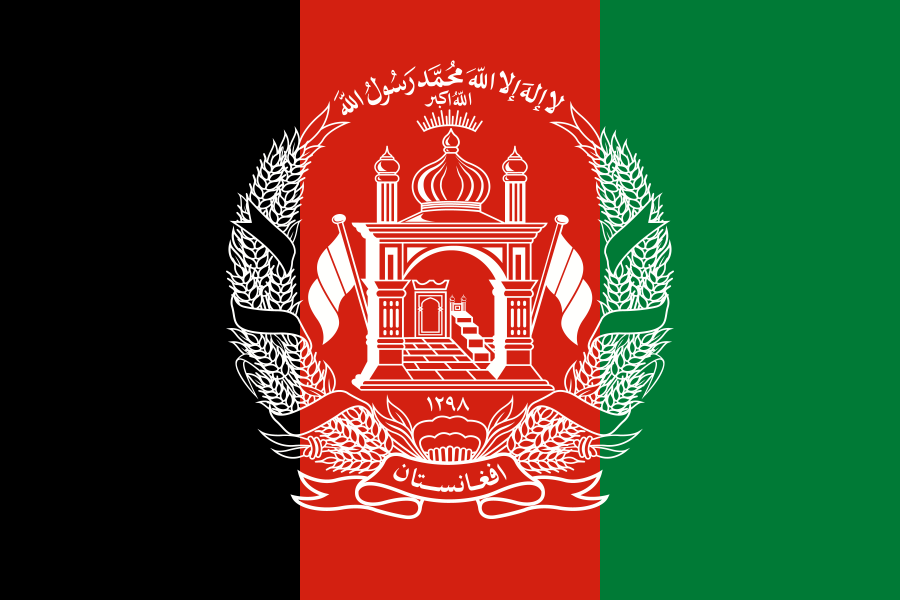
Paktīkā
· AF

Paktīkā

Paktīkā, Afghanistan

Welcome to Paktīkā, a province nestled in the beautiful country of Afghanistan, offering a unique blend of history, culture, and natural beauty for adventurous travelers to explore. Paktīkā is a region rich in history, w…

#Afghanistan#Paktīkā#remote#mountainous#rural
1/32

Top hotels & flights

Hand-picked stays and the best fares into Paktīkā.

Top Hotels in Paktīkā

Top Flights to Paktīkā

Popular activities

Tours, tickets and experiences travelers book most in Paktīkā.

Tours

Historical Tour of Sharana

Explore the historical sites of Sharana, the capital of Paktika.

Shopping

Traditional Bazaar Shopping

Experience shopping in traditional Afghan bazaars, known for handicrafts and local goods.

Outdoor

Kurgha Valley Trek

Enjoy trekking through the beautiful landscapes of Kurgha Valley.

Location videos

Real reels from travelers, plus longer watches to get the full picture.

From travelers
Watch & explore

Practical info

The essentials for planning your time in Paktīkā.

Currency
؋ | AFN | Afghan Afghani
Population
Information not available.
Languages
Pashto, Pashto

Local guide

What travelers love, what to watch for, and a deeper read on Paktīkā.

What people love

Information not available.

What to know

Traveling to Paktīkā, Afghanistan, comes with several significant challenges and potential risks, especially considering the current socio-political climate. Here are some of the cons:

  1. Security Concerns: Afghanistan has been experiencing ongoing conflict and instability for many years. Paktīkā, like many other provinces, has seen violence and insurgent activity. The security situation can be volatile, with risks of armed conflict, terrorism, and kidnapping.

  2. Infrastructure Issues: The infrastructure in Paktīkā is underdeveloped. Roads, healthcare facilities, and other essential services may be limited or in poor condition, which can make travel and daily living difficult.

  3. Travel Restrictions: Many governments, including the U.S. and other Western countries, have travel advisories in place for Afghanistan, often advising against all travel to the region due to safety concerns.

  4. Limited Access to Services: Access to basic services such as healthcare, clean water, and telecommunications can be unreliable or unavailable in many areas of Paktīkā.

  5. Cultural and Language Barriers: For foreigners, there may be significant cultural and language barriers. Understanding local customs and languages (primarily Pashto and Dari) is important for effective communication and interaction.

  6. Political Uncertainty: The political situation in Afghanistan remains uncertain, and changes in governance or policy could affect travel plans dramatically.

  7. Humanitarian Concerns: The region faces humanitarian challenges, including poverty, displacement, and lack of resources, which can impact visitors as well.

Given these considerations, traveling to Paktīkā, Afghanistan, should be approached with extreme caution, and it is important to stay updated on current events and travel advisories from reliable sources.

Paktīkā is a province in southeastern Afghanistan that has a rich and complex history. This region has been inhabited for thousands of years and has been influenced by various empires and cultures.

Historical Overview

  1. Ancient and Medieval Periods:

    • The area that is now Paktīkā was once part of ancient civilizations and empires, including the Achaemenid Empire and later the Maurya Empire, which spread Buddhism throughout the region.
    • During the Islamic conquests, the area came under the influence of various Muslim dynasties, such as the Ghaznavids and the Ghurids, who played a crucial role in the spread of Islam in Afghanistan.
  2. Modern History:

    • In the 19th century, Paktīkā became a frontier area during the Great Game, the strategic rivalry between the British Empire and the Russian Empire.
    • The region has been affected by the various conflicts that have plagued Afghanistan, including the Soviet-Afghan War in the 1980s, when Afghan mujahideen resisted Soviet forces.
    • During the Taliban regime (1996-2001), Paktīkā was under Taliban control, and after the U.S.-led invasion in 2001, it became an area of conflict between coalition forces and insurgents.
  3. Recent Developments:

    • Post-2001, Paktīkā has seen significant military activity and development projects aimed at reconstruction and stabilization.
    • The presence of NATO and U.S. forces led to various military operations aimed at countering insurgency, which has affected the local population.
    • The province has been part of peace talks and efforts to bring stability to Afghanistan in recent years.

Significant Events

  • Soviet-Afghan War (1979-1989): Paktīkā was one of the regions where Afghan mujahideen fought against Soviet troops.
  • Operation Enduring Freedom (2001-present): The province has been a site of ongoing military operations against Taliban insurgents.

Historical Figures

  • Mujahideen Leaders: Several mujahideen commanders who fought against Soviet forces in the 1980s hailed from or operated in Paktīkā.
  • Local Tribal Leaders: Tribal leaders have played significant roles in the political and social dynamics of Paktīkā throughout history.

Important Landmarks

  • Historical Sites: The province has various ancient sites and remnants of Buddhist stupas and monasteries, though many have not been fully excavated or documented.
  • Sharana: The capital of Paktīkā, which has been a focal point for administration and development projects in the province.

Paktīkā, like much of Afghanistan, has a history marked by conflict and cultural diversity. Its strategic location and rugged terrain have made it a significant area in Afghanistan's historical narrative. Information about specific events or historical figures from earlier periods may be limited due to the region's complex history and ongoing challenges.