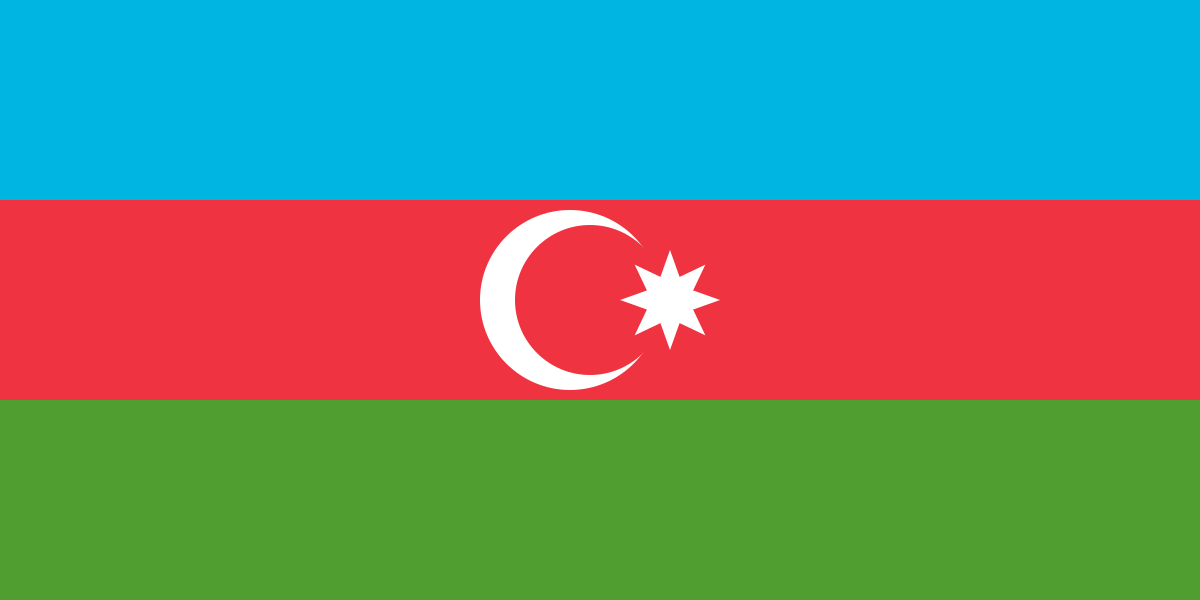
Əmircan, a settlement located within the administrative boundaries of Baku, the capital of Azerbaijan, has a rich historical background. The village, once known as "Amirovka" during the Soviet era, is one of the oldest settlements in the area with a history that stretches back several centuries.
Significant Historical Events and Figures:
-
Medieval Era: The history of Əmircan can be traced back to medieval times when it was part of the Shirvan region. The village was known for its strategic location and was a part of the trade routes in the Caucasus.
-
Oil Boom Era: In the late 19th and early 20th centuries, Baku experienced an oil boom, and Əmircan benefited from this economic surge. Many oil fields were developed in and around Baku, transforming the region into one of the world's leading oil producers.
-
Soviet Period: During the Soviet era, the village was renamed "Amirovka" after the prominent Azerbaijani composer Uzeyir Hajibeyov, whose real name was Uzeyir Amirov. This period saw significant industrial development, but also a loss of some cultural heritage due to Soviet policies.
-
Notable Figures: Uzeyir Hajibeyov, although not born in Əmircan, is closely associated with Azerbaijani cultural history. His contributions to music and the arts left a lasting impact on the region.
Important Landmarks:
-
Mosques and Religious Sites: Əmircan is home to several historical mosques, which reflect the Islamic architectural styles of the region. These mosques are central to the cultural and religious life of the community.
-
Traditional Architecture: The village contains examples of traditional Azerbaijani architecture, with houses and buildings that showcase the distinctive stonework and design elements of the region.
-
Cultural Sites: Efforts have been made to preserve and promote the cultural heritage of Əmircan, including its music, dance, and local crafts, which are an integral part of Azerbaijan's national identity.
-
Soviet-Era Buildings: The influence of Soviet architecture is also evident in some of the buildings constructed during the 20th century, reflecting the styles and priorities of that period.
Overall, Əmircan is a village that showcases the rich tapestry of Azerbaijani history, from its medieval roots to its role in the oil boom era and its cultural contributions in the Soviet period. While it may not be as renowned as Baku's central landmarks, its historical significance is appreciated by those interested in the diverse history of Azerbaijan.