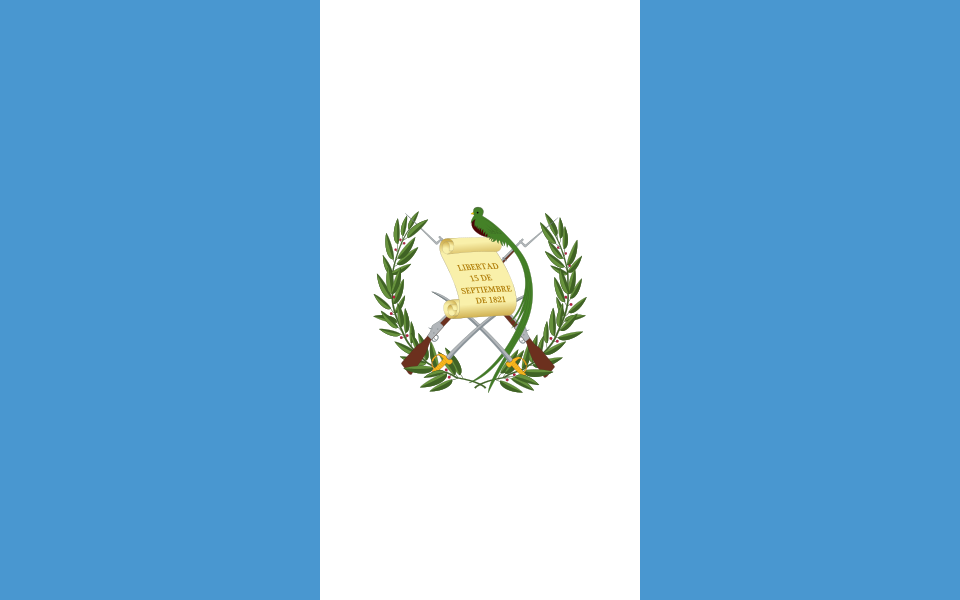
Malacatán is a town and municipality located in the department of San Marcos, Guatemala. It is situated near the border with Mexico, making it an important area for cross-border trade and cultural exchange. The town is nestled in a region characterized by its lush landscapes and proximity to the Sierra Madre mountain range.
Historical Overview
-
Pre-Columbian Era: The region around Malacatán was originally inhabited by indigenous Maya groups. The broader area of San Marcos has a rich pre-Columbian history with various archaeological sites that point to the presence of complex societies prior to the arrival of the Spanish.
-
Colonial Period: During the Spanish colonization, the area that is now Malacatán was part of the larger encomienda system, which was an economic model that included forced labor and tribute from indigenous people. The region's fertile land made it a site for agriculture and the development of small settlements.
-
19th Century: Following Guatemala's independence from Spain in 1821, Malacatán began to grow as a municipality. The development of infrastructure and roads linking it to other parts of San Marcos and the Mexican border were significant during this period. Coffee production became an important economic activity, influencing the social and economic fabric of the area.
-
20th Century: The town saw further development throughout the 20th century. The construction of the Inter-American Highway in the mid-20th century improved transportation and trade links. Malacatán's location near the Mexican border has made it a strategic point for both legal and illegal trade, influencing its economic and social dynamics.
-
Civil War Period: During Guatemala's civil war (1960-1996), the region experienced unrest and violence like many other parts of the country. However, specific events related to Malacatán during this period are less documented compared to other regions.
-
Post-Civil War Era: Since the peace accords in 1996, Malacatán has been part of national efforts to improve infrastructure and local governance. The area continues to be an important hub for agriculture, especially coffee and banana production, and cross-border trade.
Significant Events and Figures
-
Economic Development: The town's economic history is strongly tied to agriculture, with coffee and bananas being primary crops. Over the years, the development of infrastructure to support agriculture and trade has been significant.
-
Cross-Border Trade: Malacatán's position on the border has made it a focal point for commerce between Guatemala and Mexico, with the official border crossing at El Carmen being one of the busiest in the region.
Important Landmarks
-
El Carmen Border Crossing: This is a critical point of entry and exit between Guatemala and Mexico, facilitating trade and movement of people.
-
Local Markets: The town hosts vibrant markets that are crucial for local commerce and reflect the cultural mix of the region, with goods flowing in from both sides of the border.
-
Natural Landscapes: The surrounding areas of Malacatán are known for their natural beauty, including the nearby mountains and rivers, which are attractions for both locals and tourists.
Cultural Influence
The cultural landscape of Malacatán is influenced by its proximity to Mexico, with a blend of Guatemalan and Mexican traditions evident in its festivals, cuisine, and daily life. The town's cultural festivals often reflect this mix, with celebrations that incorporate elements from both countries.
Challenges
Malacatán, like many border towns, faces challenges related to migration, trade, and security. The dynamics of cross-border movement can lead to complex social and economic issues, including those related to informal trade and migration.
In summary, Malacatán's history is shaped by its strategic location, agricultural economy, and the cultural interplay between Guatemala and Mexico. It continues to evolve as a significant town within the San Marcos department.