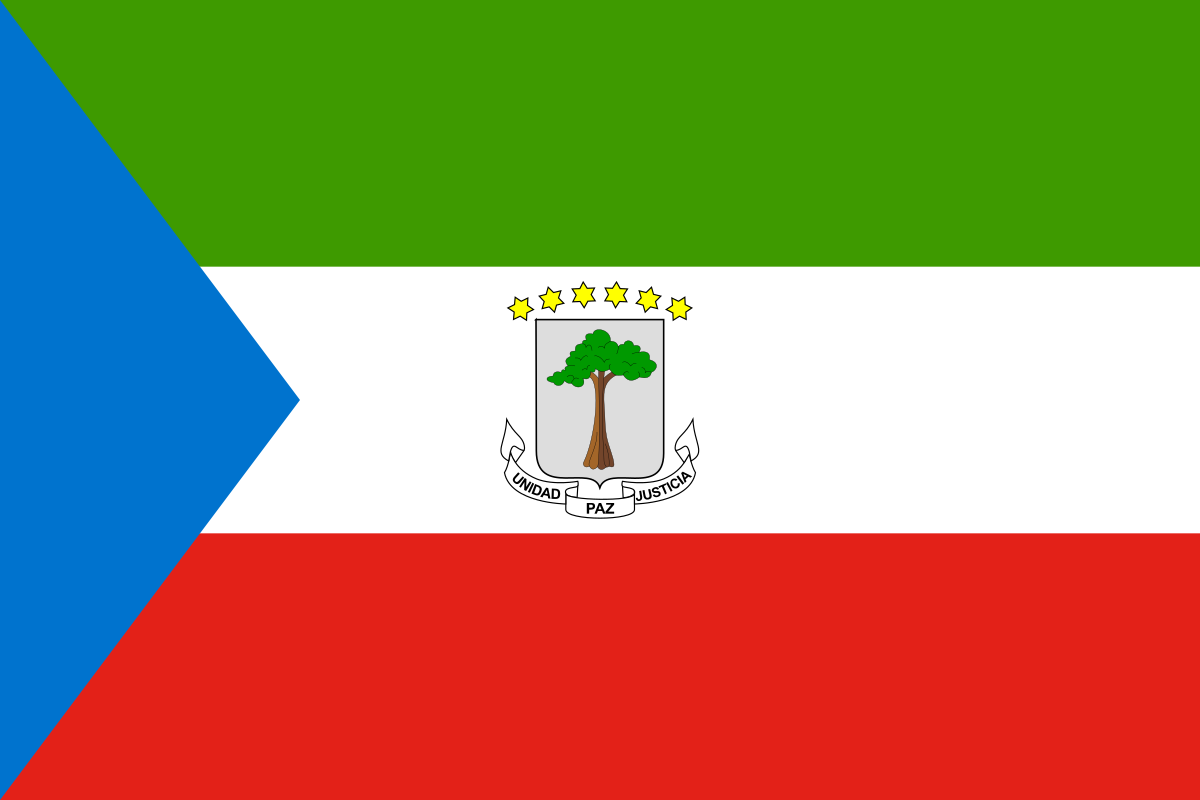
Malabo
· GQ

Malabo

Malabo, Bioko Norte, Equatorial Guinea

Malabo: Equatorial Charm Meets Modern Allure Nestled on the volcanic island of Bioko Norte, Malabo, the capital of Equatorial Guinea, is a city where vibrant African culture dances with Spanish colonial history against a…

#Capital city#Equatorial Guinea#Bioko Norte#Island#Central Africa
1/1

Top hotels & flights

Hand-picked stays and the best fares into Malabo.

Top Hotels in Malabo

Top Flights to Malabo

Popular activities

Tours, tickets and experiences travelers book most in Malabo.

Tours

Explore Malabo City

Discover the vibrant culture, colonial architecture, and bustling markets of Malabo city.

Location videos

Real reels from travelers, plus longer watches to get the full picture.

Watch & explore

Practical info

The essentials for planning your time in Malabo.

Currency
CFA Franc BEAC | XAF | Central African CFA franc
Population
Not Available
Languages
Spanish, Fang, Bubi, Ibo, English, French
Average weather
Malabo
Jan
rain
31°23°
Feb
rain
32°23°
Mar
rain
32°23°
Apr
rain
31°23°
May
rain
30°23°
Jun
rain
29°22°
Jul
cloud
28°21°
Aug
cloud
27°21°
Sep
cloud
28°21°
Oct
rain
29°22°
Nov
rain
30°22°
Dec
rain
31°23°

Local guide

What travelers love, what to watch for, and a deeper read on Malabo.

What people love

Malabo, the capital city of Equatorial Guinea, located on the island of Bioko Norte, offers a unique travel experience with several pros:

  1. Natural Beauty: Malabo is surrounded by lush tropical landscapes, including rainforests, beaches, and volcanic mountains. Visitors can explore the diverse flora and fauna of the region and enjoy outdoor activities such as hiking, birdwatching, and diving.

  2. Cultural Richness: The city has a rich cultural heritage influenced by Spanish and indigenous traditions. Travelers can visit historical landmarks, museums, and local markets to immerse themselves in the local culture and traditions.

  3. Cuisine: Malabo offers a variety of local dishes that showcase the flavors of Equatorial Guinea. Visitors can enjoy fresh seafood, tropical fruits, and traditional dishes such as grilled fish, plantains, and cassava.

  4. Hospitality: The locals in Malabo are known for their warm hospitality and friendliness towards visitors. Travelers can interact with the locals and learn about their customs and way of life.

  5. Safety: Malabo is considered a safe destination for travelers, with low crime rates and a stable political environment. Visitors can explore the city and its surroundings with peace of mind.

Overall, traveling to Malabo offers a blend of natural beauty, cultural richness, delicious cuisine, warm hospitality, and safety for an unforgettable experience.

What to know

There are several cons to consider when traveling to Malabo, the capital city of Equatorial Guinea located on the island of Bioko Norte. Here are some detailed points to consider:

  1. Safety Concerns: Crime rates in Malabo are relatively high, especially in certain areas. Travelers should be cautious and take necessary precautions to ensure their safety.

  2. Health Risks: Equatorial Guinea has a high prevalence of diseases such as malaria, yellow fever, and dengue fever. It is important to take necessary health precautions, such as getting vaccinated and taking antimalarial medication.

  3. Limited Infrastructure: Malabo may not have the same level of infrastructure and amenities as more developed tourist destinations. This could impact the quality of accommodation, transportation, and healthcare facilities available to travelers.

  4. High Cost of Living: The cost of living in Malabo can be relatively high compared to other cities, which could make it an expensive destination for tourists.

  5. Political Stability: Equatorial Guinea has been known for its political instability and human rights issues. Travelers should stay informed about the current political situation and any potential risks.

  6. Language Barrier: The official languages in Equatorial Guinea are Spanish and French. English may not be widely spoken, which could pose a communication challenge for English-speaking travelers.

  7. Limited Tourist Infrastructure: Malabo may not have a well-developed tourism infrastructure compared to other popular destinations. This could impact the availability of tourist services and activities.

Overall, while Malabo has its own unique charm and attractions, travelers should be aware of these potential cons and plan their trip accordingly to ensure a safe and enjoyable experience.

I hope this information is helpful to you!

Malabo, the capital city of Equatorial Guinea, is located on the northern coast of Bioko Island in the Gulf of Guinea. Its history is rich and complex, having been influenced by various cultures and colonial powers over the centuries. Here is a detailed history of Malabo:

Early History

  • Pre-Colonial Period: Before European contact, the island of Bioko was inhabited by the Bubi people. They were organized into small kingdoms and lived primarily by farming and fishing.

Colonial Era

  • Discovery and Early European Influence (1472): The island was first sighted by Portuguese explorers in 1472. Initially named Formosa, the island was later renamed Fernando Pó after the explorer Fernão do Pó.
  • Spanish Control: In 1778, through the Treaty of El Pardo, Portugal ceded Bioko (then Fernando Pó) and other territories to Spain. The Spanish aimed to use the island primarily as a base for the slave trade.
  • British Influence (1827-1843): The British established a base on the island to combat the slave trade. They called the settlement Clarence City, after the Duke of Clarence, later William IV of the United Kingdom.
  • Reversion to Spanish Rule: The British withdrew in 1843, and the settlement was renamed Santa Isabel, honoring Queen Isabella II of Spain.

Post-Colonial Period

  • Independence (1968): Equatorial Guinea gained independence from Spain on October 12, 1968. Santa Isabel became the capital of the newly independent country.
  • Renaming to Malabo (1973): President Francisco Macías Nguema changed the city's name to Malabo as part of his campaign to replace colonial names with African ones. Malabo was named after the last Bubi king, Malabo Lopelo Melaka.

Modern History

  • Economic and Political Development: Since the 1990s, Malabo has seen significant development, largely due to the discovery and exploitation of oil reserves. This has brought both wealth and challenges to the city.
  • Infrastructure and Growth: The city has experienced infrastructure development, including the construction of new roads, government buildings, and luxury hotels, aimed at establishing it as a modern capital.
  • Political Unrest: The political climate in Malabo, as in the rest of Equatorial Guinea, has been marked by authoritarian rule and limited political freedoms. The country has been ruled by President Teodoro Obiang Nguema Mbasogo since 1979.

Important Landmarks

  • Malabo Cathedral: A neo-Gothic cathedral built between 1897 and 1916, it is one of the city's most prominent landmarks.
  • The Presidential Palace: A symbol of the country's government, this building is located near the coast.
  • The Equatorial Guinea Cultural Center: A hub for cultural activities and education, offering insights into the local culture and history.
  • Paseo Maritimo: A scenic waterfront promenade that offers views of the Gulf of Guinea.

Historical Figures

  • King Malabo Lopelo Melaka: The last Bubi king who resisted Spanish colonial rule. The city was renamed in his honor.
  • Francisco Macías Nguema: The first president of Equatorial Guinea, known for his authoritarian rule and the renaming of the city.

Malabo continues to be a focal point of political, cultural, and economic activities in Equatorial Guinea, balancing its rich history with ongoing development.