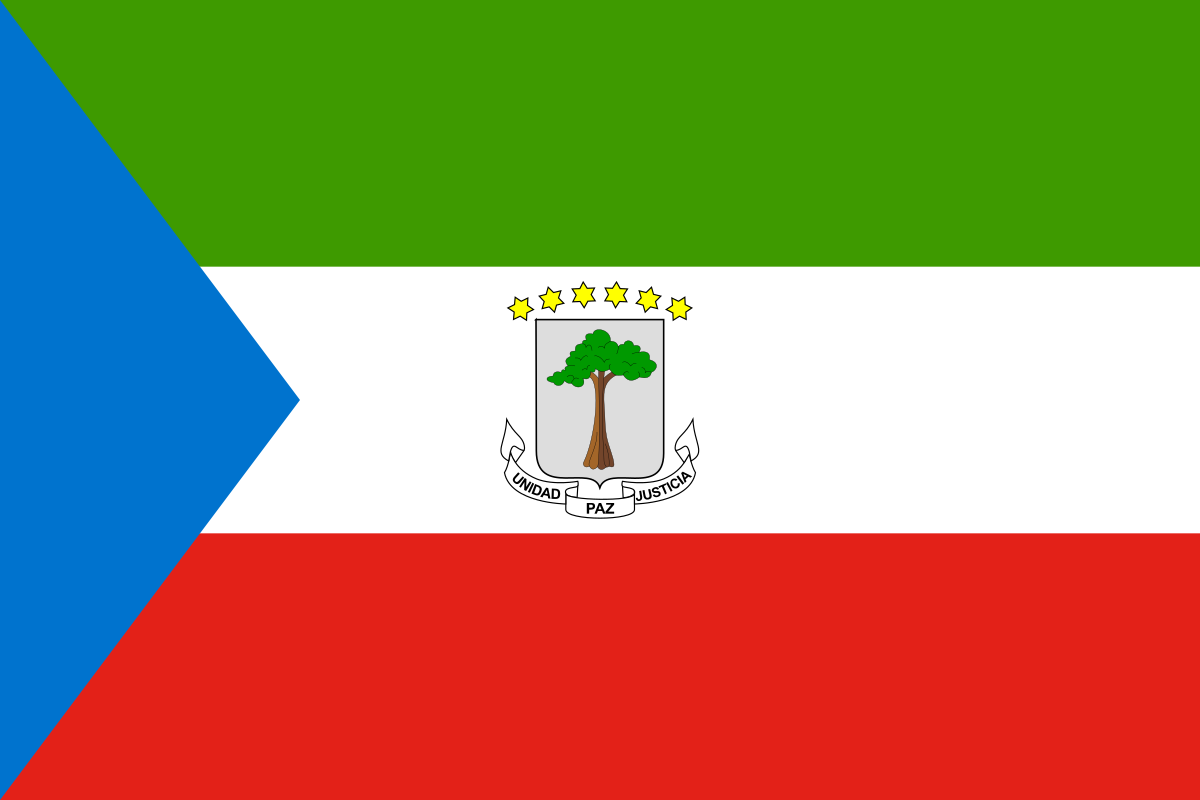
Litoral is a province in Equatorial Guinea, located on the mainland region of the country, known as Río Muni. The capital of Litoral is Bata, which is the largest city in Equatorial Guinea. Here is a detailed history of the region:
Historical Background
-
Colonial Era: Equatorial Guinea, including the Litoral region, was colonized by the Portuguese in the late 15th century. However, it was later ceded to Spain in 1778 through the Treaty of El Pardo. The region was then part of the Spanish colony of Spanish Guinea.
-
Independence Movement: Throughout the 20th century, there were growing movements for independence across African colonies, including in Spanish Guinea. The push for independence was partly inspired by the broader decolonization wave across Africa.
-
Independence: Equatorial Guinea gained independence from Spain on October 12, 1968. The first president was Francisco Macías Nguema.
Significant Events
-
Post-Independence Era: After gaining independence, Francisco Macías Nguema's regime was marked by severe repression and human rights abuses. His rule was characterized by political purges and economic decline.
-
Coup and New Leadership: In 1979, a coup led by Teodoro Obiang Nguema Mbasogo, a nephew of Francisco Macías, overthrew Macías. Teodoro Obiang has remained in power since then, making him one of Africa's longest-serving leaders.
Important Landmarks and Features
-
Bata: As the capital of Litoral Province, Bata is a significant urban center. It serves as an economic hub with port facilities that are crucial for trade.
-
Bata Cathedral: An important landmark in Bata, the cathedral is a representation of the colonial architectural influence in the region.
-
Monte Alén National Park: Located near the Litoral Province, Monte Alén is one of Central Africa’s most significant national parks, known for its biodiversity and conservation efforts.
Economic and Cultural Aspects
-
Economic Development: The discovery of oil reserves in the 1990s led to significant economic growth in Equatorial Guinea, with Bata and the Litoral Province benefiting from infrastructure development and foreign investment.
-
Cultural Influence: Litoral, like the rest of Equatorial Guinea, is rich in cultural diversity, with influences from indigenous ethnic groups such as the Fang, as well as the legacy of Spanish colonial rule.
Challenges
-
Political Stability: The region, along with the rest of the country, faces challenges related to political stability, governance, and human rights issues.
-
Economic Disparities: Despite the wealth from oil, there are significant economic disparities, and many citizens in Litoral and other provinces live in poverty.
Overall, Litoral plays a critical role in the history and development of Equatorial Guinea, with Bata being a focal point of economic and social activity. However, like many regions with a colonial past, it continues to navigate complex issues related to governance and equitable development.