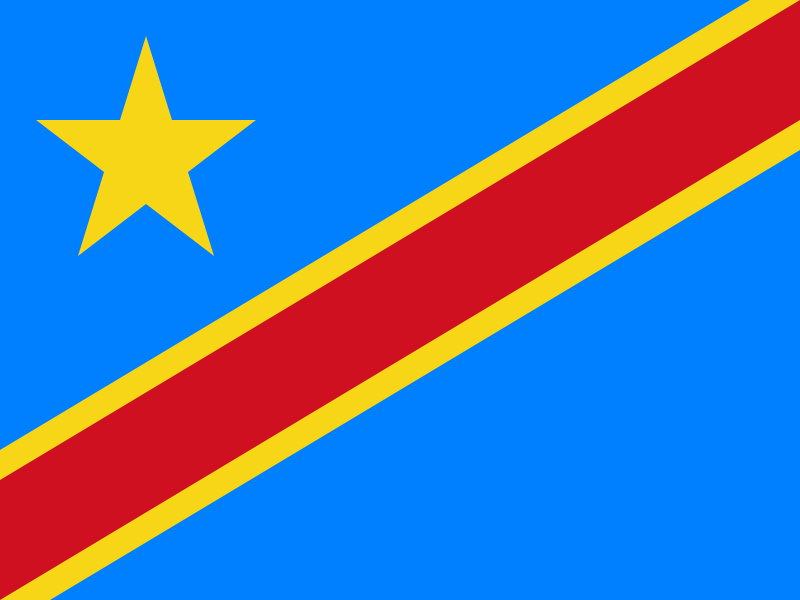
Kwango is a province in the southwestern part of the Democratic Republic of the Congo (DRC), with its administrative capital being Kenge. The province is named after the Kwango River, which also forms part of the boundary between the DRC and Angola.
Historical Overview
-
Pre-Colonial Period: The region that is now Kwango has been inhabited by various ethnic groups, including the Yaka and Suku people. These groups were part of larger Bantu migrations across Central Africa.
-
Colonial Era: During the late 19th and early 20th centuries, the area came under the control of the Congo Free State, which was a personal possession of King Leopold II of Belgium. The region, like much of the Congo, witnessed exploitation and forced labor, especially in rubber and ivory extraction.
-
Belgian Congo: After the Belgian government took over from King Leopold II in 1908, the region continued to be part of the Belgian Congo. Infrastructure development, such as roads and basic healthcare, began during this period, although primarily to facilitate resource extraction.
-
Post-Independence: The Congo gained independence from Belgium in 1960, and Kwango was originally part of a larger province. The political landscape was tumultuous with various secessionist and rebel movements, reflecting broader national instability.
-
Recent Developments: In 2015, Kwango was established as a separate province following a constitutional reform that divided the country into 26 provinces. This was part of an effort to decentralize governance and bring administration closer to the local populace.
Notable Figures
- Simon Kimbangu: Although not from Kwango itself, Simon Kimbangu's influence as a religious leader and founder of the Kimbanguist Church was felt throughout the Congo, including in Kwango.
Important Landmarks
-
Kwango River: This is a significant geographical feature and serves as an important natural resource for the communities along its banks.
-
Kenge: As the capital of Kwango, Kenge is a focal point for political and economic activities in the province.
Challenges
Kwango, like many regions in the DRC, faces challenges such as limited infrastructure, poverty, and access to education and healthcare. The province is primarily rural with agriculture being the mainstay of the local economy.
Overall, the history of Kwango is intertwined with the broader historical narrative of the Democratic Republic of the Congo, marked by periods of exploitation, struggle for independence, and ongoing challenges of development and governance.
Information not available.