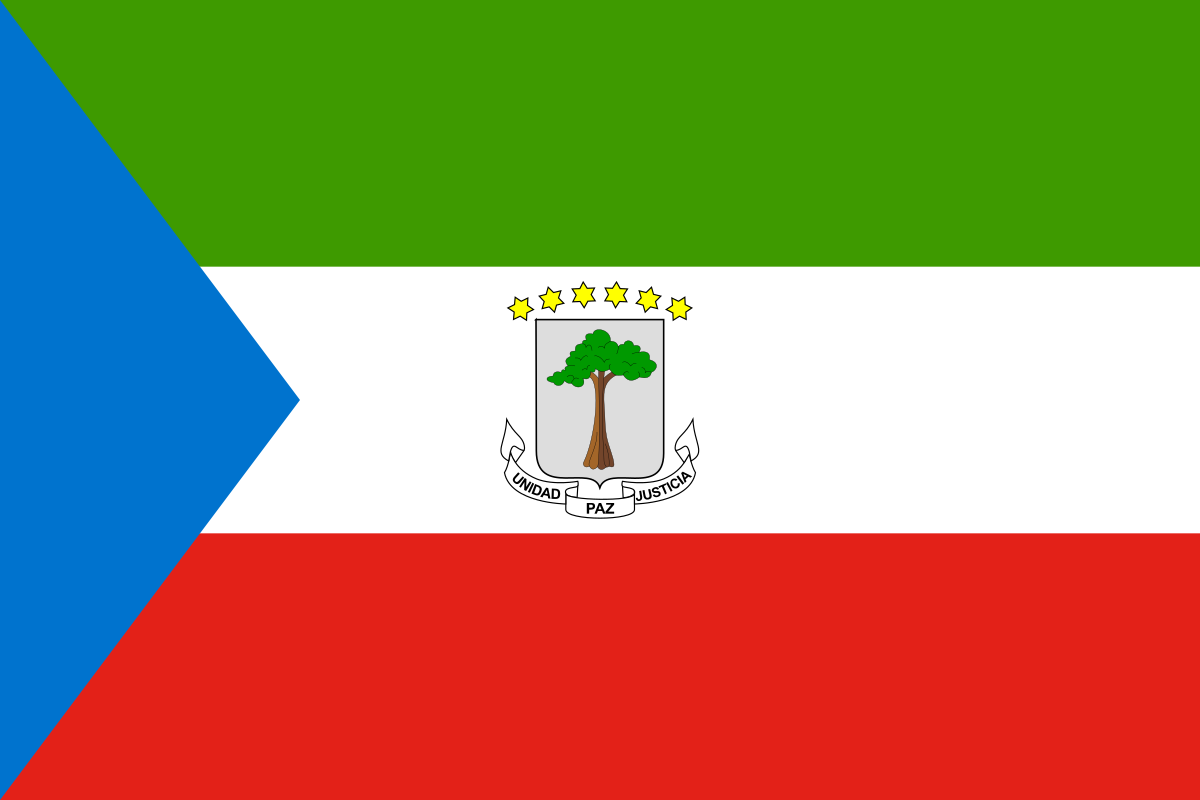
Kié-Ntem is a province located in the northeastern part of Equatorial Guinea. It is one of the country's eight provinces and has its capital in Ebebiyin. The province is bordered by Cameroon to the north and Gabon to the east and south.
Historical Background:
-
Colonial Era: Like the rest of Equatorial Guinea, Kié-Ntem was under Spanish colonial rule. During this period, the region was part of Spanish Guinea. The colonial administration influenced the cultural and linguistic landscape of the area, introducing Spanish as the official language.
-
Post-Colonial Era: Equatorial Guinea gained independence from Spain on October 12, 1968. Since independence, the province has been part of the national framework of Equatorial Guinea. The region has experienced political changes alongside the rest of the country, including periods of authoritarian rule.
Significant Events:
-
Independence: The broader movement for independence in Equatorial Guinea affected Kié-Ntem, as it did the entire country. The processes leading up to and following independence in 1968 are pivotal to its history.
-
National Reforms: Throughout the late 20th and early 21st centuries, Equatorial Guinea underwent several political and economic reforms, many of which impacted the development of its provinces, including Kié-Ntem.
Historical Figures:
- Teodoro Obiang Nguema Mbasogo: While not specifically from Kié-Ntem, he has been a central figure in Equatorial Guinea since he became president in 1979. His policies and governance have influenced the entire nation, including Kié-Ntem.
Important Landmarks:
-
Ebebiyin: As the capital of Kié-Ntem, Ebebiyin is a significant city and a hub for administrative activities. It is strategically located near the borders with Cameroon and Gabon, making it an important point for cross-border trade.
-
Natural Landmarks: The province is characterized by its lush tropical environment and is part of the Congo Basin rainforest region, which is significant for biodiversity.
Cultural Aspects:
- Ethnic Groups: The province is home to various ethnic groups, including the Fang, who are the majority in the region. Their cultural practices, languages, and traditions form an integral part of the province’s identity.
In summary, while Kié-Ntem shares much of its historical and political journey with the rest of Equatorial Guinea, its strategic location and cultural richness provide it with unique characteristics. However, detailed historical records specific to the province are limited, and much of its history is intertwined with the national narrative of Equatorial Guinea.