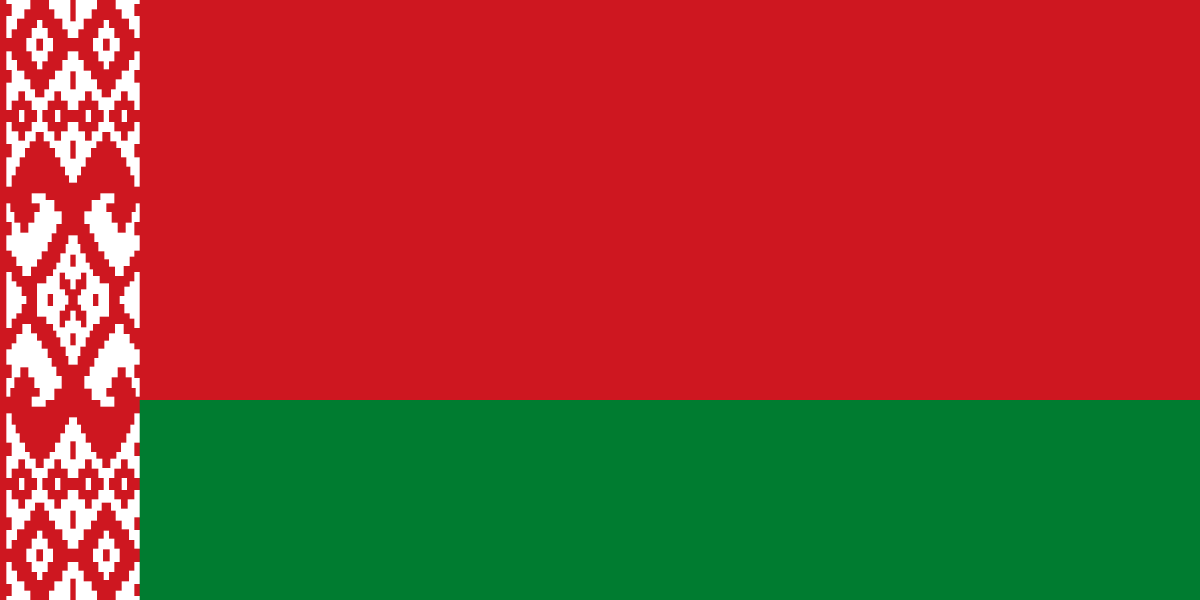
Khoyniki is a town in the Homyel'skaya Voblasts' (Gomel Region) of Belarus. While specific historical records about Khoyniki might not be extensive, there are some known aspects regarding its history and development.
-
Early History: Khoyniki, like many towns in the region, has roots that date back to the times of the Grand Duchy of Lithuania and the Polish-Lithuanian Commonwealth. The area was historically part of these states before being absorbed into the Russian Empire during the partitions of Poland in the late 18th century.
-
19th Century: During the Russian Empire era, Khoyniki was part of the Minsk Governorate. It was primarily a small settlement with a local economy based on agriculture and trade. The social and economic life of Khoyniki, as with many similar towns, would have been influenced by the larger administrative and economic changes occurring in the empire.
-
20th Century:
- World War II: Khoyniki, like much of Belarus, was significantly affected by World War II. The town was occupied by Nazi Germany, and the local Jewish community, which had been present in the town, suffered heavily during the Holocaust.
- Post-War Era: After the war, Khoyniki was rebuilt and became part of the Byelorussian Soviet Socialist Republic (BSSR) within the Soviet Union. The town developed industrially and agriculturally during this period.
- Chernobyl Disaster: One of the most significant events in the history of Khoyniki is the impact of the Chernobyl nuclear disaster in 1986. Although Khoyniki itself was not evacuated, the nearby areas were heavily contaminated, and the disaster had a lasting effect on the environment and health of its residents. Many people were relocated, and the economy and daily life were disrupted.
-
Modern Era: After the dissolution of the Soviet Union in 1991, Khoyniki became part of an independent Belarus. The town has continued to deal with the legacy of Chernobyl, but it has also been part of the broader economic and social developments in post-Soviet Belarus.
-
Landmarks: While Khoyniki might not be known for grand historical landmarks, it does have local sites of interest, including war memorials and monuments related to the Chernobyl disaster. These serve as reminders of the town’s past and its resilience.
-
Cultural Heritage: The town, like many in Belarus, would have traditions and cultural elements tied to the broader Slavic and Belarusian cultural heritage, including festivals, local cuisine, and crafts.
Information on specific historical figures directly associated with Khoyniki is limited, and the town's history is often overshadowed by larger regional and national historical narratives.
Overall, Khoyniki's history is marked by its experiences during major historical upheavals, including World War II and the Chernobyl disaster, and its journey through changing political landscapes from the Grand Duchy of Lithuania to modern Belarus.